Can a Portable Power Station Run a Microwave Safely?
Operating kitchen appliances off-grid requires careful mathematical alignment. Understanding appliance wattage prevents unexpected generator shutdowns during meal preparation.

Yes, provided your unit supplies at least 1500W continuous output and a large enough watt-hour capacity to handle high inductive starting loads safely.
Ready to compare models? Start with our Best Portable Power Station: Top Backup & Off-Grid Picks.
Practical Quick-Reference Table
| Scenario / Metric | Recommended Target | Why It Matters |
|---|---|---|
| Small Microwave (700W) | 1000W Inverter | Accounts for heating element surges during cooking cycles. |
| Standard Microwave (1000W) | 1500W Inverter | Safely handles heavy transformer and magnetron electrical draws. |
| Large Microwave (1200W+) | 2000W+ Inverter | Prevents immediate overload fault triggers during startup. |
| Power Station Capacity | 1000Wh Minimum | Provides practical runtime for multiple heating sessions. |
| Operating Temperature | 50°F to 90°F | Optimizes internal chemical discharge and inverter efficiency. |
| Peak Surge Rating | Double Rated Wattage | Absorbs the initial mechanical spike from magnetron activation. |
Demystifying Microwave Power Requirements and Inverter Demands
Running kitchen appliances demands a deep dive into electrical specifications. A typical microwave lists cooking wattage on the door frame, but the actual power draw is significantly higher.
Even models featured in our best camping power station reviews rely on internal transformers to convert household electricity, meaning hidden electrical overhead frequently triggers automatic shutdowns on smaller generators.
Pure sine wave inverters are mandatory for sensitive microwave control boards. Modified sine wave units can damage electronic timers and cause loud humming noises during operation.
Always cross-reference your inverter's continuous wattage rating against the actual running load. Never rely solely on peak marketing numbers printed on the outer casing.
Standard household microwaves require a continuous running wattage between 600 and 1200 watts. However, the magnetron component demands significantly more energy during the initial startup phase to ionize the vacuum tube properly.
When calculating electrical needs, always multiply your stated cooking wattage by 1.6 to 2.0 to account for total electrical conversion efficiency losses. Inverters operating under heavy inductive loads inevitably generate internal heat and resistance.
Pure sine wave inverters are absolute requirements for running modern kitchen appliances safely. Modified sine wave units produce erratic electrical noise that can severely damage sensitive control boards and overheat internal microwave transformers.
Surge capacity ratings matter just as much as continuous output metrics when sizing your generator. Ensure your chosen power station features a peak surge rating that easily exceeds the microwave's aggressive initial draw.
- Locate the electrical rating label on the rear panel.
- Multiply cooking wattage by 1.5 to estimate true input draw.
- Verify that your inverter produces a clean pure sine wave output.
- Check manufacturer specifications for maximum continuous output limits.
Evaluating Magnetron Surge Characteristics
Magnetrons demand a sharp surge of electrical current the exact millisecond they activate. This initial spike lasts only a fraction of a second but tests inverter limits.
High-quality power stations feature robust surge buffers designed to absorb these shocks. Selecting a unit with adequate surge capacity protects internal microprocessors from sudden voltage drops.
- Monitor initial load spikes using a digital clamp meter.
- Ensure surge duration falls within manufacturer safety limits.
Evaluating Portable Power Station Capacity and Discharge Rates
Battery capacity is measured in watt-hours, dictating how long your appliance will run. A 1000Wh power station theoretically provides one hour of continuous operation at one thousand watts.
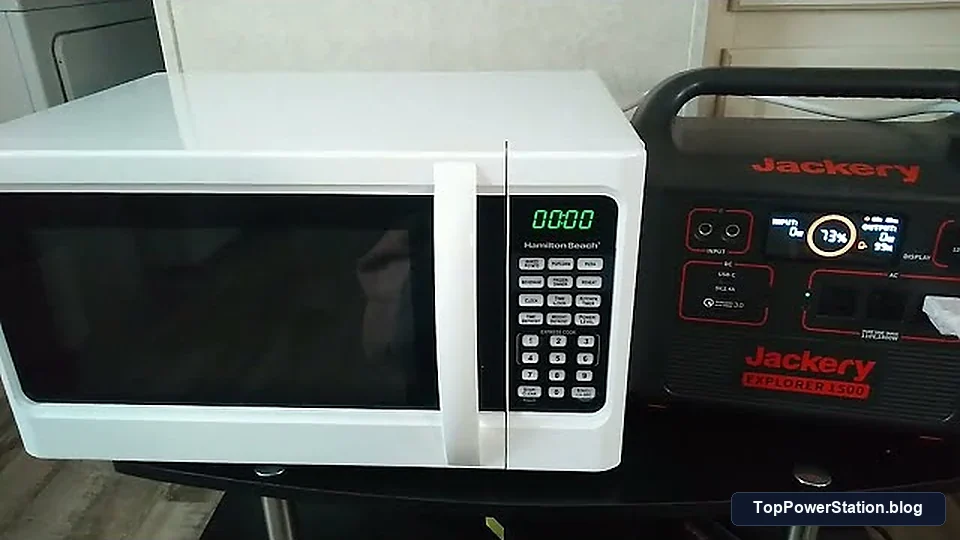
Inverter conversion losses typically consume ten to fifteen percent of stored energy. Real-world runtime will therefore be slightly shorter than basic mathematical calculations suggest.
Lithium iron phosphate chemistries offer superior thermal stability and extended cycle life. Choosing modern battery cells ensures dependable performance during heavy kitchen appliance usage.
Keep a close eye on your state-of-charge percentage indicator during extended cooking sessions. Deep discharges under heavy loads generate substantial internal heat within the pack.
When evaluating our best portable power station options, battery capacity measured strictly in watt-hours (Wh) dictates precisely how long your backup system can sustain kitchen operations.
Peukert's law dictates that drawing heavy electrical loads rapidly reduces the total usable capacity of traditional chemistry batteries. High-draw appliances accelerate voltage sag, meaning you will harvest fewer watt-hours during rapid discharge cycles.
Lithium Iron Phosphate (LiFePO4) chemistries offer superior thermal stability and vastly extended life cycles compared to older lithium-ion variants. They maintain steady voltage outputs under heavy electrical loads without experiencing severe performance degradation.
Depth of discharge limitations heavily influence your real-world runtime expectations during extended grid outages. Smart users factor in a 20 percent reserve margin to prevent premature battery management system shutdowns while cooking.
- Calculate expected runtime by dividing usable watt-hours by wattage.
- Account for an estimated fifteen percent inverter energy conversion loss.
- Prioritize lithium iron phosphate batteries for enhanced thermal safety.
- Avoid running power stations down to zero percent state-of-charge.
Calculating Practical Runtime Ratios
Translating raw battery capacity into usable cooking time requires simple arithmetic. Factor in depth-of-discharge limits to preserve long-term battery health over years of service.
Divide your total available watt-hours by the real input wattage of the microwave. Subtract ten percent for thermal inefficiencies to find your accurate cooking window.
- List your power station capacity in total watt-hours.
- Apply a realistic efficiency multiplier before starting appliances.
Video Walkthrough: Can a Portable Power Station Run a Microwave or Coffee Maker?
Step-by-Step Configuration for Safe Kitchen Appliance Operation
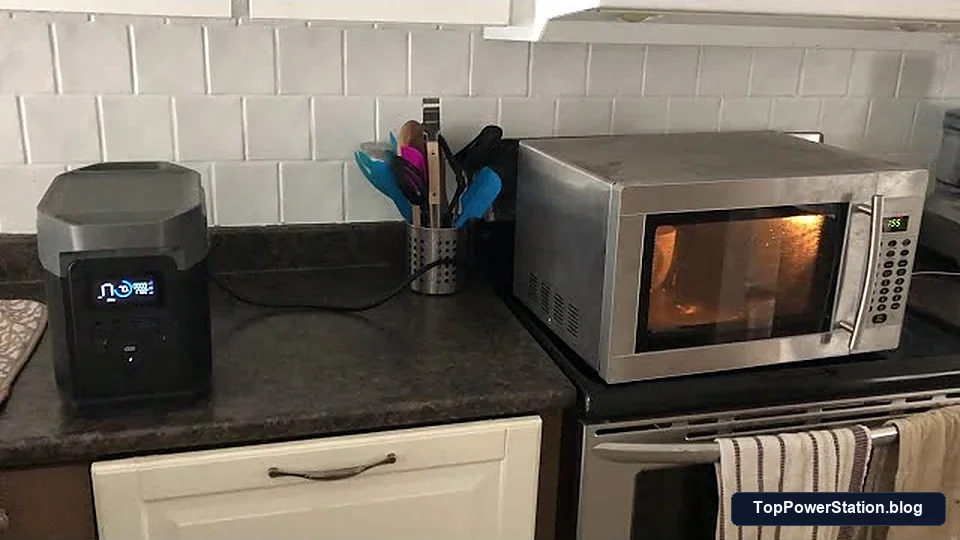
Proper physical setup prevents accidental tipping and minimizes cable resistance issues. Place your power station on a flat, dry surface away from direct sunlight and moisture.
Connect the microwave directly to the primary AC outlet on the power unit. Avoid using extension cords or multi-tap power strips that introduce dangerous voltage drops.
Power on the generator's inverter system before initiating any appliance cooking cycles. Verify that the digital display shows stable voltage and frequency outputs.
Monitor the real-time wattage output screen on your power station carefully. This allows you to catch abnormal electrical draws before safety breakers trip.
When selecting top home backup power stations, position your hardware on a flat, dry, and well-ventilated surface away from flammable materials to ensure unobstructed airflow through integrated cooling fan ports.
Connect the microwave directly to a dedicated AC output port rather than utilizing cheap extension cords. Using undersized extension wiring introduces unacceptable voltage drop and creates severe fire hazards under high electrical loads.
Activate the inverter module independently before initiating any cooking cycles on your kitchen appliance. This allows the internal circuitry to stabilize voltage output prior to experiencing the heavy initial magnetron surge.
Monitor the real-time digital display panel closely during the first thirty seconds of appliance operation. Watch for unexpected wattage spikes or rapid battery depletion that could signal an impending overload condition.
- Position equipment on stable, dry, and well-ventilated surfaces.
- Plug the microwave directly into the primary AC receptacle.
- Activate the inverter switch prior to starting the appliance.
- Observe the digital output display for unexpected load spikes.
Managing Cable Gauge and Resistance
Thick electrical loads demand appropriately sized extension cables if distance is required. Undersized cords create excessive heat and reduce voltage delivered to the appliance.
Inspect all power cords for fraying or exposed copper wire before connection. Safety standards dictate that damaged insulation must be replaced immediately.
- Use heavy-duty rated power cords for high-draw appliances.
- Check cable jackets regularly for signs of thermal stress.
Common Operational Faults and Practical Troubleshooting Steps
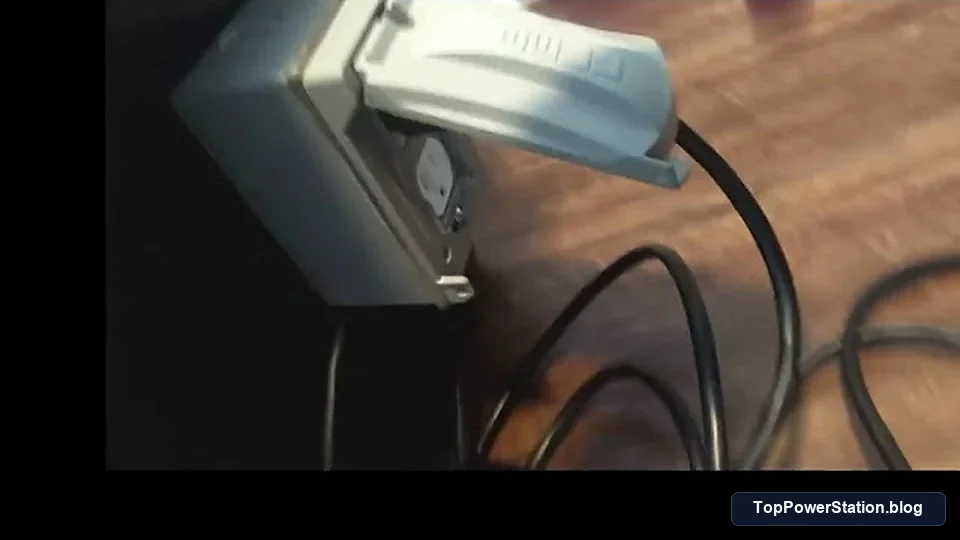
Overload error codes are the most common issue when running high-draw appliances. When this occurs, the internal circuit breaker instantly cuts power to protect delicate circuitry.
Use our power station runtime calculator to check loads before disconnecting the microwave immediately and resetting your hardware via its master switch after an overload.
Low voltage warnings often stem from partially depleted internal battery banks. Recharging your power station restores normal operating thresholds and prevents erratic behavior.
Audible buzzing noises usually indicate an incompatible modified sine wave inverter. Switch immediately to a pure sine wave power source to prevent permanent appliance damage.
Overload protection errors typically trigger when the microwave's startup surge exceeds the inverter's maximum threshold. When this happens, the unit will instantly cut power to protect its internal switching transistors from damage.
Persistent low-voltage warnings usually indicate that your battery state of charge has dropped below safe operational parameters. Recharge the power station immediately using a compatible solar array or wall outlet before attempting further cooking.
Audible buzzing or humming noises from the microwave often point toward poor inverter output waveform quality. Disconnect the appliance immediately if you detect abnormal acoustic resonance to prevent permanent transformer coil damage.
Intermittent power loss during extended heating cycles frequently stems from thermal throttling of internal cooling components. Allow the generator to cool down completely in a shaded area before resuming food preparation tasks.
- Disconnect loads immediately upon receiving any error code.
- Allow heated internal components adequate time to cool down.
- Recharge depleted battery banks before running heavy appliances.
- Verify sine wave compatibility if unusual noises occur.
Interpreting Error Codes and Warning Lights
Modern power stations feature digital displays with specific alphanumeric fault codes. Consult your user manual to decode these messages and apply the correct fix.
Thermal warning lights indicate that internal cooling fans are failing or blocked. Clear any obstructions around ventilation ports immediately to restore airflow.
- Match displayed error codes with manufacturer documentation.
- Inspect cooling ports for dust or physical blockages.
Routine Maintenance Protocols and Long-Term Battery Health
Regular maintenance ensures your power station remains reliable for future emergency tasks. Keep firmware updated and store the unit at a moderate state of charge.
Clean external casing vents regularly using a soft brush or compressed air. Removing dust buildup prevents thermal throttling and extends internal component lifespans significantly.
Perform periodic calibration cycles by fully charging and discharging the battery. This helps the internal management system report accurate state-of-charge percentages.
Store equipment in climate-controlled environments away from freezing cold or excessive heat. Extreme ambient temperatures degrade chemical capacity rapidly over time.
Perform regular firmware updates through the manufacturer's mobile application to optimize internal battery management algorithms. Keeping software current ensures peak charging efficiency and protects against unexpected system bugs during emergencies.
Clean cooling intake vents monthly using a soft-bristled brush or compressed air to remove accumulated dust. Unrestricted airflow is vital for maintaining safe operating temperatures during heavy inductive appliance usage cycles.
Store your portable generator in a temperature-controlled environment between 50 and 70 degrees Fahrenheit when not in active use. Extreme ambient temperatures accelerate chemical degradation and permanently reduce total energy storage capacity.
Calibrate the internal state-of-charge indicator annually by cycling the unit from full capacity down to zero percent before recharging fully. This calibration prevents misleading battery percentage readouts during critical power outages.
- Clean exterior ventilation ports of dust and debris.
- Store units at a fifty percent charge during long periods.
- Perform periodic battery capacity calibration cycles.
- Keep equipment away from extreme temperature environments.
Firmware Updates and System Diagnostics
Manufacturer software updates often optimize inverter efficiency and safety algorithms. Connect your device to authorized mobile applications periodically to check for improvements.
Run built-in diagnostic tools to verify sensor accuracy across all internal circuits. Early detection of component wear prevents unexpected failures in the field.
- Check for official software patches through mobile apps.
- Run complete diagnostic self-tests twice a year.
Understanding Thermal Management and Ventilation Standards
High-draw appliances force power station cooling fans to spin at maximum speed. Ensuring unobstructed airflow around the chassis is critical for maintaining safe operational temperatures.
Never enclose your power station inside a tight cabinet while running a microwave. Trapped heat causes thermal protection circuits to shut the system down abruptly.
Listen for abnormal fan grinding noises that indicate bearing wear or obstruction. Promptly clear any foreign objects blocking the intake or exhaust grilles.
Maintain a clearance buffer of at least six inches around all vents. Proper spacing allows cooling fans to dissipate internal heat efficiently during heavy loads.
Modern portable power stations utilize variable-speed cooling fans to manage internal component temperatures during high-wattage outputs. These fans must remain completely unblocked at all times to prevent premature thermal shutdown events.
Operating heavy kitchen appliances generates substantial internal heat within the inverter transformer and capacitor banks. Maintaining a minimum clearance of six inches around all vents is crucial for efficient heat dissipation.
Ambient room temperature plays a massive role in how effectively your generator sheds unwanted thermal energy. High environmental heat forces cooling systems to work harder, which triggers thermal protection modes much faster.
Never operate your power station inside enclosed spaces like small cabinets or tightly sealed storage bins. Proper cross-ventilation prevents the buildup of hot exhaust air that degrades lithium battery chemistry over time.
- Keep at least six inches of clearance around all vents.
- Avoid operating equipment inside cramped storage compartments.
- Monitor cooling fan operation during heavy cooking cycles.
- Clean intake filters regularly to maintain steady airflow.
Optimizing Ambient Airflow in Workshops
Workshop environments often contain airborne sawdust that threatens cooling fans. Position your power station on an elevated workbench away from floor debris.
Use auxiliary desk fans to circulate fresh air around the generator chassis. Enhancing ambient airflow lowers overall operating temperatures during heavy appliance use.
- Elevate equipment above dusty workshop floor surfaces.
- Improve room ventilation during extended appliance runs.
Frequently Asked Questions
Can a 500W power station run a microwave?
No, a 500W unit lacks the necessary continuous output. Microwaves require at least 1500W to handle their electrical transformers safely.
Why does my microwave hum loudly on battery power?
Loud humming usually indicates your power station uses a modified sine wave. Switch to a pure sine wave inverter to protect your appliance.
How long will a 1000Wh battery run a microwave?
A 1000Wh battery typically runs a standard microwave for roughly forty-five minutes. Inverter conversion losses reduce total practical cooking time slightly.
Will running a microwave damage my portable generator?
No, provided the appliance wattage stays below the inverter rating. Always check your continuous output limits before initiating cooking tasks.
Do I need special cables to connect my microwave?
Always plug the microwave directly into the AC outlet. Avoid extension cords to prevent dangerous voltage drops and thermal issues.