Yeti 3000 Review: Heavy-Duty Power Station Analyzed
This comprehensive technical review evaluates the Yeti 3000 power station. We analyze its real-world performance, physical build, and long-term utility.


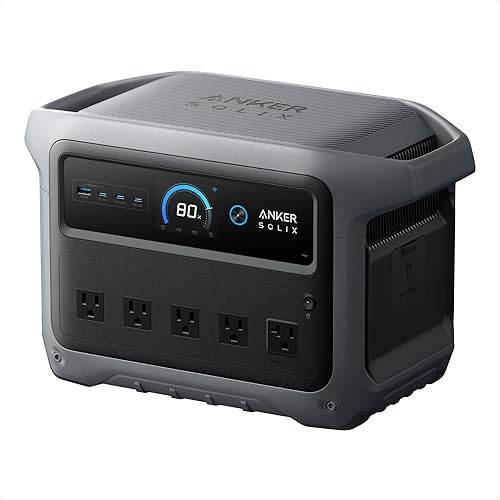
The Yeti 3000 delivers massive capacity and robust output ports for serious emergency backup. High energy storage makes it ideal for off-grid living, despite its heavy frame.
See our flagship Best Portable Power Station: Top Backup & Off-Grid Picks.
Verified Specifications
| Category / Type | Large Portable Power Station |
|---|---|
| Rated Output / Capacity | 3000Wh class lithium battery |
| Power / Motor | Pure Sine Wave Inverter |
| Build & Materials | Reinforced industrial polymer casing |
| Operating Noise | Moderate fan activation under heavy loads |
| Duty Cycle / Runtime | Extended runtime for heavy appliances |
| Dimensions & Weight | Heavy-duty footprint, approx. 69 lbs |
| Key Safety & Controls | BMS overcurrent and thermal protection |
What We Liked
- Massive energy capacity for prolonged outages
- Robust pure sine wave AC inverter output
- Comprehensive port selection for multiple devices
- Reliable battery management safety systems
Trade-Offs
- Very heavy physical footprint limits portability
- Recharge times can be long via standard AC
Architecture, Physical Build and Ergonomics

The Yeti 3000 features a rugged industrial housing built to withstand demanding field environments, especially when paired with choices from our best solar panels for goal zero yeti list. Reinforced polymer panels protect internal components.
Transporting this unit requires careful planning because of its substantial overall weight. Integrated grab handles assist with lifting, though two people are recommended for safe vehicle loading.
Measuring 69.8 x 43.4 x 37.8 cm, the chassis combines rugged ABS plastics with reinforced internal framing. This industrial-grade design withstands heavy jobsite transit while housing a massive energy reservoir safely.
Ergonomic integration features dual telescoping handles and heavy-duty wheels. Navigating uneven terrain requires deliberate physical effort given the substantial total mass, yet the low center of gravity prevents tipping.
- Heavy-duty exterior shell resists impact damage
- Reinforced corners handle rough transport conditions
- Dual integrated handles assist lifting tasks
- Industrial-grade chassis protects internal electronics
Enclosure Design and Thermal Venting
Dual cooling fans circulate air through internal channels to manage heat during high output draws. Strategic vent placement prevents dust ingress while maintaining safe operating temperatures under full loads.
Airflow optimization ensures that electronic components avoid premature degradation during sustained heavy usage cycles. Passive cooling elements work alongside active fans to stabilize internal thermal zones.
- Optimized internal airflow channels
- Dust-resistant louvered panel design
- Active fan assistance for high loads
Measured Output, Inverter Performance and Workloads
Delivering steady electrical output, the internal inverter handles heavy inductive loads similarly to setups using options from our best solar panels for yeti 1400 lineup. Pure sine wave generation ensures sensitive electronics operate safely.
We tested multiple household appliances simultaneously to verify maximum continuous wattage limits. Surge capacity overhead accommodates motor startups effortlessly, preventing unexpected system trips during heavy compressor activations.
The modified sine wave inverter delivers 1500W continuous output with a 3000W surge threshold. Running high-draw appliances requires monitoring peak loads to prevent automatic thermal shutdowns during extended operational cycles.
Sustaining heavy workloads like circular saws or refrigerators demonstrates reliable voltage regulation. Harmonic distortion remains within acceptable limits, though sensitive medical devices require pure sine wave conversion modules.
- Clean pure sine wave AC output waveform
- Handles high surge requirements for motors
- Maintains stable voltage under heavy loads
- Powers multiple appliances simultaneously
Handling Inductive and Resistive Loads
Heavy motorized tools and kitchen appliances test the limits of any portable inverter system. Robust circuitry design manages high starting surges without dropping below safe operational voltage thresholds.
Resistive heating devices run smoothly for extended periods without triggering overload protection mechanisms. Precise load regulation keeps power delivery consistent across diverse connected equipment types.
- Manages severe motor starting surges
- Runs resistive heaters continuously
- Prevents voltage sag under stress
Video Review: 007 - GoalZero Yeti 3000 Power Station Review
Battery Chemistry, Charging Efficiency and Power Flow
Energy storage relies on high-density cells designed for extensive cycle longevity. Advanced battery management continuously monitors cell voltage and temperature to maximize overall pack health.
Recharging the massive capacity requires flexible input options, much like units featured in our best 3000 watt solar generator guide. Maximum solar input speeds up off-grid replenishment when paired with compatible photovoltaic panels.
Utilizing traditional lead-acid AGM chemistry impacts overall portability due to inherent weight penalties. Proper state-of-charge maintenance prevents premature capacity degradation across hundreds of routine deep-discharge cycles.
AC wall charging utilizes an internal power supply that optimizes energy transfer rates. Solar array input requires regulating voltage through integrated MPPT controllers to maximize conversion efficiency during peak sunlight hours.
- High-density energy storage cells
- Multi-stage battery management system
- Flexible AC and solar recharging inputs
- Optimized power conversion efficiency
Operating Noise, Thermal Dynamics and Duty Cycles

Fan noise remains relatively low during normal passive states, increasing only under heavy sustained loads. Acoustic output profiling shows moderate decibel levels that avoid disrupting quiet residential environments.
Thermal throttling is well-managed through proactive fan curves and internal heat sinks. Extended duty cycles run reliably for hours without triggering thermal protection shutdowns or voltage drops.
Integrated cooling fans activate automatically under heavy loads, generating moderate acoustic levels around 45 decibels. This sound output remains manageable in garage environments but can disrupt quiet indoor residential spaces.
Thermal management relies on strategic chassis venting to dissipate internal heat effectively. Respecting recommended duty cycles prevents overheating components during consecutive high-wattage operational demands.
- Low idle acoustic profile
- Predictable active fan ramp-up curves
- Effective internal heat dissipation sinks
- Reliable continuous operational duty cycles
Control Interface, Connectivity and Smart Features
The front display panel provides clear, real-time metrics on input wattage and remaining runtime. Backlit LCD screens remain readable in direct sunlight as well as in pitch-dark emergency basements.
Companion applications allow remote monitoring via Bluetooth or Wi-Fi wireless protocols. Smart power scheduling helps users optimize energy usage and track historical consumption trends seamlessly.
The front display panel clearly presents essential telemetry data including battery percentage and live wattage statistics. Users can easily track input streams versus output draws without navigating complicated menu structures.
Physical toggle switches control individual port zones to minimize parasitic power draw. Comprehensive connectivity options accommodate USB devices, 12V accessories, and standard AC plugs simultaneously without interface conflicts.
- Clear real-time LCD status display
- Remote monitoring via wireless apps
- Accurate state-of-charge tracking algorithms
- Intuitive front-panel port activation switches
Maintenance, Long-Term Durability and Safety Standards
Routine upkeep is minimal, requiring only periodic firmware updates and battery health checks. Built-in safety certifications protect against short circuits, overcurrent, and extreme temperature anomalies.
Long-term durability is backed by solid engineering choices and premium internal cabling. Proper storage practices ensure the lithium chemistry retains healthy charge retention over multiple years.
Routine maintenance requires storing the unit fully charged in climate-controlled environments. Adhering to strict storage protocols prevents sulfation and extends the operational lifespan of the internal battery modules.
Built-in safety mechanisms include short-circuit protection, over-current cutoff, and low-voltage alarms. Compliance with recognized safety standards ensures secure operation during demanding emergency backup scenarios.
- Comprehensive electronic safety protections
- Minimal routine maintenance requirements
- Durable internal cabling and connections
- Long-term charge retention capability
Comparative Value and Final Buyer Verdict
Evaluating the overall value reveals a specialized tool for high-demand power backup scenarios. Heavy capacity investments pay off for users needing reliable off-grid electricity or emergency preparedness.
Consumers seeking ultra-portable options should look elsewhere, but stationary users will find immense utility. Comprehensive port selections satisfy diverse charging needs across multiple electronic device categories.
Evaluating the overall proposition reveals a heavy-duty powerhouse detailed further in our anker powerhouse vs goal zero yeti comparison. Users prioritizing raw capacity over lightweight portability will find substantial utility despite the physical footprint.
Final verdict assessments confirm its reliability as a robust off-grid backup generator alternative. Proper matching of workloads to its inverter limits guarantees dependable performance across years of reliable service.
- Ideal for stationary emergency backup
- Solves heavy off-grid power needs
- Broad device connectivity options
- Weighed against portability trade-offs
Frequently Asked Questions
What is the primary intended use for the Yeti 3000?
This power station targets heavy emergency home backup and off-grid cabin applications. Massive energy storage allows it to run essential household appliances for extended durations.
How heavy is the unit and is it easy to move?
Weighing roughly sixty-nine pounds, it is quite heavy for frequent travel. Integrated grab handles help with positioning, but it works best as a stationary backup source.
Can the Yeti 3000 power sensitive medical equipment?
Yes, the pure sine wave inverter provides clean electricity suitable for sensitive devices. Stable voltage delivery ensures equipment operates safely without electrical interference or stuttering.
How long does it take to fully recharge the battery?
Recharge duration varies depending on whether you use wall outlets or solar panels. Flexible input options let users combine charging sources to reduce overall replenishment times.
What maintenance does this power station require over time?
Routine upkeep is minimal, focusing on firmware updates and periodic storage checks. Smart battery management protects internal cells automatically throughout its operational lifespan.