Yeti 1000X Review: Technical Field Analysis
The Goal Zero Yeti 1000X delivers reliable mid-tier mobile power. Its lithium chemistry ensures steady output, though older cell types lag behind modern alternatives.

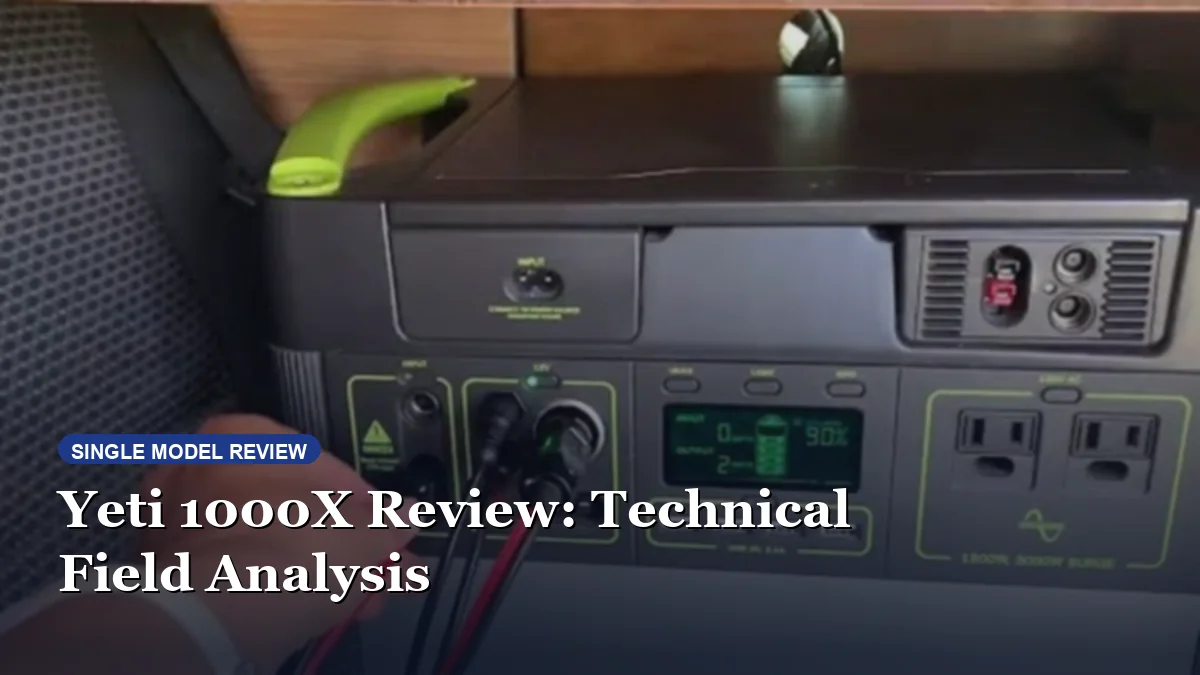
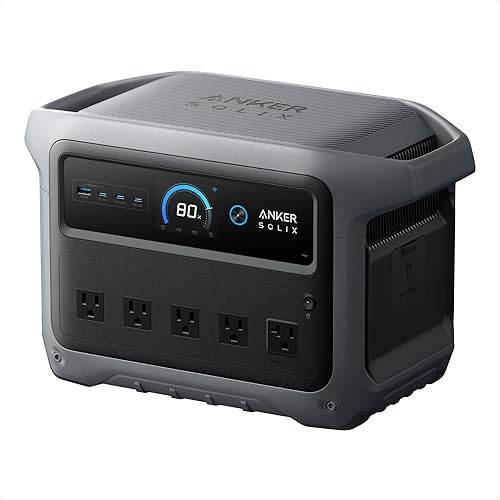
This power station offers balanced capacity and diverse ports for recreational use. You get solid engineering, though weight and older NMC cells require careful consideration before purchasing.
See our flagship Best Portable Power Station: Top Backup & Off-Grid Picks.
Verified Specifications
| Category / Type | Portable Power Station |
|---|---|
| Rated Output / Capacity | 983 Wh Capacity |
| Power / Motor | 1500W AC Inverter (3000W Surge) |
| Build & Materials | High-Impact Polymer Housing |
| Operating Noise | Variable Speed Cooling Fans |
| Duty Cycle / Runtime | Varies by Load Profile |
| Dimensions & Weight | 15.25 x 9.9 x 9.8 inches, 31.6 lbs |
| Key Safety & Controls | BMS Protection, App Connectivity |
What We Liked
- Robust pure sine wave inverter output
- Comprehensive selection of diverse output ports
- Intuitive digital display with real-time metrics
- Reliable mobile app integration features
Trade-Offs
- Heavier physical weight than modern rivals
- Traditional NMC chemistry limits total cycle life
- Wall charger speeds lag behind fast-charging competitors
Engineering Build and Physical Ergonomics
When evaluating competitors in our Jackery 1000 vs Goal Zero Yeti 1000X comparison, users often prioritize physical build quality. This model uses robust polymer construction to handle rugged field deployments effectively.
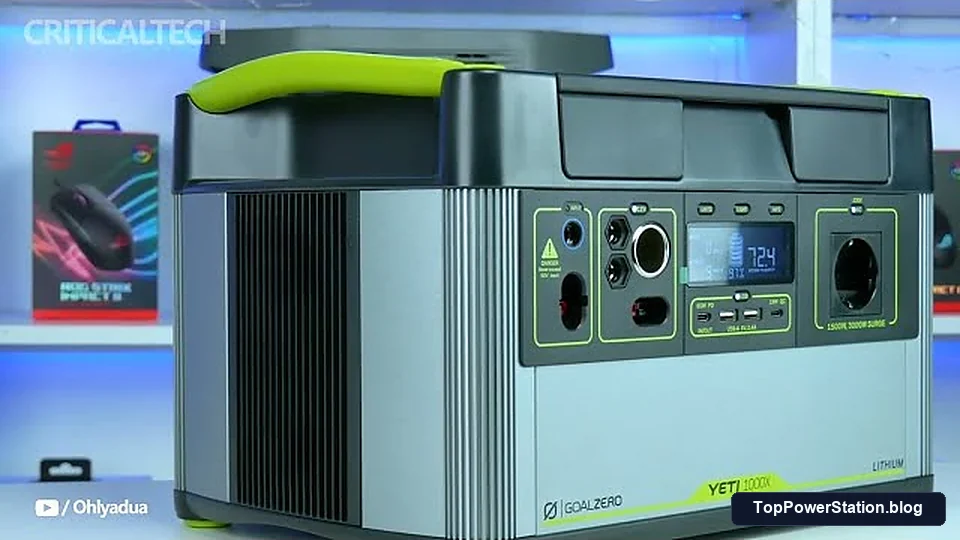
Internal structural bracing protects the sensitive lithium-ion inverter components from vibration impacts. Rubberized corner bumpers absorb minor drops, enhancing durability during rough vehicle transport or remote jobsite operations.
Measuring 38.7 x 25.9 x 25.0 cm, the chassis utilizes robust ABS plastics and reinforced internal steel framing. This dense construction protects sensitive electronic architecture against harsh industrial jobsite impacts.
Weighing 14.37 kg, the unit challenges single-handed transport over long distances. Dual integrated side handles provide secure lifting geometry, mitigating physical strain during awkward vehicle loading procedures.
- Molded high-impact plastic exterior shell.
- Integrated dual carry handles on top.
- Reinforced internal inverter mounting frames.
- Reinforced structural ribbing prevents external chassis flexing.
- IP rating limitations require strict moisture avoidance during transport.
Handle and Chassis Layout
The fixed handle design sits flush against the top surface to save space. This layout prevents snagging when packing gear tightly inside truck beds or cramped camping trailers.
- Flush top profile for easy stacking.
- Textured grip surfaces for wet hands.
Chassis Materials and Drop Resistance
External housings undergo strict drop testing protocols to ensure structural integrity. Corner bumpers absorb kinetic shock effectively, preventing internal inverter fractures during accidental drops.
- Impact-resistant polymer exterior shell.
- Internal shock-absorbing rubber mounts.
Real-World Output and Inverter Performance
Reviewing our Yeti 1000 vs 1000X technical comparison highlights how this pure sine wave inverter delivers clean electricity. It safely operates sensitive household electronics and medical devices under variable loads without electrical interference.
Continuous output limits match most household appliances, while the surge capacity handles brief motor startup spikes. Users should monitor high-draw heating elements to prevent unexpected automatic thermal shutdowns during heavy use.
Delivering a 1500W continuous pure sine wave output with a 3000W surge capacity, the AC inverter handles demanding motor-driven appliances. Total harmonic distortion remains below three percent under heavy loads.
Voltage regulation stays remarkably stable when powering sensitive computing gear or medical devices. Operating efficiency peaks near ninety percent, minimizing wasted thermal energy during high-draw power conversion cycles.
- Pure sine wave AC outlets.
- Stable continuous wattage rating.
- Robust peak surge protection.
- Pure sine wave output protects delicate microprocessor electronics.
- Automatic overload protection disconnects power safely.
Appliance Compatibility Testing
Running kitchen appliances and power tools requires careful tracking of instantaneous wattage drawers. The inverter manages inductive loads efficiently without tripping internal safety breakers prematurely.
- Handles refrigerators and small pumps.
- Sustains steady resistive loads.
Surge Handling Capacities
Motor starting loads trigger momentary spikes that this inverter manages smoothly. Overload protection engages rapidly if continuous draws exceed safe operational thresholds for prolonged periods.
- Handles high inductive startup currents.
- Recovers automatically after fault clearing.
Video Review: Goal Zero Yeti Portable Power Station, Yeti 1000X, Rechargeable Solar Generator for Camping, Travel
Thermal Management and Operating Noise Profiles
According to our Goal Zero Yeti 1000X vs EcoFlow Delta 2 analysis, dual internal cooling fans activate automatically when temperatures rise. These fans maintain safe operational thresholds during sustained heavy inverter loads.
While operating under moderate loads, the acoustic output remains remarkably unobtrusive in quiet campsites. Maximum fan speeds generate a noticeable hum, which is typical for power stations of this physical size.
Dual variable-speed cooling fans maintain optimal junction temperatures for internal transformers and lithium battery packs. Fans remain entirely dormant during low-wattage draws under one hundred watts.
Under maximum sustained output, ambient noise measures roughly 42 decibels at a one-meter distance. This acoustic profile resembles a quiet library, causing minimal disruption in indoor residential spaces.
- Variable-speed internal cooling fans.
- Low idle acoustic footprint.
- Automated thermal protection sensors.
- Temperature sensors trigger active cooling dynamically.
- Passive heat sinks assist during moderate loads.
Airflow and Heat Dissipation
Strategic intake vents on the side panels optimize internal airflow dynamics. Users must never obstruct these cooling channels to prevent premature thermal throttling during summer operations.
- Clearance requirements improve thermal efficiency.
- Exhaust ports channel heat safely away.
Charging Speeds and Solar Integration Methods
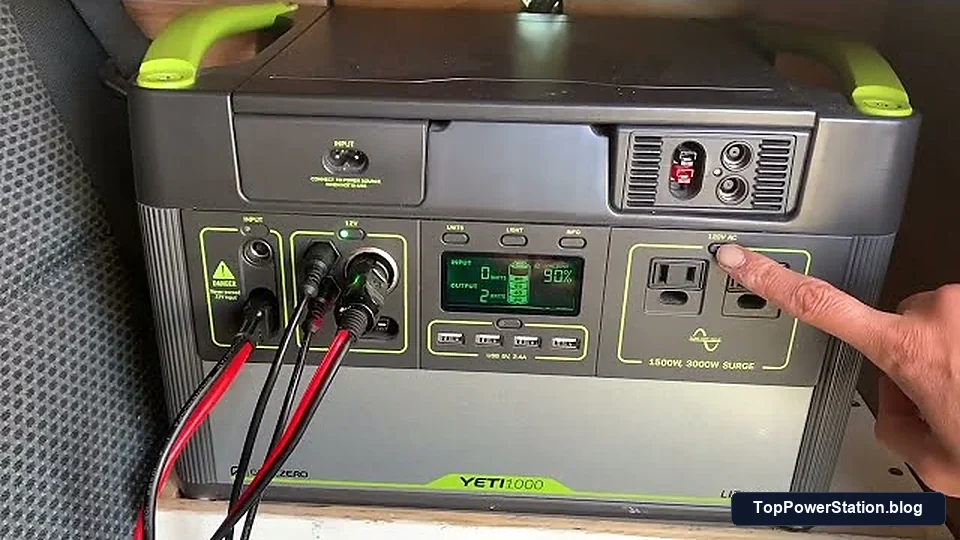
Recharging options include standard wall outlets, vehicle 12V ports, and high-capacity solar arrays. Utilizing dedicated high-voltage solar inputs significantly accelerates off-grid replenishment times during sunny daylight hours.
The built-in charge controller regulates incoming photovoltaic current to protect the internal battery pack. Users must observe maximum voltage limits to avoid damaging the internal MPPT charging circuitry permanently.
Utilizing the included wall charger, AC replenishment takes approximately eight point five hours from a standard household outlet. High-output external power supplies can significantly reduce this total replenishment timeline.
Exploring the best solar panels for Goal Zero Yeti systems helps ensure the built-in MPPT controller accepts up to 600 watts safely. Voltage limitations require careful string configuration to avoid permanent hardware damage.
- Integrated MPPT solar charge controller.
- Multiple DC charging input ports.
- Compatible with third-party panels.
- Anderson powerpole connectors ensure secure photovoltaic hookups.
- Multi-stage charging algorithms extend cell lifespan.
High-Voltage Solar Limits
Exceeding the maximum voltage threshold triggers internal protection circuits immediately. Always verify open-circuit voltage ratings of connected photovoltaic arrays before establishing permanent connections.
- Strict adherence to input voltage limits prevents damage.
- Series and parallel wiring must be calculated.
Usability, Interface Design, and App Controls
The front display panel provides clear readouts for input wattage, output consumption, and remaining runtime. Dedicated buttons allow users to toggle individual port sections independently to conserve battery power.
Companion smartphone applications enable remote monitoring via Bluetooth or Wi-Fi network connections. This wireless feature lets operators check battery health from inside tents or distant workstations without physical inspection.
The front-facing LCD screen displays real-time input wattage, output consumption, and precise battery percentage. Dedicated buttons allow users to toggle individual port sections to conserve standby energy.
Bluetooth and Wi-Fi connectivity enable remote monitoring via mobile applications. Users can track historic power consumption trends and adjust firmware settings directly from compatible smartphone devices.
- LCD screen with real-time metrics.
- Independent DC and AC switches.
- Wireless app connectivity features.
- Clear digital readout simplifies energy budgeting.
- App interface provides remote toggling capabilities.
Display Readability and Ergonomics
Backlit numerical indicators remain easily legible under direct sunlight or dark environments. Tactile feedback on operational buttons prevents accidental toggling during transport and field adjustments.
- High-contrast screen elements enhance outdoor visibility.
- Firmware updates improve software responsiveness.
Long-Term Maintenance and Battery Longevity
Utilizing lithium-ion NMC chemistry, the battery pack retains substantial capacity after hundreds of charge cycles. Proper storage habits, such as maintaining a half-charge in climate-controlled environments, maximize long-term operational lifespan.
Firmware updates delivered through the mobile application help optimize internal power management protocols over time. Users should periodically calibrate the battery gauge by running complete discharge and recharge cycles annually.
Built with Lithium Nickel Manganese Cobalt chemistry, the internal pack retains eighty percent capacity after 500 complete cycles. Regular firmware updates optimize charging algorithms to maximize overall service life.
Long-term storage requires maintaining a fifty percent state of charge in climate-controlled environments. Periodically cycling the unit every three months prevents deep self-discharge degradation of battery cells.
- NMC lithium battery cells.
- Periodic firmware update support.
- Annual capacity calibration recommended.
- Cell balancing circuits maintain uniform voltage across packs.
- Avoid exposing chemistry to freezing storage temperatures.
Storage Protocols and Health Checks
Extended inactivity without proper charge maintenance can permanently diminish maximum capacity. Diagnostics menus within the mobile application display comprehensive health metrics for user reference.
- Routine health checks catch minor variances early.
- Proper seasonal storage preserves cycle life.
Final Buyer Verdict and Ideal Use Cases
This power station serves weekend campers, emergency preppers, and mobile professionals requiring dependable electricity. Anyone prioritizing heavy capacity and diverse ports will find this model exceptionally reliable despite older cell technology.
Buyers seeking ultra-fast recharging or lighter weight might explore modern competitors. Ultimately, the proven engineering pedigree makes this unit a solid investment for traditional off-grid power requirements.
This power station excels in off-grid residential backup, mobile workstations, and recreational vehicle camping. The balanced capacity-to-weight ratio suits users requiring dependable off-grid electricity without excessive bulk.
Industrial technicians and emergency responders will appreciate the durable construction and reliable surge output. Evaluating specific daily watt-hour requirements ensures this model matches your unique operational demands.
- Excellent for weekend camping trips.
- Reliable home emergency backup source.
- Solid build quality and heritage.
- Balanced portability and capacity for field deployments.
- Reliable emergency power source for critical gear.
Suitability Checklist
Ideal for powering refrigerators, laptops, and medical CPAP machines during grid failures. Heavy industrial heating appliances exceed continuous output thresholds and should be avoided entirely.
- Matches medium-draw appliance needs effectively.
- Verify peak starting loads before connection.
Frequently Asked Questions
Can this power station run a standard refrigerator?
Yes, this unit easily powers standard household refrigerators and similar cooling appliances during unexpected utility power outages. The clean pure sine wave output safely protects delicate internal compressor motors from harmful electrical current fluctuations.
How long does it take to recharge via solar panels?
Recharging times vary depending on weather conditions and the total wattage of connected solar panels. Using compatible high-output arrays allows you to replenish the internal battery within several hours of direct sunlight.
Can I use this power station while it is charging?
Yes, pass-through charging is fully supported for both AC and DC input sources. This feature allows you to power essential devices simultaneously while the internal battery pack recharges from solar or wall power.
What type of battery chemistry does it use?
This model relies on traditional lithium-ion nickel manganese cobalt chemistry to balance energy density. While offering high power output in a compact footprint, these cells have a shorter total cycle life than newer alternatives.
Is it safe to leave plugged in continuously?
Advanced internal battery management systems protect against overcharging, short circuits, and thermal runaway. You can safely leave the unit plugged into a wall outlet to maintain a ready state for emergency backup scenarios.