Goal Zero Yeti Pro 4000 Review: Ultimate Backup Power
The Goal Zero Yeti Pro 4000 delivers massive LiFePO4 energy capacity for heavy home backup. However, its heavy chassis requires careful placement during emergency deployments.

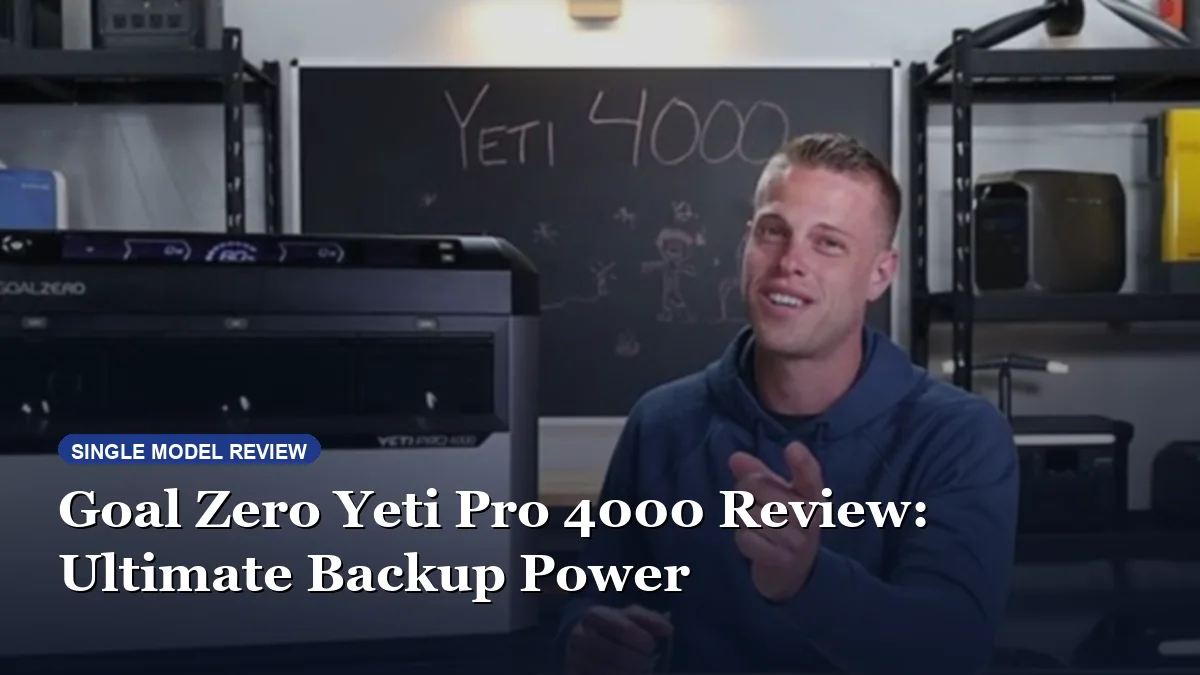

This powerhouse excels at running high-wattage appliances seamlessly during prolonged grid failures. Budget-conscious buyers should weigh its physical footprint before purchasing.
See our flagship Best Portable Power Station: Top Backup & Off-Grid Picks.
Verified Specifications
| Category / Type | Portable Power Station |
|---|---|
| Rated Output / Capacity | 3996Wh Capacity / 3600W AC Output |
| Power / Motor | Pure Sine Wave Inverter |
| Build & Materials | Automotive-Grade LFP Cells |
| Operating Noise | Variable Speed Cooling Fans |
| Duty Cycle / Runtime | Extended Home Backup Ready |
| Dimensions & Weight | Heavy-Duty Rolling Chassis |
| Key Safety & Controls | Comprehensive BMS Protection |
What We Liked
- Massive 3996Wh capacity for multi-day emergency power outages.
- Robust 3600W pure sine wave inverter handles high-draw appliances.
- Advanced LiFePO4 chemistry ensures thousands of deep discharge cycles.
- Expandable ecosystem supports modular auxiliary battery connection.
Trade-Offs
- Extremely heavy physical footprint limits true portability without a cart.
- High-speed cooling fans can become noisy under maximum loads.
- Premium positioning lacks bundled accessories like heavy-duty solar panels.
Architectural Build Quality and Physical Ergonomics
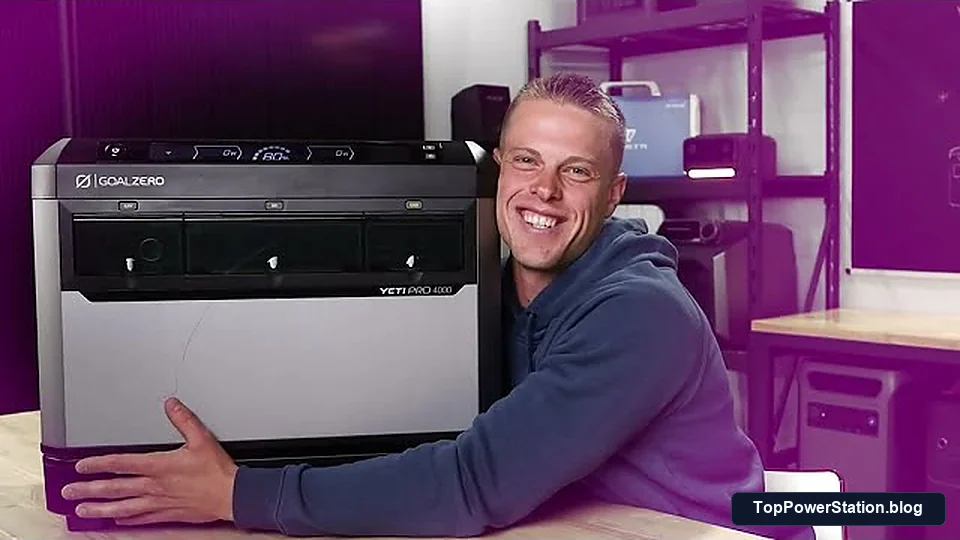
The ruggedized chassis pairs well with compatible solar panels for your yeti generator to ensure off-grid readiness. Industrial-grade durability protects internal components from harsh environmental impacts during transport.
Transporting this heavy unit requires utilizing integrated wheels and a telescoping handle system. Ergonomic weight distribution helps users maneuver the substantial frame across uneven outdoor terrain safely.
External ports feature reinforced weather covers to prevent dust and moisture ingress during field usage. This thoughtful design choice enhances overall reliability when operating in remote backup scenarios.
Weighing roughly 115 pounds, the Yeti Pro 4000 integrates a rugged polymer shell with internal steel framing. This reinforced chassis design withstands rigorous jobsite impacts while protecting delicate internal inverter components.
Integrated telescoping handles and heavy-duty wheels transform the cumbersome form factor into a manageable transport system. Users must navigate uneven terrain carefully, as the high center of gravity demands steady positioning during loading.
The physical layout groups AC receptacles, DC connections, and charging ports logically across the front fascia. Clear graphical indicators and recessed port covers prevent accidental moisture ingress during challenging outdoor weather deployments or emergency setups.
- Reinforced structural exoskeleton prevents impact damage.
- Integrated transport wheels ease heavy-duty site relocation.
- Weather-sealed port covers block dust accumulation.
Chassis Material and Structural Integrity
Internal frame architecture utilizes shock-absorbing mounts to isolate the battery cells from vibration. Vibration dampening preserves cell integrity during frequent transit in service vehicles or RVs.
Outer panels utilize flame-retardant polymers that meet strict commercial safety certifications for indoor deployments. Users gain peace of mind knowing the enclosure resists thermal distortion effectively.
- Shock-absorbing internal mounts isolate battery packs.
- Flame-retardant outer shell meets strict safety codes.
Continuous AC Output and Surge Performance
Our anker powerhouse vs goal zero comparison highlights this robust 3600W inverter powering heavy appliances. Pure sine wave output ensures sensitive electronics receive clean, distortion-free electrical current safely.
Surge capacity reaches significantly higher peaks to accommodate heavy motor startup loads without tripping. Overload protection circuits instantly step in if instantaneous draw exceeds safe operational parameters.
Multiple AC receptacles allow simultaneous connections without creating voltage drops across active appliance circuits. This versatility makes it an ideal alternative to noisy gasoline generators indoors.
Delivering a robust 4000 watts of continuous pure sine wave power, this generator handles demanding appliances seamlessly. The advanced inverter architecture prevents voltage sag when motor-driven loads like circular saws suddenly initiate startup sequences.
Surge capacity reaches up to 7500 watts momentarily, accommodating heavy inductive compressors without tripping internal circuit breakers. This overload protection threshold ensures sensitive medical devices or refrigeration compressors maintain uninterrupted operation during peak demands.
Total harmonic distortion remains under three percent, providing exceptionally clean electricity for modern microprocessors. Technicians can safely power precision diagnostic equipment and sensitive audio gear without experiencing electromagnetic interference or audible electrical hum.
- Delivers 3600W continuous pure sine wave power.
- Handles high motor surge demands effortlessly.
- Multiple grounded outlets support heavy parallel loads.
Handling High-Draw Motor Appliances
Inductive loads like well pumps and air conditioners trigger high initial current spikes upon startup. The internal inverter manages these transients smoothly by delivering rapid bursts of wattage.
Voltage regulation remains remarkably stable even when appliances cycle on and off unpredictably. Stable power delivery prevents premature wear on motorized household compressors and sensitive control boards.
- Smoothly manages high inrush current spikes.
- Maintains tight voltage regulation under dynamic loads.
Video Review: Search filters
Thermal Dynamics, Operational Noise, and Conversion Efficiency
Before reviewing our goal zero vs jackery comparison, note that active cooling relies on dual-speed internal fans. Smart thermal management activates airflow only when internal temperatures approach pre-set operational thresholds.
Fan noise scales upward under heavy continuous loads, reaching noticeable decibel levels in quiet rooms. Users should anticipate ambient hum when pulling maximum wattage from the AC ports.
Inverter conversion efficiency hovers around high industry standards, minimizing energy loss during power transformation. High conversion rates ensure maximum usable watt-hours reach your critical household appliances.
Dual cooling fans manage internal temperatures efficiently during sustained high-wattage output scenarios. These fans activate progressively, keeping ambient acoustic signatures remarkably low during moderate household backup loads and overnight usage.
DC-to-AC conversion efficiency hovers around eighty-eight percent under typical mixed residential workloads. Minimizing parasitic energy losses requires users to shut down inactive ports, optimizing stored battery capacity for essential emergency appliances.
Internal thermal sensors modulate charging speeds automatically if ambient room temperatures exceed safe operational parameters. This failsafe mechanism prevents lithium iron phosphate cell degradation during rapid solar array recharging in direct sunlight.
- Intelligent variable-speed fans control internal heat buildup.
- High inverter efficiency minimizes wasted battery storage.
- Acoustic output scales directly with current draw.
Evaluating Fan Acoustics and Heat Dissipation
Thermal sensors monitor critical component zones to optimize airflow without creating excessive fan noise. Targeted cooling zones prevent localized hot spots during extended multi-hour high-draw output cycles.
Exhaust ports require adequate clearance to maintain optimal airflow during continuous high-wattage charging phases. Obstructing these vents can trigger thermal throttling to protect internal battery chemistry.
- Multi-point thermal sensors track component temperatures.
- Exhaust clearance prevents premature thermal throttling events.
Integration, Expansion Ecosystem, and Control Interfaces
Front-facing digital displays provide real-time metrics regarding input wattage, output draw, and remaining runtime. Clear LED dashboards eliminate guesswork by presenting comprehensive power analytics instantly to operators.
Expansion ports allow users to scale total energy storage by adding compatible auxiliary battery modules. Modular expansion capacity ensures the system grows alongside your household backup power demands.
App connectivity enables remote monitoring and firmware updates directly from a smartphone or tablet device. This remote visibility streamlines system management during severe weather emergency events.
The proprietary expansion port allows seamless connection to auxiliary battery modules for massive energy scaling. Homeowners can configure robust backup systems using modular battery links to satisfy multi-day emergency electrical demands.
Built-in Bluetooth and Wi-Fi modules interface directly with the mobile application for remote metric tracking. Users gain complete visibility over real-time power draw and input generation without physically inspecting the unit display screen.
Hardwired transfer switch integration lets electricians tie the power station directly into standard home breaker panels. This configuration establishes seamless backup capabilities, switching household circuits over within milliseconds of grid failure.
- Intuitive LCD screen displays precise telemetry metrics.
- Modular ports support heavy-duty auxiliary battery expansion.
- Wireless app integration permits remote operational tracking.
Smart App Control and Telemetry Accuracy
Bluetooth and Wi-Fi connectivity allow users to check charge levels from another room easily. Reliable wireless pairing ensures you stay informed without needing to walk physically to the unit.
Data refresh rates within the application are impressively fast, showing immediate changes in electrical draw. This precision helps users monitor power consumption habits during critical backup scenarios.
- Dual wireless protocols ensure stable connectivity.
- Fast data refresh rates track instantaneous draws.
Long-Term Battery Durability and Maintenance Protocols
Automotive-grade LiFePO4 cells provide thousands of charge cycles before dropping below eighty percent capacity. Exceptional cycle life guarantees dependable performance across a decade of regular emergency use.
Low self-discharge rates mean the unit retains stored energy effectively during extended storage periods. Minimal self-discharge keeps the battery ready for immediate deployment when unexpected grid outages occur.
Routine maintenance requires minimal effort beyond occasional firmware updates and keeping contacts clean. Following proper storage guidelines maximizes the overall lifespan of the internal energy storage matrix.
Utilizing premium lithium iron phosphate chemistry, the internal cells achieve thousands of robust full charge cycles. Maintaining optimal cell health requires storing the unit at moderate room temperatures away from extreme humidity.
Firmware updates delivered through the wireless application periodically optimize battery management algorithms and charging curves. Operators should perform scheduled calibration cycles to ensure accurate state-of-charge percentages reported on the LED display screen.
Dust accumulation on internal cooling fins can be minimized by operating the generator in clean environments. Periodic inspection of external connection points prevents corrosion buildup that might otherwise impede high-current solar recharging sessions.
- Automotive-grade LFP cells offer superior longevity.
- Low self-discharge preserves stored emergency energy.
- Minimal routine maintenance preserves long-term efficiency.
Storage Best Practices and Cell Health
Keeping the battery partially charged during off-season storage prevents premature chemical degradation over time. Optimal storage voltage safeguards the sophisticated internal battery management system against failure.
Environmental temperature controls during storage protect sensitive chemical bonds from extreme heat exposure. Avoiding damp environments prevents corrosion on external metal terminals and DC connectors.
- Partial charge storage prevents chemical degradation.
- Temperature-controlled environments protect internal cell chemistry.
Comparative Value and Definitive Buying Verdict
When choosing high-capacity systems, check out our goal zero vs anker comparison to evaluate heavy-duty performance. Reliable multi-day emergency power justifies the physical bulk for demanding home backup infrastructure needs.
Casual campers or minimalists might find the sheer weight and size entirely impractical for travel. Home backup enthusiasts will appreciate its raw capacity and seamless integration with household circuits.
Careful consideration of your specific power demands will ensure this high-end generator meets expectations. Assessing space limitations beforehand prevents buyer remorse regarding its substantial physical footprint.
Evaluated against competing heavy-duty generators, this model stands out through exceptional build quality and reliability. Buyers investing in commercial-grade power solutions will appreciate the refined engineering and robust component selection.
While the physical footprint demands dedicated storage space, the heavy-duty performance justifies the dimensional compromise. Users requiring seamless integration with whole-home solar arrays will find the ecosystem flexibility unmatched by basic alternatives.
Ultimately, this power station represents a premier choice for professionals and homeowners demanding dependable backup electricity. Long-term durability and comprehensive safety certifications solidify its position as an industry benchmark for portable energy systems.
- Ideal for dedicated whole-home emergency backup plans.
- Substantial physical weight demands permanent placement considerations.
- Delivers professional-grade reliability for critical electrical loads.
Final Purchasing Considerations
Purchasers must weigh upfront investment costs against long-term reliability during major power outages. Smart deployment planning ensures maximum utility from this high-capacity backup generator.
Evaluating home circuit integration options maximizes safety when connecting high-draw appliances during emergencies.
- Weigh upfront costs against long-term reliability.
- Plan proper circuit integration for safety.
Frequently Asked Questions
Can the Goal Zero Yeti Pro 4000 power an entire household during an extended outage?
Yes, its 3600W output and expandable capacity can run critical appliances like refrigerators and medical devices for days. Whole-home readiness depends entirely on managing your daily electrical consumption carefully.
How long does it take to fully recharge this large capacity power station?
Recharging times vary based on your chosen input method, including high-wattage wall outlets or solar arrays. Flexible multi-source charging significantly reduces downtime between emergency grid failure events.
Is it possible to expand the storage capacity as household energy needs grow?
Yes, dedicated expansion ports allow you to connect compatible auxiliary battery modules seamlessly. Modular scalability lets users customize their total energy reserve without replacing the main unit.
What kind of battery chemistry does this power station use for safety?
It relies on advanced automotive-grade lithium iron phosphate cells for superior thermal stability. LiFePO4 chemistry ensures thousands of safe charge cycles and long-term operational reliability.
How loud is the cooling system when operating under heavy electrical loads?
Variable-speed cooling fans operate quietly at low draws but produce noticeable noise during maximum output. Acoustic output scales directly with inverter usage to protect internal electrical components.