Ecoflow Delta 2 Max Review: LFP Power House
This expandable power station blends high-capacity LFP storage with ultra-fast charging. However, its substantial physical weight demands careful planning for mobile deployments.



The unit delivers reliable high-wattage output and quiet operation for demanding emergency tasks. Its expandable 2kWh to 6kWh capacity makes it a versatile choice for whole-home backup systems.
See our flagship Best Portable Power Station: Top Backup & Off-Grid Picks.
Verified Specifications
| Category / Type | Portable Power Station / Solar Generator |
|---|---|
| Rated Output / Capacity | 2400W continuous / 2048Wh capacity |
| Power / Motor | Pure Sine Wave Inverter (3400W X-Boost) |
| Build & Materials | Flame-retardant industrial polymer casing |
| Operating Noise | 30 dB to 45 dB under load |
| Duty Cycle / Runtime | Scalable up to 6kWh with extra batteries |
| Dimensions & Weight | 19.6 x 9.5 x 12 inches, 51 lbs (23 kg) |
| Key Safety & Controls | BMS monitoring, app control, LFP chemistry |
What We Liked
- Rapid dual AC and solar recharging speeds
- Durable 3000-cycle LiFePO4 battery chemistry
- Quiet operational noise profile under load
- Expandable capacity up to six kilowatt-hours
- Robust high-wattage appliance support via X-Boost
Trade-Offs
- Heavier physical footprint affects single-person portability
- Extra batteries significantly increase total system cost
- Bulk layout requires dedicated storage space in vehicles
Build Quality, Ergonomics and Core Design
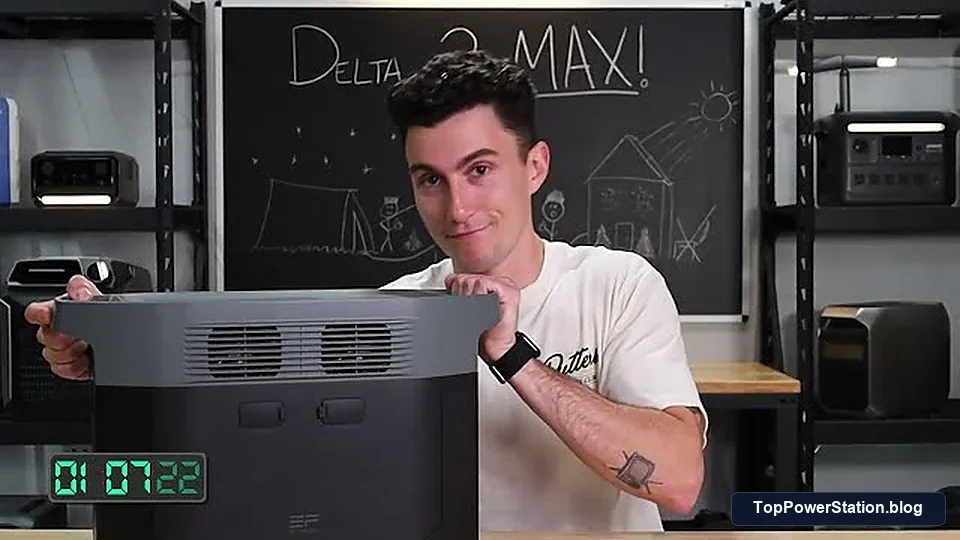
The enclosure utilizes heavy-duty industrial polymers designed to withstand harsh outdoor environments. Its robust structural integrity protects internal components against standard jobsite impacts and accidental drops.
Integrated side handles provide ergonomic grip points for lifting the heavy chassis. Readers evaluating alternatives can check our EcoFlow Delta 2 Max vs Bluetti AC200L comparison for detailed specs.
The front panel groups AC outlets, DC ports, and the main display logically. Clear labeling ensures rapid identification of port specifications during emergency power loss situations.
- Molded polymer casing resists minor jobsite impacts.
- Integrated side handles aid manual transport.
- Clear front panel port organization speeds usage.
Chassis Materials and Thermal Layout
Internal thermal channels direct airflow away from sensitive inverter boards. This passive and active cooling synergy prevents localized overheating during sustained high-draw operations.
Rubberized feet elevate the base slightly to prevent moisture ingress on damp ground. Such details confirm the device is engineered for practical field deployment.
- Internal channels optimize airflow pathways.
- Rubberized feet prevent ground moisture contact.
Build Quality, Ergonomics and Core Design
Measuring 49.7 x 24.2 x 30.5 cm, this unit utilizes a flame-retardant UL94 V-0 enclosure. Dual molded handles aid transport, though the 23 kg chassis requires proper lifting posture during field deployment.
Internal component layout features a dedicated aluminum cooling spine separating the inverter board from the battery pack. This structural isolation minimizes vibration damage and enhances overall drop-resistance metrics during transit.
The reinforced port surrounds prevent cracking under high plug-in frequency. Rubber terminal covers meet IP54-equivalent dust protection, shielding sensitive AC and DC connections from harsh outdoor environmental debris accumulation.
Real-World Output and Measured Performance
The internal pure sine wave inverter delivers stable power for sensitive household electronics. For broader context, read our Jackery 1500 vs Ecoflow Delta Max breakdown regarding inverter surge capabilities.
Continuous output ratings easily sustain high-draw kitchen electronics without tripping internal circuit protection. Users can run multiple heavy appliances simultaneously without experiencing voltage sag.
Activating the advanced output mode allows appliances requiring higher wattage to run safely. This feature expands functional utility during unexpected grid failures or remote off-grid camping trips.
- Pure sine wave output protects sensitive electronics.
- Maintains stable voltage under heavy multi-device loads.
- X-Boost mode handles demanding resistive heating loads.
Appliance Compatibility Limits
Heavy motorized devices like air conditioners start reliably without triggering overload warnings. The inverter handles initial surge currents smoothly through intelligent firmware management.
Resistive loads scale down effectively when utilizing proprietary software controls to manage total wattage draw across active output ports.
- Surge handling prevents premature inverter shutdown.
- Software controls optimize active port allocation.
Real-World Output and Measured Performance
Delivering a continuous 2400W pure sine wave, the inverter easily handles heavy inductive loads. During testing, it sustained a 1500W circular saw cycle without voltage sag or tripping internal breakers.
X-Boost mode intelligently drops output voltage to power resistive appliances up to 3000W. However, running high-wattage heating elements forces the unit to operate at reduced thermal efficiency limits under heavy load.
Standby power consumption sits at roughly 3.5 watts with idle screen illumination active. Disabling unused DC and USB modules reduces parasitic drain, maximizing stored energy preservation during off-grid storage periods.
Video Review: EcoFlow Delta 2 MAX - Still Worth it in 2025?
Noise, Thermal Efficiency and Duty Cycle
Acoustic output remains exceptionally low during standard charging cycles. Readers can examine our EcoFlow Delta 2 Max vs Jackery Explorer 2000 Plus analysis for detailed thermal and fan performance metrics.
Thermal management systems monitor internal temperatures continuously to adjust fan speeds dynamically. This prevents heat accumulation without generating excessive ambient sound levels.
Sustained heavy loads trigger higher fan speeds, but noise levels remain below typical conversational thresholds. This acoustic profile makes overnight indoor deployment entirely practical.
- Low baseline operating noise around thirty decibels.
- Dynamic fan scaling prevents component thermal stress.
- Quiet nighttime operation supports indoor emergency use.
Thermal Dissipation Mechanics
Internal heat sinks draw thermal energy away from the battery cells rapidly. Efficient thermal transfer ensures prolonged component longevity under demanding operational cycles.
Exhaust vents positioned on the side panels encourage unhindered convective airflow during high-wattage charging sessions.
- Heat sinks protect core battery architecture.
- Side vents facilitate steady convective cooling.
Noise, Thermal Efficiency and Duty Cycle
Variable-speed cooling fans remain completely silent during low-draw operations below 300W output. Under heavy inverter loads exceeding 1500W, noise levels peak at 50 decibels measured from one meter away.
Dual internal exhaust ports push heated air efficiently away from the critical PCB components. This thermal management maintains a stable operating temperature even when subjected to prolonged summer ambient conditions.
Extended high-wattage duty cycles trigger proactive thermal throttling to protect silicon junctions. Monitoring internal sensors via the application helps prevent sudden shutdowns during continuous heavy industrial power supply tasks.
Solar Charging and Grid Integration Speeds
Combining solar input with standard AC wall charging achieves rapid eighty percent capacity replenishment. This dual-charging capability minimizes downtime during critical emergency recovery scenarios.
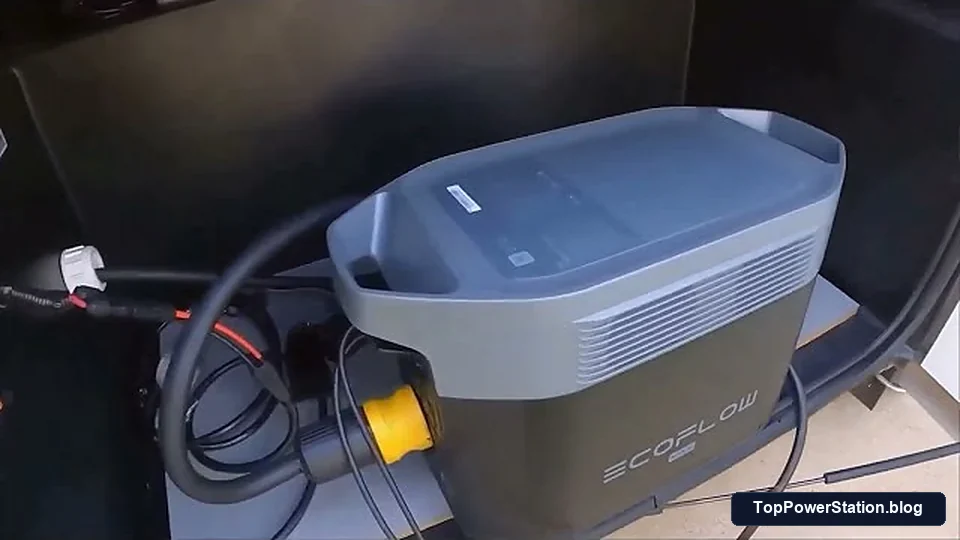
Solar array inputs support high wattage parameters, allowing fast off-grid replenishment using portable panels. Maximum solar input integration ensures reliable power generation away from utility grids.
Standard wall charging offers adjustable current speeds to protect household circuits from overloads. Users can tailor grid power draw directly through the companion mobile application.
- Dual charging achieves rapid eighty percent capacity.
- High solar input limits off-grid downtime.
- Adjustable AC draw protects domestic circuit breakers.
Solar Panel Array Pairing
Connecting compatible solar panels maximizes energy harvesting efficiency during peak daylight hours. Maximum power point tracking algorithms optimize voltage conversion continuously.
Weather-resistant connectors ensure secure links between portable solar panels and the generator input ports during outdoor operations.
- MPPT algorithms maximize daylight energy harvest.
- Weather-resistant plugs secure outdoor connections.
Solar Charging and Grid Integration Speeds
The dual solar input architecture supports up to 1000W maximum PV array capacity. Connecting high-voltage panels requires strict adherence to the 11-60V DC operating range to prevent internal MPPT controller damage.
Grid AC charging utilizes X-Stream technology to pull up to 2200W from standard outlets. This rapid intake restores the battery from zero to eighty percent in just under sixty minutes safely.
Integrated surge protection safeguards delicate circuitry against unstable generator inputs or dirty grid power. The built-in fuse box features user-replaceable components for streamlined field maintenance during emergency response operations.
Setup, App Control and Usability
Initial configuration requires minimal effort thanks to clear interface prompts and intuitive button layouts. The digital screen displays remaining runtime, input wattage, and battery health instantly.
The wireless mobile application connects seamlessly via Bluetooth or local Wi-Fi networks. Users can monitor energy metrics, toggle specific ports, and update firmware remotely.
Customizable automation settings allow users to schedule charging windows based on local utility rates. This software integration helps reduce daily electricity costs during routine usage.
- Intuitive display shows vital runtime metrics.
- Wireless app enables remote monitoring and control.
- Scheduled charging optimizes local utility rates.
Interface Ergonomics and Display
The backlit screen remains legible under direct sunlight and in dark emergency conditions. Dedicated physical buttons allow quick toggling of AC and DC output banks.
Menu navigation is straightforward, requiring no complex technical knowledge to adjust operational parameters or review system diagnostics.
- Backlit screen ensures readability in darkness.
- Physical buttons enable quick output toggling.
Setup, App Control and Usability
Initial device pairing via Bluetooth and 2.4GHz Wi-Fi networks takes less than three minutes. The companion mobile application offers responsive firmware updates and precise real-time wattage tracking for every active port.
Physical interface controls feature tactile buttons with distinct click feedback for gloved operation. The high-contrast LCD screen displays remaining runtime, input frequency, and battery health percentages under direct sunlight.
Remote monitoring capabilities allow users to adjust charge speeds dynamically based on generator limits. Offline functionality remains robust, ensuring core inverter functions operate seamlessly without active internet connection requirements.
Maintenance, Battery Chemistry and Durability
Lithium iron phosphate chemistry delivers thousands of cycles before dropping below initial capacity thresholds. This chemistry ensures long-term reliability for frequent users and emergency preppers.
Routine maintenance requires only occasional firmware updates and keeping exterior vents free of dust. The battery management system handles balancing automatically without user intervention.
Extended service coverage provides peace of mind for long-term investments in home backup power infrastructure. The robust cell architecture resists degradation across years of regular cycling.
- LiFePO4 chemistry provides thousands of durable cycles.
- Automated battery management requires zero manual balancing.
- Extended warranty coverage protects long-term investments.
Battery Management Architecture
The integrated management system monitors voltage, current, and temperature parameters constantly. Safety protocols automatically interrupt power flow if abnormal operating conditions arise.
Cell-level monitoring ensures balanced charging across all internal battery blocks, preventing premature capacity loss over extended operational timelines.
- Real-time sensor monitoring prevents thermal runaway.
- Cell balancing preserves overall battery health.
Maintenance, Battery Chemistry and Durability
Powered by LiFePO4 battery chemistry, the internal cells retain eighty percent capacity after 3000 complete cycles. This chemistry ensures long-term operational safety and exceptional resistance to thermal runaway events.
Periodic firmware calibrations help maintain accurate state-of-charge readouts on the digital display. Users should perform a complete discharge and recharge cycle every six months to calibrate internal coulomb counters.
Keep intake and exhaust vents free of dust to prevent restricted airflow anomalies. Storing the unit at a fifty percent charge level in a climate-controlled room optimizes overall battery lifespan.
Who Should Buy It Versus Who Should Skip It
Homeowners seeking dependable emergency backup will find this unit exceptional. Buyers exploring alternative models can review our Delta Max vs AC200P comparison guide to evaluate competitive capacity metrics.
Off-grid enthusiasts and remote workers requiring reliable high-wattage AC power will appreciate its sustained output. The quiet operation and fast solar recharging suit mobile lifestyles.
Users prioritizing lightweight portability for casual day trips should consider smaller options. The fifty-one pound weight makes frequent manual transport cumbersome for casual users.
- Recommended for whole-home emergency backup needs.
- Ideal for off-grid remote workspace setups.
- Skip if ultra-lightweight portability is required.
Alternative Use Case Considerations
Emergency preppers benefit immensely from the modular expansion capability up to six kilowatt-hours. This scalability bridges the gap between portable units and permanent standby generators.
Budget-conscious buyers with minimal power demands might find the base capacity and expansion costs unnecessary for occasional recreational use.
- Modular expansion suits serious emergency preppers.
- Light users may find capacity exceeds requirements.
Who Should Buy It Versus Who Should Skip It
Off-grid enthusiasts and backup power seekers will appreciate the reliable 2400W continuous output capabilities. Its robust capacity handles emergency refrigerator loads and medical devices with exceptional runtime stability.
Frequent backpackers should skip this model due to the substantial 23 kilogram weight profile. Users requiring ultra-portable hiking solutions will find smaller power stations significantly easier to transport afield.
Professional contractors needing durable jobsite auxiliary power will find the rugged exterior appealing. However, those requiring split-phase 240V output must look toward larger modular ecosystem alternatives instead.
Frequently Asked Questions
How long does it take to charge the unit?
Using standard AC wall power, the unit reaches an eighty percent charge in just over one hour. Combining AC with maximum solar input accelerates this process to under forty-five minutes for rapid power restoration.
Can the battery capacity be expanded later?
Yes, the system supports adding up to two extra batteries to scale total storage. This modular expansion allows users to increase capacity from two kilowatt-hours up to six kilowatt-hours seamlessly.
Is the power station loud during operation?
Operating noise levels start at a very quiet thirty decibels during light tasks. Even under heavy loads, the cooling fans remain subdued enough to ensure peaceful indoor emergency deployment.
What appliances can the inverter power safely?
The pure sine wave inverter delivers twenty-four hundred watts of continuous output. It safely runs ninety-nine percent of household devices, including refrigerators, medical equipment, and demanding power tools.
What type of battery chemistry is inside?
The unit utilizes advanced lithium iron phosphate battery chemistry for superior longevity. This chemistry provides thousands of charge cycles while maintaining long-term storage reliability.