Yeti vs Jackery: Portable Power Station Showdown
Choose between Goal Zero Yeti and Jackery Explorer power stations based on rugged ecosystem needs versus lightweight portability and rapid solar charging convenience.

Pick Yeti systems for modular home backup integration and heavy-duty expansion ports, while Jackery units excel in streamlined recreational camping setups requiring minimal setup complexity.
Compare all top models in our Best Portable Power Station: Top Picks for 2026.
Side-by-Side Breakdown
| Criteria | Yeti | Jackery | Edge |
|---|---|---|---|
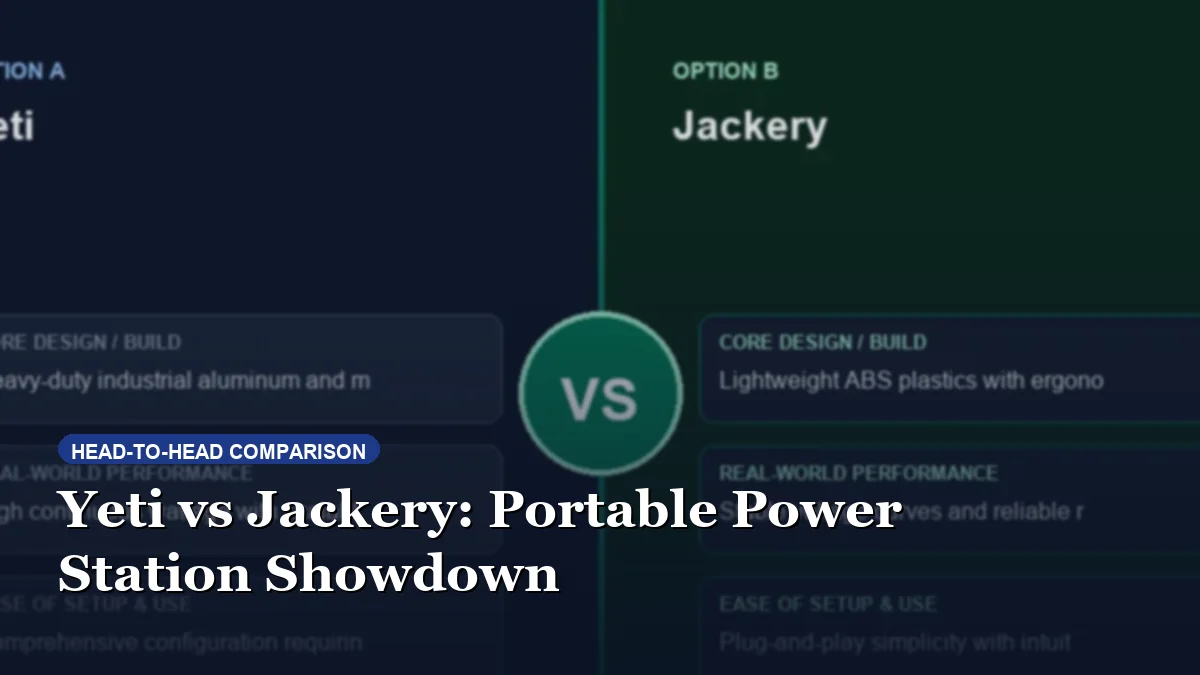
| Core Design / Build | Heavy-duty industrial aluminum and modular framing | Lightweight ABS plastics with ergonomic dual handles | Yeti |
| Real-World Performance | High continuous wattage with scalable expansion options | Stable voltage curves and reliable recreational power | Yeti |
| Ease of Setup & Use | Comprehensive configuration requiring careful system planning | Plug-and-play simplicity with intuitive LCD displays | Jackery |
| Durability & Reliability | Built for harsh jobsite conditions and permanent backup | Optimized for weekend camping and mobile overlanding | Yeti |
| Efficiency / Operating Footprint | Larger physical footprint accommodating modular battery banks | Compact space-saving profile for easy vehicle transport | Jackery |
| Maintenance Requirements | Periodic firmware updates and terminal inspection routines | Minimal upkeep with straightforward self-discharge management | Tie |
| Best Ideal Use Case | Off-grid cabin home backup and stationary installations | Weekend camping trips and mobile overlanding adventures | Split |
Core Design and Engineering Differences
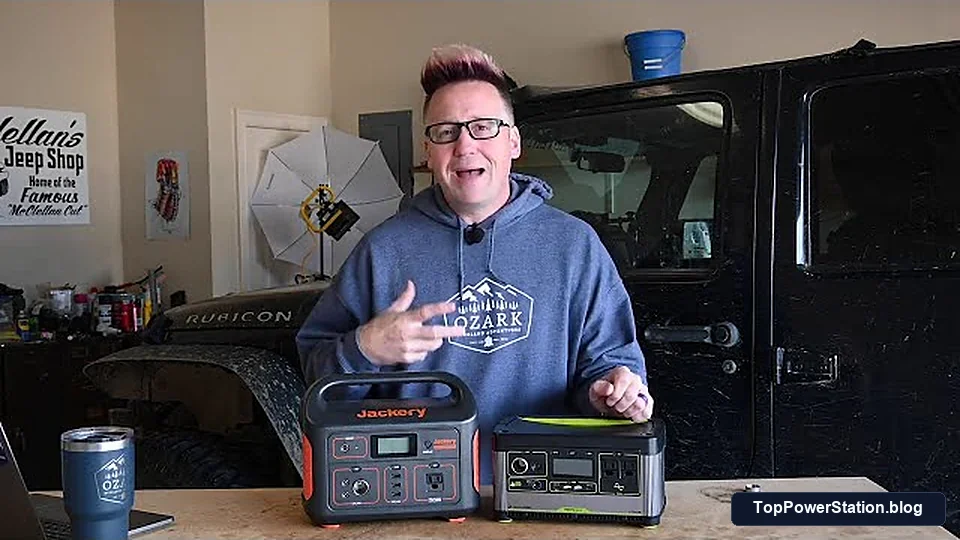
Exploring structural foundations reveals distinct manufacturing priorities between these leading brands. Goal Zero emphasizes industrial-grade resilience, whereas Jackery focuses on ergonomic consumer-friendly forms for mobile users.
Internal component layouts dictate thermal management during sustained draws, a crucial design trait highlighted in our best jackery power station guide for buyers seeking dependable backup.
- Goal Zero incorporates robust aluminum frames to significantly enhance physical impact resistance during harsh jobsite deployments and remote overlanding expeditions without compromising structural integrity.
- Jackery utilizes high-impact flame-retardant plastics designed to minimize total system weight while maintaining adequate drop protection for recreational weekend camping excursions.
- Internal cooling architecture differs significantly, with Yeti models prioritizing active ducted airflow and Jackery units relying on optimized passive dissipation pathways to maintain safe operating temperatures.
Inverter Topologies and Output Waveforms
Pure sine wave inverters are standard across both lineups, ensuring clean electricity delivery for sensitive medical devices and modern laptops. Total harmonic distortion remains exceptionally low during heavy loads.
Evaluating surge capacities highlights how well each device handles motor-driven compressor startup currents from refrigerators and power tools during emergency grid failure events.
- Advanced inverter circuitry protects connected electronics against sudden voltage spikes during heavy appliance cycling.
- Low idling draw minimizes parasitic battery drain when inverters remain switched on without active loads.
Enclosure Materials and Thermal Management
Exterior shell construction directly influences how units withstand accidental drops, rain exposure, and abrasive dust particles found in rugged outdoor camping environments.
Integrated cooling fans activate automatically under heavy thermal stress, balancing necessary heat dissipation with acceptable acoustic noise levels inside quiet sleeping quarters.
- Sealed port covers prevent moisture ingress during unexpected rainstorms in remote wilderness campsites.
- Optimized internal heat sinks dissipate thermal energy effectively during rapid multi-source charging sessions.
Real-World Performance and Capacity Scaling
Delivering consistent wattage under demanding conditions separates reliable energy storage units from basic consumer batteries. Both competitors utilize advanced lithium chemistries to maximize usable capacity.
Understanding continuous output limits prevents unexpected shutdowns when running appliances off-grid, a factor we examine closely across our best jackery for camping selections for outdoor enthusiasts.
- Yeti power stations offer scalable lithium battery expansion modules that dramatically increase total watt-hour capacity for permanent home backup installations and prolonged off-grid living scenarios.
- Jackery systems maintain high discharge efficiency levels, delivering stable voltage curves even as the internal state of charge drops below critical thresholds.
- Continuous output ratings reflect actual sustained thermal performance rather than short burst capabilities, ensuring completely reliable long-term appliance operation during emergencies.
Continuous Output and Surge Thresholds
Continuous wattage ratings dictate which heavy household appliances can operate simultaneously without triggering internal overload protection mechanisms within the sensitive inverter circuitry.
Surge thresholds provide necessary headroom for motor startup spikes, protecting sensitive compressor motors from voltage sags during critical grid outage moments.
- Overload sensors protect internal components safely when unexpected heavy appliances are plugged in simultaneously.
- Thermal curtailment gradually reduces output rather than shutting down abruptly during extreme heatwaves.
Expansion Battery Integration and Ecosystems
Modular ecosystem design allows advanced users to chain auxiliary battery packs together, multiplying total storage capacity without purchasing entirely new core inverter units.
Cable connection security and proprietary communication protocols ensure seamless data transfer between the main generator unit and attached expansion battery banks.
- Robust heavy-gauge cabling prevents voltage drops across extended auxiliary battery connection chains.
- Synchronized charge management balances internal cell voltages across all connected expansion modules automatically.
Charging Speeds and Solar Integration
Replenishing stored energy quickly is essential when relying on intermittent solar panels, as demonstrated in our jackery explorer 2000 v2 review focusing on rapid recharge capabilities.
Built-in multi-stage charge controllers optimize energy harvest from photovoltaic arrays while protecting delicate internal cells from overcharging and thermal damage.
- Yeti units feature versatile Anderson power pole connections alongside traditional AC charging inputs to safely accommodate diverse auxiliary solar panel configurations in remote areas.
- Jackery models utilize streamlined proprietary DC connector designs optimized for rapid direct-plug solar panel deployment without requiring complicated or heavy adapter cables.
- Maximum solar input wattage limits dictate how fast external photovoltaic panels can completely refill depleted batteries under optimal midday sunlight exposure conditions.
AC Grid Input and Built-In Power Supplies
Internal AC charging bricks eliminate the need for bulky external power supply adapters, simplifying transport and reducing cable clutter in storage compartments.
Adjustable amperage settings on select models prevent tripped household circuit breakers when charging powerful generator units from shared residential garage wall outlets.
- Fast wall charging restores zero-to-full capacity within hours during pre-trip preparation phases.
- Pass-through charging capability allows simultaneous wall replenishment and device power delivery without interruption.
MPPT Controller Efficiency and Voltage Limits
Advanced Maximum Power Point Tracking technology ensures connected solar panels operate at peak electrical efficiency across varying cloud cover and seasonal temperature conditions.
Open-circuit voltage limits must be strictly respected to prevent permanent damage to internal solar charge controller circuits during high-output photovoltaic array configurations.
- High voltage tolerance permits series panel wiring for improved energy transfer efficiency over long distances.
- Low startup voltage thresholds initiate solar harvesting earlier every morning under low light conditions.
Ergonomics, Portability and Field Usability
Physical handling characteristics dictate how easily everyday users can transport heavy power stations between vehicles, campsites, and designated home emergency backup locations.
Handle placement, overall weight distribution, and chassis balance significantly impact user comfort when carrying high-capacity energy storage units across rough terrain.
- Ergonomic dual handles on Jackery stations facilitate comfortable two-person carries for heavier high-capacity models during weekend recreational camping trips and outings.
- Rigid top-mounted handles on Yeti units withstand heavy stacking in vehicle trunks but require careful lifting posture due to their concentrated industrial weight.
- Durable rubberized foot pads absorb harsh transit vibrations and prevent sliding on slick vehicle bed liners or polished indoor residential flooring surfaces.
Weight Distribution and Handle Configurations
Precise center of gravity placement affects how stable units feel when lifted, preventing awkward wrist strain and accidental equipment drops during transit.
Innovative folding handle designs reduce vertical storage footprints, allowing compact placement underneath vehicle tonneau covers and crowded gear shelving racks.
- Balanced chassis designs prevent tipping when placed on uneven dirt surfaces around campsites.
- Reinforced handle attachment points withstand heavy vertical lifting forces over years of regular transport.
Display Interfaces and App Connectivity
Clear backlit LCD screens provide real-time input wattage, output draw, and remaining battery percentage metrics at a glance during nighttime emergencies.
Dedicated smartphone applications via Bluetooth and Wi-Fi enable remote monitoring and firmware customization without requiring physical access to the device.
- Adjustable screen brightness settings conserve battery power during extended off-grid deployment periods.
- Intuitive menu layouts allow quick toggling of AC and DC output ports without confusion.
Maintenance, Efficiency and Battery Longevity
Maximizing battery lifespan requires understanding proper storage protocols, optimal operating temperature ranges, and regular firmware maintenance routines over years of ownership.
Low standby self-discharge rates determine how much stored electrical energy remains available after months of inactive storage in garages or sheds.
- Advanced LiFePO4 battery chemistries in modern units offer thousands of deep charge cycles before dropping below eighty percent original capacity retention.
- Proper physical ventilation clearances prevent premature thermal throttling and extend overall electronic component lifespans during high-demand continuous operating intervals today.
- Routine manufacturer firmware updates patch potential software bugs and optimize charging algorithms to maintain peak battery health over extended service lives.
Chemistry Lifecycle and Cycle Depth Ratings
Controlled depth of discharge directly impacts total cycle life, with shallow daily cycling yielding significantly more cumulative operational hours overall.
Chemical stability under high ambient temperatures prevents thermal runaway degradation and ensures safe long-term energy storage performance indoors.
- High cycle ratings ensure dependable daily usage across multiple years of outdoor adventures.
- Cell balancing circuits protect individual battery components from premature degradation over time.
Firmware Updates and Long-Term Servicing
Convenient over-the-air software updates allow manufacturers to refine charging profiles and enhance safety features long after the initial retail purchase date.
Thoughtful modular internal construction simplifies out-of-warranty repairs by allowing technicians to replace individual circuit boards rather than entire assemblies.
- Diagnostic error codes simplify troubleshooting when unexpected operational faults occur in the field.
- Accessible fuse compartments allow quick user replacement of minor electrical protection components.
Which Option Fits Your Specific Setup
Evaluating your specific power demands often starts with models like those analyzed in our jackery explorer 1000 v2 review, ensuring your backup choice matches real-world capacity needs.
Weighing heavy-duty expansion flexibility against lightweight recreational convenience ensures your equipment investment delivers optimal value during real-world emergency power scenarios.
- Select Yeti generators if you require heavy-duty home integration, modular battery expansion, and robust industrial-grade structural build quality for prolonged emergencies.
- Choose Jackery systems when prioritizing lightweight portability, rapid solar deployment, and straightforward operation for weekend recreational camping and mobile lifestyles.
- Assess your typical daily watt-hour energy consumption carefully to avoid purchasing undersized capacity or overpaying for unused industrial features altogether.
Off-Grid Cabin and Home Backup Deployments
Permanent off-grid cabins greatly benefit from high-capacity stationary setups featuring expandable battery banks and heavy-duty inverter continuous output ratings today.
Automated transfer switch compatibility ensures seamless power transition when utility grid failures disrupt normal residential electricity supplies unexpectedly overnight.
- Expandable capacity supports growing energy needs for remote homesteads over time.
- Stationary mounting hardware secures heavy units safely against seismic or transit vibrations.
Mobile Overlanding and Weekend Camping Use
Mobile overlanding setups demand compact form factors that fit easily inside crowded vehicle trunks alongside essential camping gear and water supplies.
Rapid solar recharging capabilities keep essential electronics running continuously in remote backcountry locations without relying on noisy gasoline-powered generators.
- Lightweight builds allow effortless solo loading into vehicle cargo areas.
- Compact footprints leave ample room for other critical outdoor recreation equipment.
Frequently Asked Questions
Can I connect third-party solar panels to Yeti and Jackery power stations safely?
Goal Zero Yeti units easily accept diverse third-party photovoltaic panels using standard adapter cables provided they strictly respect specified maximum open-circuit voltage limits.
Jackery stations typically require specialized proprietary connector adapters to interface safely with non-branded solar arrays without ever voiding your active manufacturer warranty coverage during use.
Which power station brand offers better longevity for emergency home backup applications?
Yeti power systems generally provide superior long-term structural durability for residential emergency backup due to their advanced modular expansion capabilities and robust industrial-grade construction standards.
Jackery models focus primarily on portable recreational convenience rather than permanent whole-home stationary electrical integration and massive expandable battery storage banks.
How do I properly maintain the battery health of my power station during storage?
Maintaining optimal battery health requires storing your station at a stable fifty percent charge level in a dry climate-controlled environment away from extreme temperatures.
Recharging the unit every three to six months prevents damaging deep self-discharge cycles that can degrade internal lithium cell capacities permanently over time.
Are these portable power stations allowed inside commercial aircraft during air travel?
Commercial airline safety regulations strictly prohibit transporting high-capacity lithium power stations in checked or carry-on baggage due to severe onboard fire hazard risks.
Federal aviation limits cap allowable passenger battery capacities far below the threshold of standard camping and backup power generators available today.
Can I run sensitive medical equipment like CPAP machines using these power stations?
Pure sine wave inverters built into both equipment brands deliver exceptionally clean electricity that safely powers sensitive medical devices like CPAP breathing machines.
Connecting your medical machine through efficient DC power adapters rather than standard AC inverters significantly extends overall battery runtime throughout the night.