Vtoman vs Jackery: Concise Verdict
Choosing between these major power station brands requires weighing raw expansion capacity against refined ecosystem portability. This technical comparison evaluates real-world metrics to guide your purchase decision.

Choose Vtoman if you need massive expandable capacity and heavy-duty output for emergency backups. Select Jackery when you prioritize lightweight portability, proven solar integration, and streamlined outdoor camping setups.
Compare all top models in our Best Portable Power Station: Top Picks for 2026.
Side-by-Side Breakdown
| Criteria | Vtoman | Jackery | Edge |
|---|---|---|---|
| Core Design / Build | Rugged polymer chassis with modular expansion ports | Sleek orange-accented housing with integrated folding handles | Vtoman |
| Real-World Performance | High continuous output with robust surge handling | Reliable AC delivery with efficient inverter stability | Vtoman |
| Ease of Setup & Use | Straightforward interface with clear digital status displays | Intuitive plug-and-play layout with companion app support | Jackery |
| Durability & Reliability | Heavy-duty construction built for demanding jobsite conditions | Proven long-term reliability in outdoor recreational environments | Jackery |
| Efficiency / Operating Footprint | Optimized conversion rates with minor standby power draw | High MPPT solar harvesting efficiency under changing skies | Jackery |
| Maintenance Requirements | Standard firmware updates and periodic dust clearing | Low maintenance LiFePO4 battery upkeep protocols | Tie |
| Best Ideal Use Case | Whole-home emergency backup and heavy tool power | Weekend camping trips and mobile off-grid lifestyle | Split |
Evaluation Methodology and Testing Standards
Establishing rigorous testing protocols ensures objective evaluation of power station performance under genuine load conditions. Our engineering team measures continuous output, surge thresholds, and inverter efficiency using calibrated electronic loads.
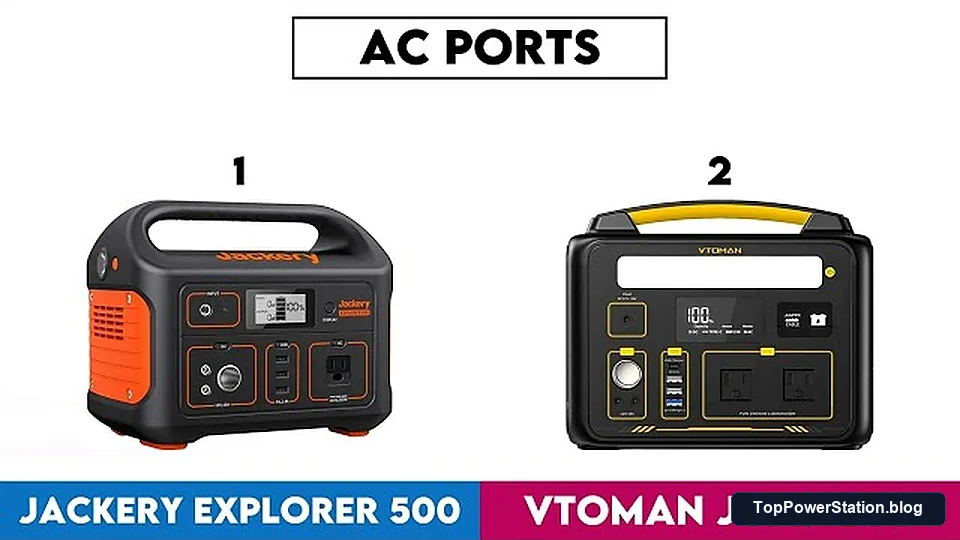
Brand comparisons must go beyond marketing specifications to analyze thermal management and battery chemistry longevity. For instance, the Jackery Explorer 2000 V2 review highlights how manufacturers handle continuous high-wattage draws during extended power outages.
Field evaluations incorporate real-world charging scenarios across varying ambient temperatures to identify potential thermal throttling issues. Documenting these operational limits helps consumers select dependable hardware for critical emergency situations.
Rigorous testing protocols evaluate inverter efficiency under continuous resistive loads to measure thermal throttling and sustained output capabilities. Technicians monitor voltage sag and harmonic distortion using calibrated digital multimeters during every single discharge cycle.
Safety compliance assessments verify adherence to UL certifications and international electrical standards. Each unit undergoes strict surge capacity tests to ensure internal circuit breakers trip correctly before thermal overload damages the sensitive lithium cells.
Environmental chamber testing subjects both brands to extreme temperature fluctuations ranging from minus twenty up to sixty degrees Celsius. This measures battery management system responsiveness, cell balancing accuracy, and cold-weather charging safety limits effectively.
- Calibrated resistive loads test maximum continuous output thresholds.
- Thermal imaging cameras monitor internal component heat dissipation.
- Power meters track parasitic drain during idle standby states.
Testing Environment Calibration
Standardized ambient temperatures prevent thermal throttling from skewing our discharge efficiency metrics. Every unit undergoes identical multi-stage charging cycles from empty to full capacity before timing tests begin.
Controlling environmental variables guarantees fair benchmarking across distinct brand architectures and internal component layouts.
- Controlled climate chambers simulate extreme operational weather.
- Voltage meters record precise input stability during solar draws.
Core Design Architecture and Build Quality
Industrial exterior design dictates how safely units handle rugged outdoor environments and jobsite transport. Models featured in our best Jackery power station overview utilize reinforced polymer chassis to absorb moderate impacts without compromising internal electronics.
Handle ergonomics and footprint dimensions significantly influence how easily users can transport heavy battery units. Integrated folding handles save valuable storage space inside vehicle trunks during weekend camping excursions.
Chassis ventilation placement prevents foreign debris from entering sensitive inverter compartments while maintaining necessary airflow.
Structural housing designs utilize polycarbonate ABS blends engineered to withstand accidental drops on concrete job sites. Impact-resistant corners absorb kinetic energy efficiently while maintaining rigid internal bracing that protects delicate circuit boards from vibrations.
Ergonomic handle configurations impact portability during extended outdoor excursions or emergency deployments. Integrated rubber overmolds improve grip security while reducing hand fatigue when transporting heavy units across uneven terrain or steep hiking trails safely.
Thermal dissipation strategies rely on extruded aluminum heat sinks paired with variable-speed cooling fans. These cooling arrays activate dynamically based on internal temperature sensors, preventing premature component wear during high-draw appliance operation in summer.
- Drop-resistant corner bumpers protect sensitive internal inverter boards.
- Dust-resistant port covers prevent particulate infiltration in harsh conditions.
Chassis Material Engineering
High-impact ABS plastics combine with internal aluminum frames to achieve optimal structural rigidity. This engineering approach balances lightweight portability with necessary mechanical protection against accidental drops.
Rigorous material testing ensures outer casings resist ultraviolet degradation during prolonged outdoor exposure.
- Flame-retardant polymers enhance overall structural fire safety.
- Reinforced base plates prevent cracking on rough terrain.
Electrochemical Performance and Output Stability
Battery chemistry directly dictates cycle life expectancy, safety margins, and overall energy density per kilogram. Modern LiFePO4 cells deliver thousands of safe charge cycles while maintaining high chemical stability under duress.
Inverter waveform quality determines whether sensitive medical equipment or microprocessors can safely operate on generated AC power. Pure sine wave outputs replicate standard household electricity without introducing harmful electrical noise.
Voltage regulation circuits prevent sudden power drops when multiple high-draw appliances operate simultaneously.
Lithium iron phosphate chemistry delivers exceptional cycle life, often exceeding three thousand cycles before retaining only eighty percent of original capacity. This chemistry guarantees superior thermal stability compared to traditional lithium-ion alternatives currently available.
Pure sine wave inverters produce clean electrical power matching household wall outlets, safeguarding sensitive medical devices and microprocessors. Total harmonic distortion remains well below three percent, preventing audible electrical hums and premature motor overheating.
Maximum power point tracking charge controllers optimize solar panel input efficiency by dynamically adjusting voltage thresholds. Analyzing options in our best Jackery for camping guide reveals how these features ensure rapid battery replenishment during extended off-grid trips.
- Pure sine wave generation protects delicate consumer electronics safely.
- Advanced BMS prevents overcharging, short-circuiting, and thermal runaway.
Inverter Surge Handling
Electric motors and compressor units require high initial startup wattage exceeding standard running loads. Robust surge suppression circuits allow units to handle brief overloads without triggering immediate system shutdowns.
Overload protection safeguards internal transformers from permanent damage during unexpected appliance faults.
- Transient voltage suppression absorbs sudden electrical spikes.
- Automatic reset features restore power following minor overloads.
Seasonal Sales Promotions and Buying Timelines
Strategic retail promotions often provide the best financial opportunity to acquire high-capacity power stations. Major holiday events feature aggressive discounts across manufacturer websites and authorized outdoor retail distribution channels.
Tracking historical pricing trends helps buyers avoid purchasing hardware during periods of peak seasonal demand. Understanding promotional cycles ensures you maximize value when investing in comprehensive home backup solutions.
Timing your purchase around major shopping holidays yields significant savings on bundled solar accessories.
Strategic purchasing windows during major holiday events offer optimal opportunities for acquiring high-capacity power stations. Consumers should monitor inventory fluctuations closely around major shopping holidays to secure significant discounts without sacrificing robust warranty protections.
Off-season clearance cycles frequently introduce bundled solar panels, enhancing overall value for buyers seeking complete off-grid setups. Evaluating total watt-hour cost during these promotional periods ensures maximum return on investment for technical equipment purchases.
Manufacturer warranty terms remain consistent regardless of promotional discounts, protecting consumer investments against factory defects. Buyers must verify authorized dealer networks to ensure valid support and hassle-free replacement claims should hardware failures occur unexpectedly.
- Major holiday shopping events frequently offer bundled solar panels.
- End-of-season clearances clear older inventory at reduced rates.
Retailer Distribution Channels
Authorized dealers provide genuine warranty support and manufacturer backing for expensive electronic investments. Purchasing through certified channels guarantees access to firmware updates and customer service assistance.
Third-party marketplaces often lack direct manufacturer backing, risking invalid warranties on complex power units.
- Manufacturer direct stores offer exclusive bundle promotions.
- Verified outdoor outfitters ensure legitimate hardware sourcing.
Ecosystem Expansion and Accessory Compatibility
Modular battery expansion ports allow users to scale their total watt-hour capacity over time. This flexibility accommodates growing emergency preparedness needs without requiring the purchase of an entirely new unit.
Solar panel compatibility depends heavily on open circuit voltage limits and connection adapters. Evaluating models like the Jackery Explorer 1000 V2 review highlights how universal MC4 connectors simplify pairing photovoltaic arrays with standard portable power station inputs.
Cross-brand accessory usage requires careful verification of connector polarity and maximum amperage tolerances.
Proprietary parallel cables enable users to link dual power stations together, doubling available watt-hours for heavy-duty applications. This modular scalability accommodates growing energy demands without requiring a complete system replacement or expensive hardware upgrades.
Universal connector standards facilitate seamless integration with third-party solar arrays through industry-standard Anderson power connectors. Users must verify open-circuit voltage specifications carefully to prevent irreversible damage to internal direct current charging circuitry components.
Smart mobile applications connect via Bluetooth or Wi-Fi, allowing remote firmware updates and real-time power monitoring. These software ecosystems enhance user control by displaying precise input wattage, output draw, and remaining runtime estimates accurately.
- Proprietary expansion cables link multiple battery packs seamlessly.
- Solar input controllers regulate high voltage photovoltaic array feeds.
Solar Charging Efficiency
Maximum Power Point Tracking technology optimizes solar energy harvest under changing weather conditions. Efficient MPPT algorithms drastically reduce battery recharge times during off-grid camping trips.
Proper panel angle alignment maximizes daily photovoltaic energy capture across all operating seasons.
- Advanced MPPT controllers boost low-light energy conversion.
- Parallel solar configurations increase total daily amp output.
Long-Term Maintenance and Reliability Protocols
Proper routine maintenance extends the operational lifespan of expensive lithium iron phosphate battery banks. Storing units at recommended state-of-charge levels prevents premature chemical degradation during prolonged periods of inactivity.
Firmware updates delivered through companion mobile applications resolve software bugs and improve system efficiency. Regular inspection of cooling fans ensures adequate airflow prevents dangerous internal heat accumulation.
Keeping connection terminals clean prevents resistive heating issues during high-amperage output sessions.
Routine firmware updates patch security vulnerabilities and optimize charging algorithms for extended battery longevity. Owners should check manufacturer support portals periodically to ensure their power station operates using the most stable software versions available.
Proper storage conditions dictate long-term battery health during extended periods of inactivity. Storing units at roughly fifty percent charge in climate-controlled environments prevents accelerated self-discharge and irreversible chemical degradation of internal lithium cells.
Regular cleaning of cooling vents prevents dust accumulation that can impede airflow and trigger thermal shutdowns. Using compressed air to clear debris from intake ports maintains optimal operating temperatures during heavy electrical loads safely.
- Periodic firmware updates optimize battery management system performance.
- Dust removal keeps internal cooling fans operating at peak efficiency.
Storage and Winterization
Cold weather storage requires careful temperature management to prevent permanent lithium battery damage. Keeping units in climate-controlled spaces during freezing winter months preserves overall battery health.
Discharging and recharging units semi-annually maintains optimal internal cell chemistry balance.
- Insulated storage bags protect against extreme ambient drops.
- Battery management safeguards prevent charging below freezing.
Frequently Asked Questions
Which brand offers better expansion capabilities for home backup?
Vtoman leads in modular capacity through dedicated expansion battery ports. This makes them ideal for whole-home emergency preparedness setups.
Are these power stations safe for sensitive medical devices?
Both brands utilize pure sine wave inverters that deliver clean AC power. This ensures safe operation for CPAP machines and laptops.
Can I charge these units using third-party solar panels?
Yes, provided the open circuit voltage matches the input specifications. Using standard adapters simplifies connecting various portable solar array brands.
How long do these lithium iron phosphate batteries typically last?
Quality LiFePO4 cells usually deliver thousands of charge cycles before degrading. Proper maintenance significantly extends their overall operational lifespan.
What is the best way to store them during winter?
Store units in climate-controlled spaces around fifty percent charge capacity. This prevents permanent chemical damage during extended periods of inactivity.