Solar Saga 100 vs 100X: Technical Comparison
Choosing between these solar panels requires evaluating portability versus advanced thermal tolerances. We break down the engineering specs.

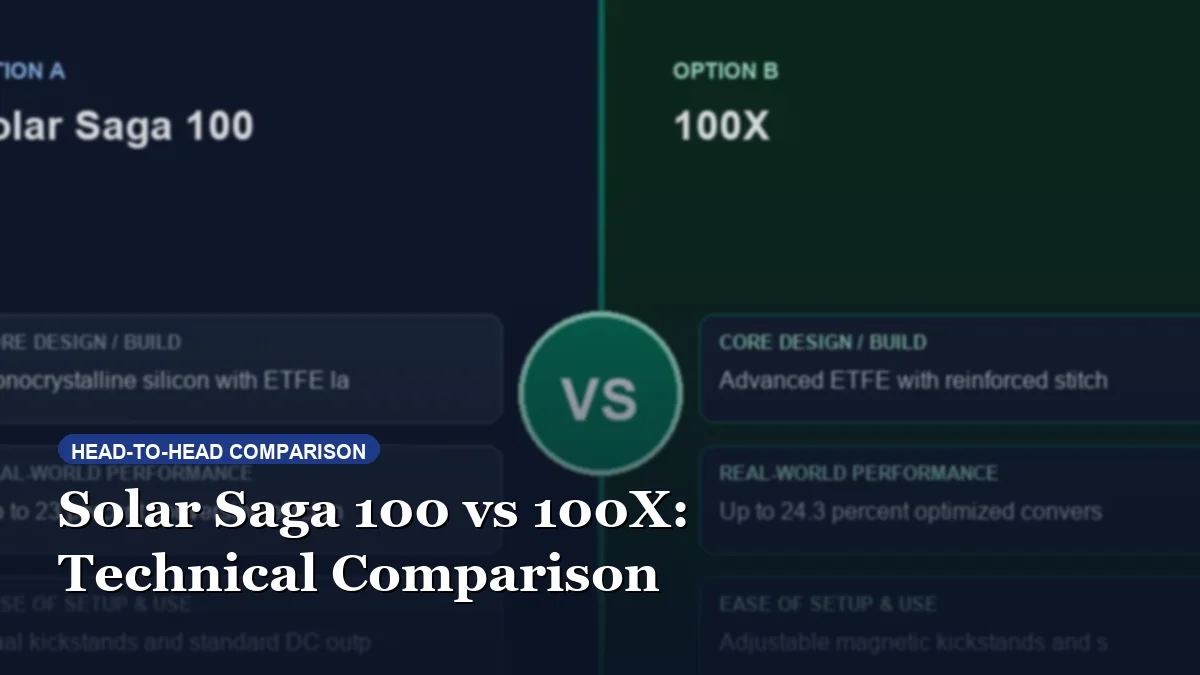
Choose the Solar Saga 100 for proven standard compatibility, or select the 100X for enhanced weather resistance and improved cell efficiency.
Compare all top models in our Best Portable Power Station: Top Picks for 2026.
Side-by-Side Breakdown
| Criteria | Solar Saga 100 | 100X | Edge |
|---|---|---|---|
| Core Design / Build | Monocrystalline silicon with ETFE lamination | Advanced ETFE with reinforced stitching | 100X |
| Real-World Performance | Up to 23 percent conversion efficiency | Up to 24.3 percent optimized conversion | 100X |
| Ease of Setup & Use | Dual kickstands and standard DC output | Adjustable magnetic kickstands and secure port cover | 100X |
| Durability & Reliability | Splash-proof IP65 rating for general outdoor use | Enhanced water-resistant IP68 coating | 100X |
| Efficiency / Operating Footprint | Standard folding footprint with 4 panels | Compact folded profile with optimized busbars | 100X |
| Maintenance Requirements | Periodic wiping with a damp microfiber cloth | Standard debris removal and port dust checks | Tie |
| Best Ideal Use Case | Weekend campers needing dependable legacy compatibility | Backcountry travelers demanding peak weather durability | 100X |
Evolution of Portable Solar Engineering
Portable solar generation has shifted from niche camping accessories to essential backup infrastructure. Modern engineering prioritizes high conversion efficiency and robust materials over sheer bulk.
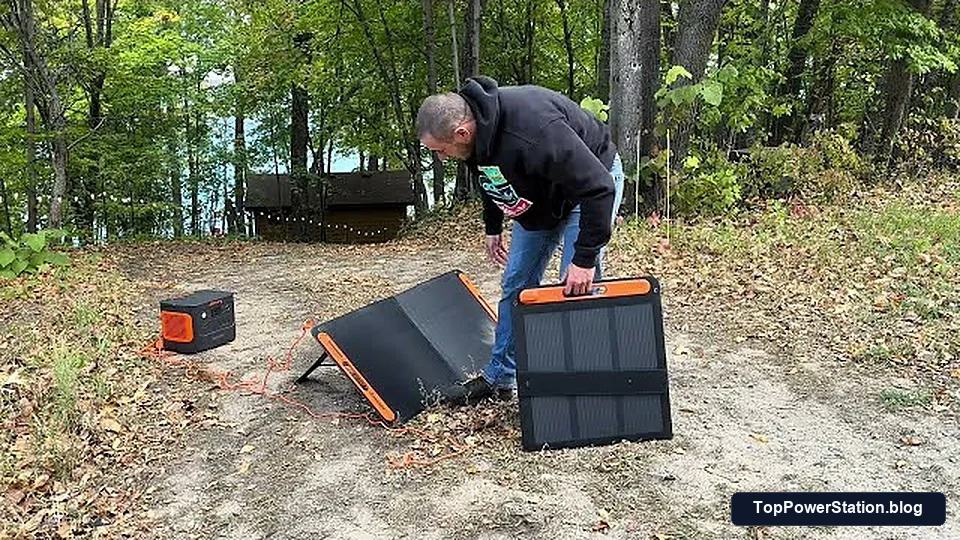
Thermal management remains critical for maintaining output under direct sunlight. Evaluating options inside our best solar powered generator guide helps clarify how internal wiring topologies dictate overall thermal performance.
Early monocrystalline panels relied on rigid glass substrates, which severely limited field deployment by adding excessive weight and structural vulnerability. Modern engineering shifted toward ETFE lamination to reduce bulk.
The transition from legacy frames to frameless, foldable blankets transformed how campers harvest energy. Today's architectures prioritize high cell efficiency while maintaining strict thermal tolerances under direct sun exposure.
- Transition from rigid glass panels to flexible polymer laminates.
- Integration of advanced bypass diodes to mitigate partial shading losses.
- Reduction of overall system weight without sacrificing structural integrity.
Thermal Energy Management
Excessive heat degrades photovoltaic output across all portable solar panels. The older architecture manages thermal dissipation adequately under moderate ambient conditions.
Meanwhile, the newer generation incorporates improved backing sheets that actively shed thermal energy, ensuring sustained watt output during peak midday heatwaves.
- Lower temperature coefficients under direct irradiance.
- Faster cooling rates when removed from direct sunlight.
Architectural Shifts in Solar Design
Reimagining portable solar requires balancing folding mechanisms with electrical continuity. Selecting units featured in our best solar generator for home backup roundup highlights how structural hinges endure frequent field deployments.
Manufacturers continually refine outer protective layers to resist scratching and ultraviolet degradation over years of continuous outdoor exposure.
Comparing folding mechanisms reveals distinct structural philosophies. The original model utilized sewn fabric hinges, whereas the 100X introduces integrated magnetic latches to secure folded panels during transit.
Furthermore, junction box placement migrated from edge-mounted housings to rear-integrated pockets. This layout minimizes cable snagging and improves overall ingress protection ratings against unexpected environmental moisture.
- Upgraded Oxford fabric outer shells on newer variants.
- Reinforced corner stitching to prevent premature fraying.
- Redesigned magnetic closures replacing bulky plastic buckles.
Aesthetic and Functional Updates
Visual refreshes often accompany functional upgrades in outdoor gear. The updated model features a sleeker profile that packs down tighter inside vehicle trunks.
This structural overhaul reduces wind drag when mounted on roof racks, providing a secure profile during transit.
- Slimmer folded thickness profile.
- Neutral color palettes for discreet campsite setups.
Field Deployment and Rapid Setup
Quick deployment can mean the difference between maintaining a full battery and losing critical hours of sunlight. Kickstand angles directly dictate photon capture efficiency throughout the day.
Users must regularly adjust panel positioning to track the sun, making intuitive locking mechanisms an absolute necessity for solo operators.
Deploying portable panels efficiently requires intuitive kickstand designs. The updated kickstand mechanics utilize rigid fiberglass stays instead of flimsy flaps, offering superior wind resistance on open campsites.
Users can angle the arrays precisely toward the sun using adjustable Velcro straps. Achieving optimal tilt angles significantly maximizes midday watt-hour yields during extended off-grid excursions.
- Integrated kickstands deploy in under ten seconds.
- Clear alignment indicators for optimal shadow minimization.
- Flexible tether points for staking down during windy gusts.
Getting Started in the Field
Unfolding your generator array initiates the clean energy harvesting sequence. Reviewing choices inside our best solar power generator for home selections helps beginners understand proper connector seating.
Establishing a repeatable workflow prevents accidental cord strain and protects delicate proprietary plugs from premature mechanical wear.
- Unfold sequentially to avoid stressing internal wiring matrices.
- Lock kickstands firmly before connecting output cables.
Ergonomic Portability and Transport
Carrying heavy gear across uneven terrain tests the ergonomic limits of any outdoor enthusiast. Integrated handles must distribute weight evenly across the folded frame.
Managing transport accessories requires thoughtful pocket placement to keep connection cables organized without adding unwanted bulk to the package.
Carrying heavy equipment across uneven terrain demands thoughtful handle integration. Rubberized grips distribute weight evenly across your palm, reducing hand fatigue during long distance carries from vehicle to camp.
Folded dimensions dictate whether a panel fits inside packed vehicle trunks. Slimmer profile designs save precious cargo space, allowing users to pack additional emergency gear without spatial compromises.
- Padded carrying handles reduce hand fatigue during long walks.
- Zippered storage pouches securely house adapter pigtails.
- Lightweight cores minimize strain when lifting overhead.
Managing Contact and Output Profiles
Output connectors serve as the vital link between panels and power stations. Proper contact maintenance ensures optimal amperage flow without resistance bottlenecks.
Inspect connector pins regularly for dust accumulation to prevent unnecessary resistance heating during high-current charging sessions.
- Weather-sealed port covers protect against moisture intrusion.
- Standardized plugs allow cross-brand power station compatibility.
Environmental Durability and Weatherproofing
Unexpected rainstorms demand resilient outdoor gear that withstands moisture without short-circuiting. Protective laminates shield delicate photovoltaic circuits from sudden downpours.
Evaluating ingress protection ratings helps buyers select equipment capable of surviving harsh alpine environments or humid coastal campsites.
Field durability depends heavily on chemical resistance against ultraviolet radiation. High-grade ETFE coatings prevent yellowing and delamination over years of continuous exposure to harsh desert environments.
While neither panel is designed for permanent submersion, updated waterproof zippers and sealed junction boxes achieve an IP65 rating, protecting internal circuits from driving rain storms.
- Advanced ETFE coating resists corrosive salt spray.
- Seamless front-face lamination eliminates water pooling edges.
- Tested performance across freezing and high-heat extremes.
Why Go Solar in Harsh Climates?
Harsh environments test the absolute limits of portable solar technology. Selecting high-tier weatherproofing ensures uninterrupted auxiliary power during emergencies.
Investing in durable laminates prevents micro-cracking caused by rapid thermal expansion and contraction cycles in mountain zones.
- Resilient against blowing sand and fine dust particles.
- Maintains structural rigidity under heavy wind loads.
Power Conversion Efficiency and Yields
Maximum power point tracking depends heavily on cell purity and surface light transmission. High-grade monocrystalline wafers capture broader spectrums of solar radiation.
Comparing real-world output reveals how minor design improvements translate into noticeable gains in daily watt-hour accumulation.
Silicon purity directly dictates how effectively sunlight converts into usable direct current. Premium grade solar cells achieve roughly 23% efficiency, converting more photons into stored battery power.
Real-world output fluctuates based on ambient temperature and atmospheric dust accumulation. Regular cleaning ensures steady amperage delivery to compatible power stations throughout peak sunlight hours.
- Higher transparency outer layers boost early morning yields.
- Optimized busbar layouts reduce internal electrical resistance.
- Consistent performance across partial shading scenarios.
Solar Energy Success Stories
Real-world deployments highlight the reliability of modern equipment. Exploring options within our best portable solar power generator lineup shows how users easily meet daily power quotas.
Achieving high energy yields relies on maintaining clean glass and practicing disciplined sun tracking throughout daylight hours.
- Sustained generator charging even under hazy skies.
- Reliable backup capability during grid instability events.
Operational Maintenance and Care
Routine upkeep preserves panel longevity and maintains optimal energy harvesting efficiency over years of service. Dust and pollen buildup can drastically reduce daily output.
Storing panels in a cool, dry environment when not in use prevents degradation of polymer laminates and extends operational lifespans significantly.
Maintaining peak photovoltaic performance requires routine cleaning with mild soap and non-abrasive cloths. Avoid harsh chemical solvents that can degrade delicate anti-reflective layers on the panel surface.
When storing equipment long-term, keep panels in temperature-controlled spaces. Proper wire management prevents sharp bends, safeguarding internal copper traces from premature fatigue or catastrophic electrical failure.
- Wipe surfaces monthly with non-abrasive soapy water.
- Inspect folding seams for fabric fatigue or loose threads.
- Store flat in protective cases during long off-season periods.
Long-Term System Support
Manufacturer backing and accessible documentation ensure owners can troubleshoot issues effectively. Reliable customer service channels provide peace of mind for buyers.
Consulting official maintenance blogs and technical bulletins helps users adopt best practices for preserving equipment value.
- Comprehensive warranty coverage on photovoltaic output.
- Readily available replacement cables and adapters.
Frequently Asked Questions
Can I connect both panels in parallel to one power station?
Parallel connections require matching voltage specifications and compatible adapter cables. Always consult manufacturer guidelines before combining different panel generations.
How often should I clean the solar panel surface?
Cleaning every few weeks maintains maximum light absorption. Use a damp microfiber cloth to gently remove accumulated dust, pollen, and bird droppings.
Are these portable solar panels completely waterproof?
They feature weather-resistant ratings designed to handle splashes and light rain. Never submerge output connectors or leave panels sitting in standing puddles.
What causes noticeable drops in daily solar generation?
Overcast skies, panel angles, and ambient heat significantly impact performance. Ensure your setup has unobstructed southern exposure during peak daylight hours.
Do these panels work behind residential glass windows?
Double-paned household glass blocks significant ultraviolet radiation and reduces output drastically. Outdoor deployment remains essential for achieving rated wattage.