Portable Power Station vs Ups Backup
Choosing between a versatile portable power station and a dedicated UPS backup depends on your critical uptime needs. Understanding their underlying power topologies ensures your sensitive electronics remain protected.

Pick a portable power station for outdoor versatility and large appliance runtimes, or choose a UPS backup for instantaneous server switching and seamless desktop computer failovers.
Compare all top models in our Best Portable Power Station: Top Picks for 2026.
Side-by-Side Breakdown
| Criteria | Portable Power Station | Ups Backup | Edge |
|---|---|---|---|
| Core Design / Build | Ruggedized exterior with integrated handles and multiple AC/DC ports. | Compact desktop or rack-mounted chassis optimized for stationary utility. | Portable Power Station |
| Real-World Performance | Delivers hundreds of watt-hours for heavy appliances and multi-device charging. | Provides short-term bridging power specifically designed to safely save work. | UPS Backup |
| Ease of Setup & Use | Plug-and-play operation requiring manual activation for grid interruption recovery. | Automatic voltage regulation and sub-10ms transfer times for zero dropouts. | UPS Backup |
| Durability & Reliability | Utilizes advanced LiFePO4 chemistry supporting thousands of deep discharge cycles. | Relies on sealed lead-acid or smaller lithium packs built for standby duty. | Portable Power Station |
| Efficiency / Operating Footprint | Larger physical footprint with higher idle conversion losses during long standby. | High standby efficiency designed for continuous 24/7 electrical grid monitoring. | UPS Backup |
| Maintenance Requirements | Minimal upkeep involving periodic firmware updates and standard battery health checks. | Requires routine battery replacements every few years depending on thermal exposure. | Portable Power Station |
| Best Ideal Use Case | Off-grid camping, emergency home backup, and powering remote job sites. | Protecting desktop computers, network routers, and sensitive office servers. | Split Choice |
Core Architecture & Physical Enclosures
Evaluating external power equipment requires examining physical enclosures and structural housings. Much like protective acrylic display boxes shield sensitive retail items, robust polymer casings protect internal lithium cells from environmental hazards.
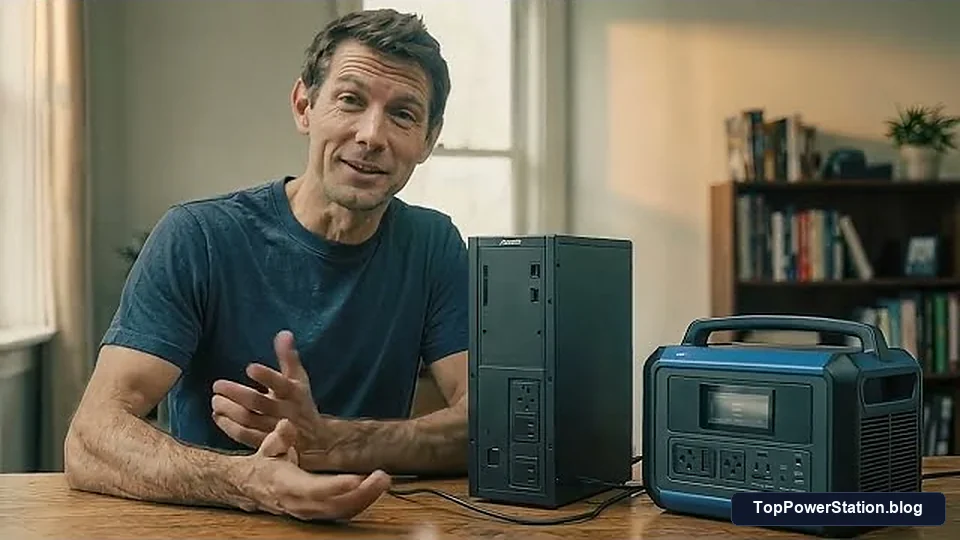
Rugged composite shells featured on the best portable power station models are designed to withstand heavy field vibrations. Conversely, uninterruptible power supplies utilize flame-retardant plastics engineered for stable indoor office environments.
Internal framing demands rigorous engineering to manage thermal dissipation during heavy electrical loads. Premium manufacturers utilize aluminum internal frames to reinforce structural integrity against accidental drops and constant warehouse handling stresses.
Portable power stations integrate inverter modules, lithium chemistry packs, and thermal management into rugged polymer chassis, whereas traditional uninterruptible power supplies prioritize compact desktop footprints, lead-acid batteries, and basic step-wave generation.
Enclosure engineering requires robust flame-retardant thermoplastics rated at UL94 V-0 standards alongside internal aluminum framing to dissipate heat effectively, preventing thermal runaway during continuous high-wattage inverter loads or rapid charging cycles.
Airflow dynamics dictate system reliability, utilizing intelligent PWM controlled fans to pull ambient air across insulated copper busbars while isolating sensitive control microcontrollers from dust ingress and environmental moisture hazards during outdoor deployment.
- Impact-resistant exterior polymer shells
- Reinforced internal aluminum framing
- Optimized thermal ventilation channels
Protective Enclosure Standards
Protective housing construction directly influences overall unit longevity during daily operations. High-grade polymer resins prevent structural warping when exposed to elevated internal temperatures during fast charging cycles.
Sealed port covers block dust intrusion during outdoor expeditions. Standard office UPS units lack these heavy outdoor gaskets because they remain stationary indoors.
- Dust-resistant port sealing gaskets
- Flame-retardant ABS plastic grades
Technical Specifications & Power Capacities
Technical metrics dictate whether an energy storage device can handle high surge demands. Portable units frequently offer gigawatt-hour scale scalability, allowing users to attach expansion batteries for prolonged multi-day emergency outages.
UPS devices prioritize rapid transfer speeds over massive energy capacities. Their primary electrical objective is delivering stable sine wave power for mere minutes so computers execute safe shutdowns.
Inverter efficiency ratings determine how much stored energy converts into usable alternating current. High-frequency inverters achieve remarkable conversion rates, reducing thermal waste during continuous inverter operation under heavy loads.
Watt-hour capacity calculations determine runtime, scaling from compact 500Wh units for field electronics up to multi-kilowatt modular systems designed for whole-home emergency backups during extended municipal grid failures or severe weather events.
Surge wattage ratings evaluate transient motor loads, where advanced pure sine wave inverters handle 2000W continuous outputs with double-surge capabilities, vastly outperforming standard offline backup systems that struggle with inductive compressor startup demands.
Conversion efficiency metrics measure internal DC-AC losses, with premium topologies achieving 92 percent efficiency by utilizing advanced silicon carbide semiconductors instead of older, heat-generating MOSFET components common in budget consumer electronics.
- Scalable watt-hour storage capacities
- Sub-10ms automatic transfer switch times
- Pure sine wave AC output distortion
Detailed Electrical Parameters
Reviewing surge watt ratings prevents equipment damage when starting motorized appliances. Motor compressors demand triple their running wattage upon initial startup, requiring robust inverter overload protection.
Battery management systems monitor individual cell voltages to prevent catastrophic thermal runaway events. Modern firmware optimizes charging currents dynamically based on current ambient temperature readings.
- Dynamic battery management monitoring
- Overload surge protection thresholds
Related Equipment & Auxiliary Hardware
Modern energy systems integrate seamlessly with various auxiliary accessories to maximize utility. Solar panels, DC car chargers, and parallel cables expand how users replenish depleted battery banks in remote environments.
UPS systems generally interface directly with desktop computers via USB or serial cables. This direct data connection triggers unattended operating system shutdowns when battery reserves reach critical thresholds.
Accessory compatibility ensures long-term system flexibility. Standardized connectors and aviation plugs highlight top camping power stations capable of delivering secure high-amperage connections for demanding off-grid requirements.
Integrating portable generators requires specialized transfer switches and interlock kits to safely route high-amperage current into residential breaker panels without causing hazardous backfeeding into public utility distribution lines.
Solar panel arrays connect via standardized Anderson or MC4 ports, delivering unregulated DC voltage that internal Maximum Power Point Tracking controllers convert into optimal battery charging currents under changing meteorological conditions.
External expansion batteries utilize high-voltage communication cables to synchronize state-of-charge data, effectively doubling usable capacity while maintaining balanced cell wear across combined multi-module systems during heavy off-grid operational cycles.
- Portable solar panel charging cables
- USB communication interface links
- Standardized high-amperage DC connectors
Accessory Integration Protocols
Proper cable gauges prevent voltage drop during high-current charging cycles. Using manufacturer-certified wiring harnesses guarantees optimal safety compliance and prevents excessive connector heating issues.
External battery expansion modules utilize heavy-duty locking plugs. These mechanical locks prevent accidental disconnection during mobile deployment or severe weather events.
- Heavy-duty locking power plugs
- Certified low-resistance cabling
Engineering Experience & Manufacturing Workflows
Factory production workflows dictate the reliability of advanced electronic energy systems. Experienced engineering facilities enforce strict quality control measures throughout circuit board assembly and final battery pack integration.
Automated optical inspection machines scan printed circuit boards for microscopic solder defects. This rigorous testing minimizes field failure rates during intense commercial deployment or emergency residential power outages.
Thermal stress testing validates component durability under extreme operational climates. Manufacturers subject assembled units to rigorous temperature cycling chambers to uncover potential electronic weaknesses prior to distribution.
Automated assembly lines employ precision laser welding to secure nickel strips onto cylindrical lithium-ion cells, ensuring minimal internal resistance and preventing localized hot spots during high-amperage charge-discharge workflows.
Quality control protocols subject every manufactured inverter board to rigorous thermal imaging and high-pot dielectric tests to verify insulation integrity and catch microscopic component flaws before final warehouse packaging.
Firmware deployment engineers calibrate battery management systems using precise voltage thresholds, guaranteeing that low-voltage cutoffs and overcurrent protections engage reliably within milliseconds of a fault condition occurrence.
- Automated optical circuit board inspection
- Rigorous thermal stress chamber testing
- Strict factory quality control audits
Quality Assurance Standards
Quality assurance protocols ensure every unit meets international electrical safety certifications. Compliance with recognized testing laboratories guarantees safe consumer operation in residential environments.
Traceable serial numbers allow manufacturers to track component batches efficiently. This data transparency streamlines warranty services and rapid technical troubleshooting for end users.
- International electrical safety compliance
- Traceable component batch numbers
Advanced Operational Advantages & Tilting Inverters
Advanced power management features distinguish professional-grade hardware from basic consumer alternatives. Some industrial stations incorporate adjustable display panels and specialized tilting inverter topologies to optimize internal cooling airflow.
Optimized cooling angles prevent hot spots from forming near sensitive capacitor banks. This thermal management strategy significantly extends the operational lifespan of internal electronic components during continuous heavy usage.
User interface ergonomics ensure operators can monitor real-time wattage statistics instantly. Clear LCD screens display remaining runtime estimates, input wattage, and active output port statuses simultaneously.
Modern portable generators feature advanced bidirectional inverters that eliminate bulky external charging bricks, enabling ultra-fast AC recharging speeds that can restore a zero to eighty percent charge in under an hour.
Uninterruptible power supply units prioritize instant transfer times, whereas selecting top UPS power stations ensures you get bypass modes capable of protecting sensitive desktop computers and medical hardware.
Intelligent frequency synchronization allows these systems to match generator inputs seamlessly, preventing phase distortion and protecting connected inductive loads from experiencing harmful harmonic resonance during hybrid power delivery.
- Adjustable display viewing angles
- Enhanced thermal cooling airflow
- Real-time wattage status displays
Inverter Topology Benefits
Advanced inverter designs minimize harmonic distortion to protect delicate audio gear. Clean electrical output prevents annoying buzzing sounds in sensitive studio monitors and medical equipment.
Smart fan control algorithms adjust rotational speeds based on current thermal loads. This keeps operating noise levels exceptionally low during light standby duties in quiet office spaces.
- Low harmonic distortion output
- Smart temperature-regulated cooling fans
Specialized Cylindrical Cell Configurations & Form Factors
Internal battery architecture heavily influences the overall physical weight and lifespan of energy storage devices. Premium portable generators utilize high-density cylindrical lithium iron phosphate cells arranged in robust structural matrices.
Prismatic cells offer space-saving efficiency for compact office UPS backups. However, cylindrical cell configurations provide superior structural shock absorption during mobile transport across rugged terrain.
Optimizing internal spacing permits efficient heat dissipation between individual battery cells. This thermal breathing room prevents localized overheating during rapid high-amperage charging and discharging phases.
Battery pack architecture heavily relies on cylindrical 21700 or 18650 cells, arranged in strategic series and parallel groupings to optimize energy density while facilitating effective passive thermal dissipation across the internal housing matrix.
Structural epoxy layers and insulating barley paper separators provide crucial physical isolation between individual cells, safeguarding the overall battery assembly against puncture damage from severe mechanical shocks and vibration stress during transit.
Modular stackable designs utilize heavy-duty guide pins and spring-loaded high-current docking terminals, allowing users to expand total amp-hour reserves safely without dealing with exposed wiring or complex parallel connection harnesses.
- High-density cylindrical cell arrays
- Superior shock absorption matrices
- Optimized inter-cell thermal spacing
Form Factor Trade-Offs
Compact desktop form factors allow UPS units to tuck neatly beside computer towers. Choosing reliable home backup power stations ensures sturdy top handles for comfortable two-handed carrying during major emergencies.
Weight distribution is carefully engineered to prevent tipping during vehicle transit. Balanced internal layouts ensure safe handling when moving heavy high-capacity energy storage systems.
- Compact desktop tower footprints
- Balanced two-handed carry handles
Technical Support & System Maintenance Protocols
Maintaining optimal equipment health requires adherence to structured manufacturer guidelines. Routine firmware updates resolve software bugs and enhance overall battery charging efficiency over the device lifecycle.
Customer technical support teams assist users with troubleshooting complex inverter error codes. Comprehensive user manuals provide clear instructions for periodic battery calibration and safe long-term storage practices.
Proper storage conditions prevent premature capacity degradation during extended periods of non-use. Keeping internal battery levels around half charge prevents chemical stress while stored in climate-controlled environments.
Routine maintenance requires storing units at a partial state of charge in climate-controlled environments, preventing accelerated chemical degradation and preserving long-term lithium-ion health over years of intermittent emergency standby usage.
Firmware updates delivered via mobile applications patch potential security vulnerabilities and refine battery management algorithms, optimizing charging curves to extend overall cycle life expectancy under demanding daily operational routines.
Comprehensive diagnostic logs stored within internal non-volatile memory allow technical support teams to analyze past error codes quickly, streamlining warranty claims and facilitating rapid component-level hardware repairs.
- Periodic firmware update protocols
- Comprehensive error code troubleshooting
- Climate-controlled long-term storage
Maintenance Best Practices
Executing regular discharge cycles keeps internal battery chemistry active and accurate. Monthly testing ensures the system responds instantly during unexpected grid power failures.
Keeping ventilation ports clean from dust buildup prevents overheating malfunctions. Regular inspection of power cords ensures electrical safety during high-draw appliance operation.
- Monthly battery calibration cycles
- Dust-free ventilation port maintenance
Frequently Asked Questions
Can a portable power station replace a traditional desktop UPS?
While some models offer bypass modes, most portable stations lack the sub-10ms transfer times needed for sensitive servers. Therefore, a dedicated UPS remains better for computers.
How long do lithium batteries last in power stations versus UPS units?
Portable stations using LiFePO4 chemistry often exceed thousands of cycles. Standard UPS units using sealed lead-acid batteries typically require replacement every few years.
Is it safe to leave a portable power station plugged into the wall continuously?
Modern power stations feature advanced management systems that safely manage pass-through charging. However, traditional UPS units are specifically optimized for permanent grid standby duty.
What causes an inverter to produce audible buzzing noises?
Modified sine wave outputs can create electrical hums in sensitive audio equipment. Choosing units with pure sine wave output eliminates this annoying harmonic distortion.
How should I store my power equipment during the off-season?
Store your devices at roughly fifty percent charge in a dry, climate-controlled space. This preserves internal battery health and prevents severe chemical degradation over time.