Portable Power Station vs Dual Fuel Generator: Concise Verdict
Choosing between a battery-based system and an engine-driven fuel generator requires balancing silent convenience against continuous runtime. Understanding these distinct power delivery mechanisms ensures reliable emergency backup preparedness.

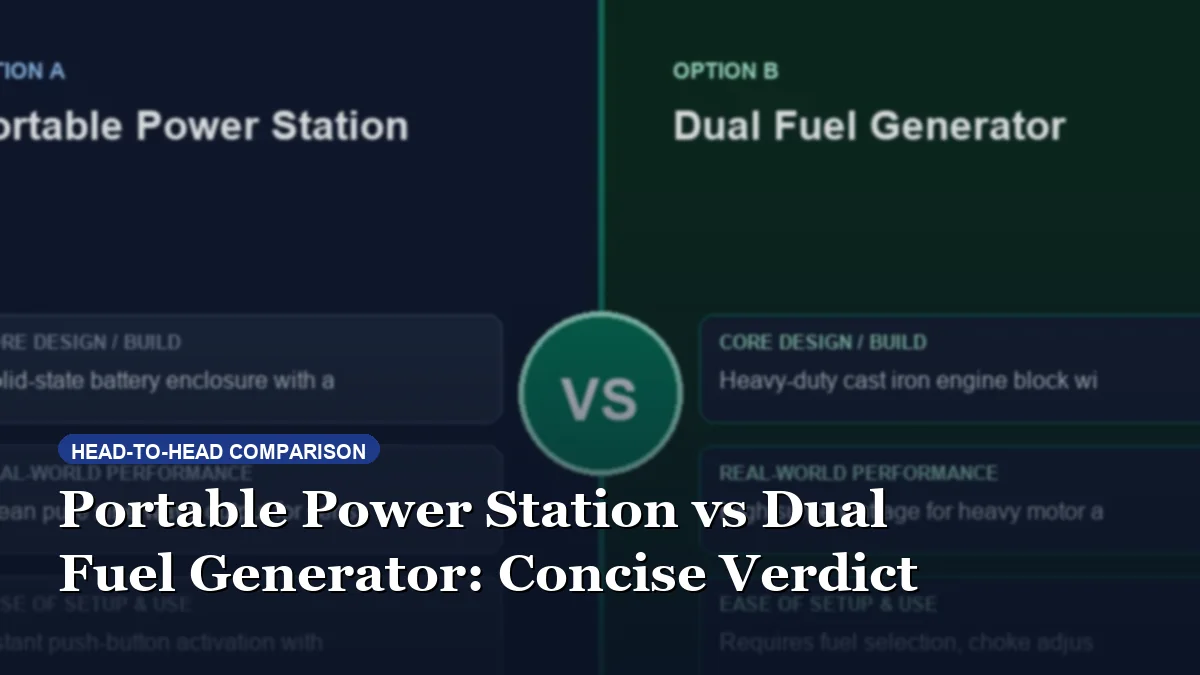
Choose the portable power station for indoor silence, zero maintenance, and apartment living. Select the dual fuel generator for multi-day grid outages requiring heavy continuous wattage and unlimited fuel swaps.
Compare all top models in our Best Portable Power Station: Top Picks for 2026.
Side-by-Side Breakdown
| Criteria | Portable Power Station | Dual Fuel Generator | Edge |
|---|---|---|---|
| Core Design / Build | Solid-state battery enclosure with advanced thermal management composites | Heavy-duty cast iron engine block with metal frame | Portable Power Station |
| Real-World Performance | Clean pure sine wave output for sensitive modern electronics | High surge wattage for heavy motor and compressor loads | Dual Fuel Generator |
| Ease of Setup & Use | Instant push-button activation with zero mechanical prep | Requires fuel selection, choke adjustment, and manual pull start | Portable Power Station |
| Durability & Reliability | Long-lasting lithium iron phosphate cells with thousands of cycles | Mechanical parts subject to wear, requiring proper winterization | Portable Power Station |
| Efficiency / Operating Footprint | Silent, zero-emission operation suitable for indoor bedrooms | Loud combustion engine requiring safe outdoor placement | Portable Power Station |
| Maintenance Requirements | Virtually maintenance-free beyond occasional firmware updates | Regular oil changes, air filter checks, and fuel stabilization | Portable Power Station |
| Best Ideal Use Case | Apartment backup, camping, and powering sensitive electronics | Multi-day home emergency backup and heavy job site tools | Dual Fuel Generator |
Core Architecture and Material Engineering
Modern lithium chemistry units rely on advanced solid-state enclosures and thermal management systems. Engineers leverage lightweight composites to protect internal battery modules from environmental degradation during heavy outdoor field operations.
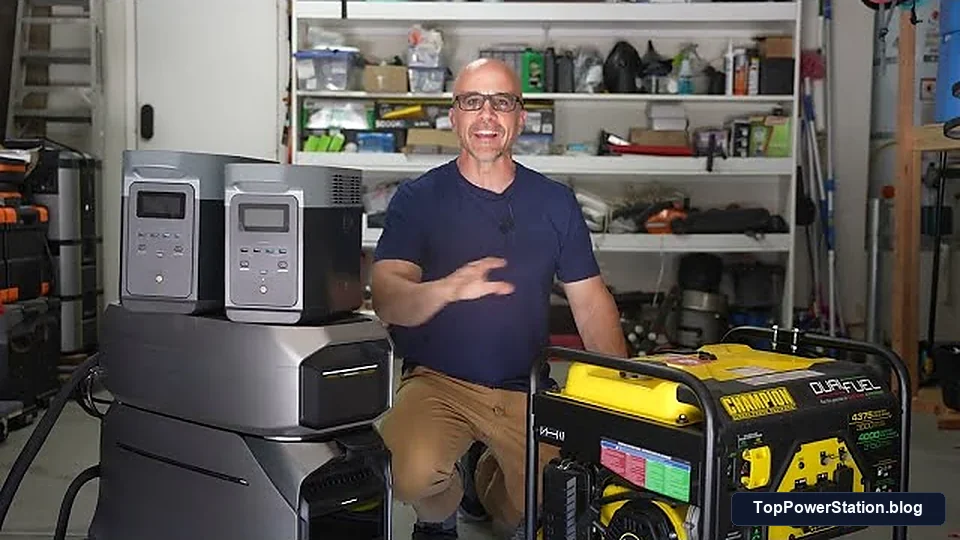
Conversely, combustion engines integrate heavy-duty cast iron sleeves and specialized metallurgy. Advanced options utilize NASA alloy GRX-810 reinforcement within turbine components to withstand extreme operating temperatures generated by continuous fuel combustion cycles.
- Solid-state thermal management
- High-temperature engine metallurgy
- Cell-level voltage monitoring
Internal Component Resilience
Battery management systems utilize sophisticated microprocessors to monitor individual cell voltages. This prevents thermal runaway while optimizing overall energy extraction efficiency across diverse ambient temperature ranges.
Dual fuel generators depend on precision carburetors and mechanical governors. These traditional mechanical components require strict tolerance management to handle fluctuating loads without stalling the primary engine block.
- Microprocessor cell balancing
- Precision mechanical governors
Fuel Source Flexibility and Energy Density
Lithium-based power stations store electrical energy chemically inside sealed enclosures. Users recharge these systems via grid AC outlets, vehicle auxiliary ports, or portable photovoltaic solar panel arrays without handling liquid fuels.
Dual fuel generators consume either liquid gasoline or pressurized propane gas stored in external tanks. This dual capability provides extended operational runtimes simply by swapping fuel canisters during prolonged emergency grid failures.
- Zero-emission solar recharging
- Propane and gasoline fuel switching
- Volumetric energy storage trade-offs
Chemical versus Mechanical Energy Storage
Battery banks offer superior volumetric efficiency for instantaneous power delivery within enclosed spaces. They eliminate hazardous fuel storage concerns inside residential garages or tight recreational vehicle compartments.
Internal combustion engines convert chemical energy from fossil fuels into mechanical rotation. This traditional process delivers massive continuous wattage output but requires careful handling of volatile combustible substances.
- Volumetric efficiency metrics
- Combustible fuel safety
Output Capacity and Surge Handling
Portable units deliver pure sine wave alternating current through advanced semiconductor inverters. These electronic circuits protect sensitive medical equipment and modern computing hardware from damaging harmonic voltage distortions.
Engine-driven generators produce high surge wattage necessary for heavy inductive motor loads. Large air conditioners and well pumps start smoothly under the robust mechanical torque provided by traditional combustion motors.
- Pure sine wave output
- Inductive motor surge capacity
- Uninterruptible power supply switching
Inverter Quality and Surge Watts
Electronic power stations feature instantaneous switchover times for uninterrupted UPS functionality. Sensitive desktop computers remain fully operational during sudden grid brownouts or unexpected power supply interruptions.
Traditional generators require careful load balancing to prevent voltage drops during heavy motor startups. Mechanical regulators adjust engine throttle speeds dynamically to accommodate sudden spikes in electrical demand.
- Millisecond switchover speeds
- Dynamic throttle regulation
Portability, Ergonomics, and Deployment Footprint
Battery power stations feature compact, boxy silhouettes equipped with integrated folding handles. Their lightweight construction allows single-handed transport across campsites, patios, and residential living spaces without heavy lifting strain.
Dual fuel generators demand rugged steel roll cages, pneumatic wheels, and drop-down handles. Their substantial weight requires two-person lifting or dedicated ramp systems to load into vehicles for remote job sites.
- Single-handed ergonomic handles
- Pneumatic transport wheel kits
- Vibration-dampening motor mounts
Weight Distribution and Transport
Compact lithium configurations optimize center-of-gravity placement to enhance stability on uneven ground. Rubberized base pads prevent sliding inside vehicle trunks during transit over rough dirt roads.
Heavy generator chassis isolate engine vibrations through heavy-duty rubber motor mounts. This engineering design reduces structural fatigue while dampening excessive acoustic noise during extended multi-hour operations.
- Optimized gravity centers
- Rubberized motor isolation
Environmental Impact and Operating Emissions
Battery generators produce absolute zero direct emissions during indoor or enclosed tent operation. Users can run essential medical devices overnight in small bedrooms without fearing carbon monoxide poisoning risks.
Combustion generators emit exhaust gases containing carbon monoxide, nitrogen oxides, and unburned hydrocarbons. Consequently, operators must position these noisy machines outdoors far away from windows and fresh air intakes.
- Zero toxic exhaust emissions
- Silent indoor operation capability
- Outdoor carbon monoxide safety
Indoor Safety and Acoustic Profiles
Silent battery units operate virtually unnoticed below twenty decibels during low-draw scenarios. This acoustic discretion makes them ideal for quiet suburban neighborhoods and wildlife observation campsites.
Traditional generators generate significant acoustic noise, frequently exceeding seventy decibels under full load conditions. Extended exposure requires hearing protection and careful placement to avoid disturbing neighbors.
- Ultra-low decibel output
- Acoustic noise mitigation
Maintenance Protocols and Long-Term Durability
Portable power stations require virtually zero mechanical maintenance beyond periodic firmware updates. Users simply store units at recommended charge levels to maximize lifespan across thousands of charge-discharge cycles.
Dual fuel engines demand rigorous maintenance schedules including oil changes, spark plug replacements, and carburetor cleaning. Neglecting these mechanical upkeep tasks leads to hard starting conditions and premature generator failure.
- Zero fluid maintenance needed
- Engine oil and spark upkeep
- Long-term cycle degradation tracking
Upkeep Requirements and Lifespan
Advanced lithium iron phosphate cells deliver enduring longevity exceeding ten years of regular use. Minimal degradation ensures reliable emergency backup performance season after season without component replacement.
Mechanical generators rely on fluid dynamics and moving metal parts subject to friction wear. Regular winterization and fuel stabilizer usage prevent varnish buildup in carburetors during extended storage periods.
- Ten-year cell longevity
- Carburetor winterization care
Advanced Technological Integration and Smart Grid
Portable power units highlighted in our top camping power station reviews incorporate Bluetooth and Wi-Fi connectivity for remote energy monitoring, allowing users to adjust charging speeds and track consumption effortlessly.
Traditional generators increasingly feature digital hour meters and basic LED status indicators. While some premium models include remote electric start fobs, they lack granular app-based power management capabilities.
- Smartphone app energy monitoring
- Minute-accurate runtime estimations
- Digital hour meter tracking
Digital Monitoring and App Control
Smart power stations provide real-time input and output wattage tracking on vibrant color displays. Users gain precise visibility into remaining runtime down to the exact minute of operation.
Mechanical units rely on analog fuel gauges and basic circuit breakers for status reporting. Operators must manually check fuel levels and listen for engine tone changes to assess load limits.
- Real-time color displays
- Analog fuel level checks
Frequently Asked Questions
Can I run a portable power station inside my house during a power outage?
Yes, you can operate a portable power station safely indoors because it produces absolute zero toxic exhaust emissions, completely eliminating any dangerous carbon monoxide risks during emergencies.
This distinct technical advantage allows you to run essential household refrigerators, CPAP medical devices, and communication electronics inside closed living spaces without requiring complex ventilation setups whatsoever.
How long does a dual fuel generator run compared to a power station?
A dual fuel generator can run continuously for multiple days or even weeks as long as you maintain an adequate external supply of propane tanks or gasoline canisters.
In stark contrast, a standalone power station is strictly limited by its fixed internal battery capacity unless actively replenished by portable solar panel arrays during daytime hours.
Are dual fuel generators difficult to maintain over time?
Yes, traditional combustion engines require rigorous, ongoing maintenance schedules including regular oil changes, spark plug replacements, and seasonal carburetor winterization to prevent sticky fuel varnish buildup.
Neglecting these critical mechanical upkeep steps will eventually lead to hard starting conditions, persistent engine sputtering, and premature generator failure during critical weather emergencies.
Can solar panels fully recharge a large capacity portable power station?
Yes, high-output photovoltaic solar panel arrays can successfully recharge massive battery capacity stations, though total replenishment time depends heavily on direct sunlight intensity and daily weather conditions.
While standard wall outlets provide rapid charging speeds, outdoor solar harvesting offers completely off-grid energy independence during extended multi-week municipal grid infrastructure failures.
Which power source is better for running sensitive electronics?
A portable power station is significantly better for running sensitive electronics because its advanced semiconductor inverter architecture consistently outputs ultra-clean pure sine wave electricity.
Traditional mechanical generators often produce unpredictable harmonic voltage distortions that can easily damage modern desktop computers, flat-screen televisions, and sophisticated smart home appliances.