Portable Power Station vs Deep Cycle RV Battery
Choosing mobile energy requires balancing all-in-one convenience with modular electrical capacity. This guide breaks down core operational trade-offs.

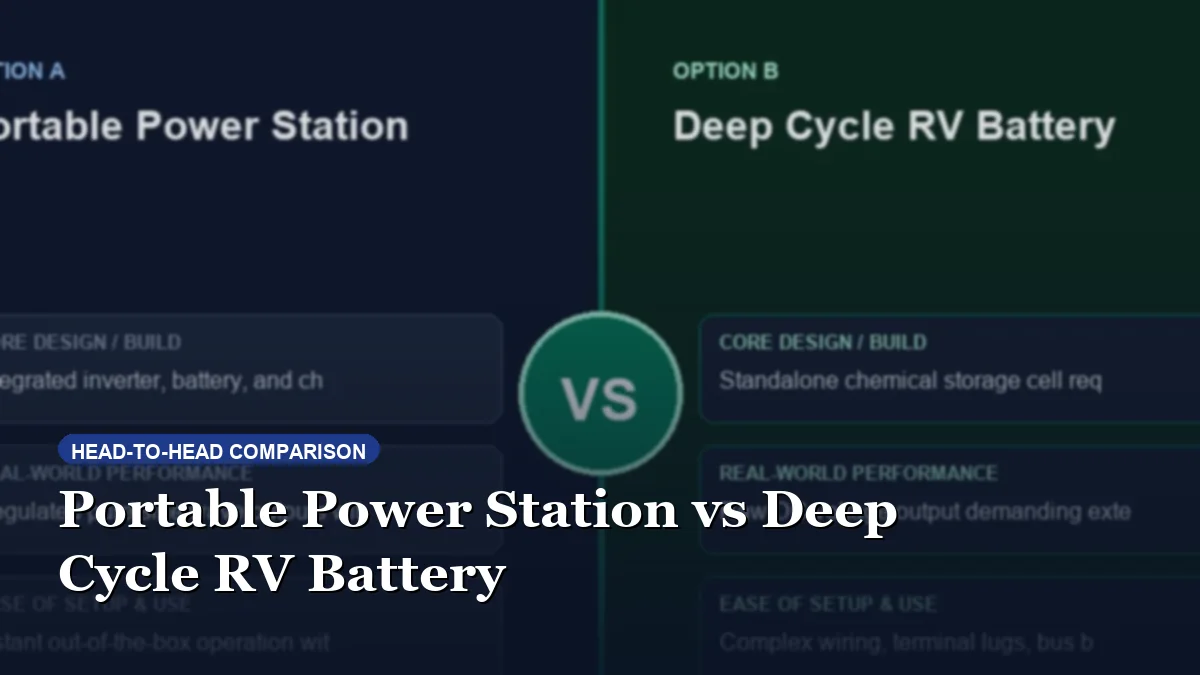
Choose a portable power station for plug-and-play simplicity and rapid solar inputs, or select a deep cycle RV battery for custom, high-capacity permanent installations.
Compare all top models in our Best Portable Power Station: Top Picks for 2026.
Side-by-Side Breakdown
| Criteria | Portable Power Station | Deep Cycle RV Battery | Edge |
|---|---|---|---|
| Core Design / Build | Integrated inverter, battery, and charge controller in one molded chassis. | Standalone chemical storage cell requiring external system components. | Portable Power Station |
| Real-World Performance | Regulated pure sine wave outputs with built-in overload protection circuits. | Raw DC voltage output demanding external fusing and inverter pairing. | Portable Power Station |
| Ease of Setup & Use | Instant out-of-the-box operation with digital displays and designated ports. | Complex wiring, terminal lugs, bus bars, and custom cable crimping. | Portable Power Station |
| Durability & Reliability | Vibration-resistant internal framing but sensitive to moisture ingress. | Rugged industrial casing built for heavy vehicular motion and shocks. | Deep Cycle RV Battery |
| Efficiency / Operating Footprint | Compact footprint with minimal wasted space due to internal integration. | Modular sizing that scales easily for large stationary energy banks. | Deep Cycle RV Battery |
| Maintenance Requirements | Zero routine maintenance beyond firmware updates and cleaning ports. | Regular terminal checks, electrolyte level monitoring, and equalization. | Portable Power Station |
| Best Ideal Use Case | Weekend camping, emergency backup, and rapid mobile device charging. | Full-time RV living, off-grid cabins, and large solar storage arrays. | Split Choice |
Architectural Design and System Engineering
Modern mobile power demands reliable hardware architectures that suit varied travel profiles. Evaluating internal engineering reveals stark differences in how electrical current is stored and distributed.
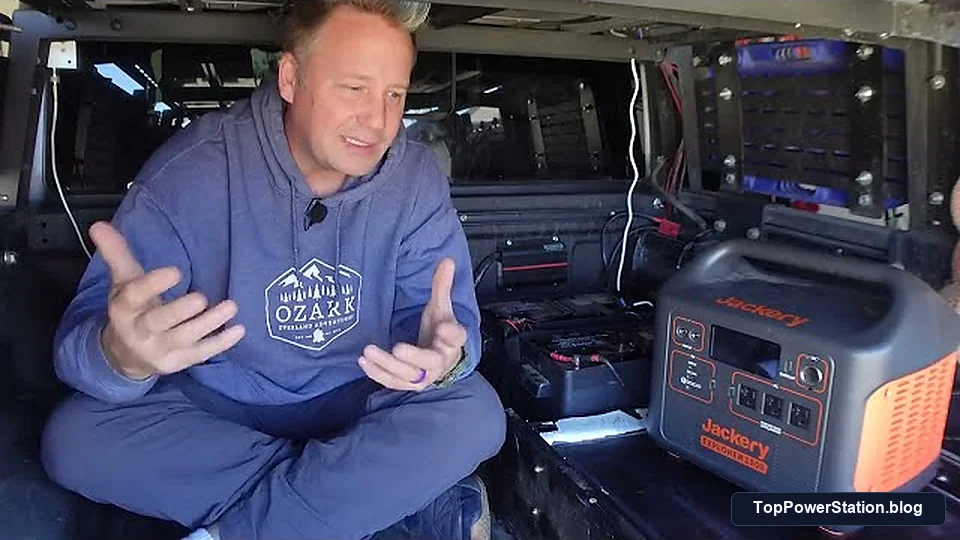
Choosing the right unit from our best home power station picks ensures you get integrated lithium chemistry, charge controllers, and inverters inside a single housing that simplifies off-grid power distribution.
Conversely, a deep cycle RV battery functions purely as an electrochemical storage reservoir. Users must manually assemble auxiliary components like inverters, chargers, and shunts to build functional systems.
Portable power stations integrate inverters, charge controllers, and lithium battery banks into a single cohesive chassis. This all-in-one architecture minimizes connection points, reducing potential electrical resistance and system failure risks significantly.
Conversely, deep cycle RV battery systems demand a modular approach requiring discrete components. Users must separately source and wire heavy-duty inverters, multi-stage converters, fuse blocks, and battery monitors to build a functional mobile power ecosystem.
Engineering choices directly impact spatial constraints and setup complexity. While power stations offer plug-and-play convenience, RV setups allow customized configurations tailored for heavy continuous loads and specialized auxiliary power distribution needs inside mobile living quarters.
- All-in-one enclosures protect delicate electronics from environmental dust and minor impacts.
- Modular battery banks allow infinite scalability by wiring multiple cells in parallel.
- Integrated LCD screens provide real-time telemetry without external multimeters.
Component Integration Realities
Factory-integrated systems reduce installation errors by pairing matched internal components together. Engineers calibrate internal management systems to prevent thermal runaway during heavy loads.
Custom battery banks require precise calculations for wire gauge, fuse ratings, and breaker sizing. Errors in physical assembly can create serious fire hazards inside tight mobile spaces.
- Factory units feature standardized Anderson or XT60 internal connection points.
- Custom setups demand heavy-duty copper cabling and hydraulic crimping tools.
Chemical Composition and Energy Density
Battery chemistry dictates overall weight, lifespan, and safe discharge limits. Understanding these underlying materials helps buyers select energy sources matching their specific weight budgets.
Most modern power stations utilize lithium iron phosphate chemistry for exceptional cycle stability. These advanced cells offer thousands of deep discharge cycles before experiencing significant capacity fade.
Traditional RV setups frequently rely on flooded lead-acid or AGM batteries. While heavier and bulkier, these chemistry types remain popular due to lower upfront material costs.
Modern portable power stations predominantly utilize Lithium Iron Phosphate (LiFePO4) chemistry. Following our LiFePO4 battery maintenance protocol ensures superior thermal stability and high volumetric energy density over traditional setups.
Traditional deep cycle RV batteries rely heavily on flooded lead-acid, AGM, or gel technologies. These older chemistries suffer from lower usable capacity limits, often restricting depth of discharge to fifty percent to prevent rapid plate degradation.
Gravimetric and volumetric metrics heavily favor lithium-based power stations for mobile applications. A LiFePO4 power station packs significantly more watt-hours into a smaller footprint, reducing total cargo weight and preserving precious payload capacity inside vehicles.
- Lithium cells maintain stable voltage profiles even under heavy inverter loads.
- Lead-acid options suffer from severe voltage sag when powering high-draw appliances.
- Advanced thermal management protects lithium units from extreme ambient temperatures.
Weight and Volumetric Efficiency
Energy density measures how much power fits within a specific physical footprint. High-density lithium packs deliver massive watt-hours while remaining light enough for single-handed transport.
Lead-acid storage alternatives weigh considerably more per usable amp-hour of capacity. Transporting these heavy blocks requires dedicated storage compartments and secure mounting brackets.
- Lithium systems save substantial payload space in smaller camper vans.
- Lead-acid banks demand reinforced flooring due to concentrated weight.
Installation Complexity and Wiring Requirements
Installing mobile power systems involves contrasting mechanical and electrical procedures. Some users prefer immediate operation, while others enjoy designing custom electrical infrastructures.
Deploying a standard unit or exploring options in our replaceable battery power station guide takes under sixty seconds of unpacking. You simply place the hardware on a flat surface and plug in devices.
Building a deep cycle battery bank requires profound electrical knowledge. Technicians must connect terminal fuses, run thick battery cables, and mount remote battery monitors securely.
Deploying a portable power station requires zero structural installation or specialized electrical wiring. Users simply unpack the unit, verify state of charge, and immediately plug appliances into integrated AC and DC output ports without tools.
Installing a deep cycle RV battery bank demands meticulous planning, heavy-gauge copper cabling, and proper terminal crimping. Incorrect wire sizing or loose connections can generate extreme heat, increasing the risk of electrical fires during operation.
Safety equipment like class-T fuses, heavy-duty disconnect switches, and secure battery boxes are mandatory for RV installations. These components ensure regulatory compliance while protecting the complex DC busbar architecture from catastrophic short-circuit fault conditions.
- Power stations eliminate the need for complex wire stripping and terminal crimping.
- RV battery installations require precise adherence to American Wire Gauge standards.
- Proper fusing is mandatory for custom setups to prevent catastrophic short circuits.
Plug-and-Play Versus Hardwired Control
Factory units feature front-facing panels with clearly labeled AC outlets and USB ports. Users never touch raw wires or worry about exposed conductive terminal posts.
Hardwired systems integrate directly into a vehicle's 12-volt fuse block and shore power converter. This permanent setup powers interior RV lighting and appliances automatically.
- Front panels protect users from accidental electrical shocks during operation.
- Hardwired links supply continuous power without manual cable rearrangement.
Inverter Integration and Output Versatility
Converting stored direct current into household alternating current requires reliable inverter technology. The quality and capacity of this conversion dictate what electronics you can run.
Portable units feature built-in pure sine wave inverters optimized for sensitive electronics. You can safely power laptops, medical CPAP machines, and kitchen appliances immediately.
Standalone RV batteries require an external inverter matched to your peak surge requirements. Selecting the wrong inverter size can trip safety switches or damage connected devices.
Integrated pure sine wave inverters in modern power stations deliver clean AC power matching grid standards. This ensures sensitive electronics, medical devices, and variable-speed compressors operate safely without suffering harmonic distortion or premature motor failure.
RV battery banks require an external standalone inverter matched to your peak surge wattage requirements. Selecting the correct inverter topology involves balancing continuous wattage ratings against your specific appliance demands and available battery output.
Output port versatility remains a major differentiator between these two power storage methodologies. Power stations feature diverse USB-C PD, 12V cigarette lighter, and Anderson ports, whereas standard RV systems require custom auxiliary fuse panels for DC distribution.
- Pure sine wave output prevents humming noises and overheating in motorized appliances.
- External inverters allow customized wattage sizing for heavy-duty power needs.
- Multiple output ports on power stations accommodate USB-C and 12V DC plugs.
Surge Capacities and Continuous Loads
Electrical motors require a temporary surge of power during initial startup phases. Integrated units handle these surges using advanced software controls embedded within the motherboard.
Custom battery systems rely on the specific surge rating of your chosen standalone inverter. Upgrading individual components lets users expand surge headroom over time.
- Internal surge suppression protects sensitive microprocessors from voltage spikes.
- External inverters offer replaceable fuses if a heavy motor overloads the circuit.
Charging Capabilities and Power Management
Replenishing depleted energy reserves efficiently keeps off-grid adventures running smoothly. Different systems handle solar panels, wall outlets, and vehicle alternators through varied methods.
Any quality portable power station featured in our rankings includes advanced internal MPPT solar charge controllers for fast recharging. Users simply plug compatible solar panels directly into standardized high-voltage input ports.
Deep cycle setups require purchasing and mounting separate solar charge controllers, battery isolators, and smart multi-stage AC battery chargers to manage energy replenishment.
Portable power stations feature sophisticated built-in MPPT solar charge controllers and rapid AC wall charging circuits. Many units accept up to two thousand watts of solar input, facilitating rapid recharge times while off-grid.
RV battery systems rely on dedicated multi-stage converters, standalone solar regulators, and DC-DC alternator chargers. Configuring these disparate charging sources demands careful voltage matching to prevent battery sulfation or premature thermal runaway events.
Advanced battery management systems inside power stations continuously monitor cell voltages, internal temperatures, and current flow. This digital oversight protects the internal chemistry far more effectively than basic analog fuse protections on traditional RV circuits.
- Internal MPPT controllers maximize solar harvest efficiency in changing weather.
- Dedicated multi-stage chargers extend lead-acid battery lifespan significantly.
- Alternator charging requires DC-to-DC converters to protect vehicle electrical systems.
Multi-Source Energy Replenishment
Combining wall charging and solar inputs accelerates recovery times dramatically during short trips. Integrated software balances multiple charging sources safely without manual intervention.
Custom setups require careful monitoring when combining multiple charging sources simultaneously. Improperly configured charge controllers can push excessive current into delicate battery terminals.
- Dual charging modes reduce overall generator run times at camp.
- Isolated charging circuits prevent feedback loops between vehicle alternators.
Operational Footprint and Environmental Durability
Physical resilience against dust, moisture, and vibration ensures long operational lifespans. Mobile environments test the structural integrity of every electrical component on board.
Power stations feature reinforced plastic or aluminum shells with protective port covers. However, their internal cooling fans remain susceptible to fine dust and moisture ingress.
Heavy-duty deep cycle batteries utilize thick resin cases resistant to severe vibrations. These robust power reservoirs thrive in rough off-road vehicles and harsh weather conditions.
Enclosure design dictates where each power solution can be safely deployed and stored. Portable power stations utilize durable polymer or aluminum casings, offering moderate weather resistance but lacking permanent ingress protection ratings for harsh outdoor exposure.
Deep cycle RV batteries require dedicated, vented compartments to safely dissipate potentially explosive hydrogen gases generated during heavy charging cycles. Sealed AGM or lithium RV batteries mitigate this risk, enabling flexible interior placement inside living vehicle spaces.
Ambient temperature operating ranges severely influence performance for both power station and RV battery configurations. Proper thermal management, including integrated heating pads for cold weather, remains essential for preserving usable capacity during freezing winter conditions.
- Rubber port covers keep campsite dust away from sensitive charging circuits.
- Sealed lead-acid and LiFePO4 batteries withstand continuous vehicular road vibrations.
- Internal cooling vents require unobstructed airflow to prevent thermal throttling.
Weather Resistance and Storage Safety
Operating electronics in freezing weather requires specialized low-temperature protection circuits. Integrated lithium units automatically halt charging when internal temperatures drop below freezing.
Lead-acid batteries tolerate cold environments better during discharge, but freezing temperatures ruin discharged flooded cells. Proper insulation keeps custom battery bays safe all winter.
- Cold-weather charging protection prevents permanent lithium crystal damage.
- Insulated battery compartments maintain stable temperatures in sub-zero climates.
Long-Term Maintenance and Lifecycle Value
Evaluating total ownership costs involves analyzing maintenance tasks and expected lifespans. Long-term reliability depends heavily on proper daily operational habits and care routines.
Portable units require virtually zero routine maintenance beyond occasional firmware updates. Once the internal battery finally degrades, the entire sealed appliance typically requires replacement.
Deep cycle alternatives demand ongoing attention including terminal cleaning and electrolyte checks. When an individual battery wears out, you simply swap that single unit.
Portable power stations are essentially maintenance-free appliance solutions requiring no fluid checks or terminal cleaning. However, their integrated, non-serviceable electronic architecture means a single component failure can render the entire unit inoperable outside warranty periods.
Deep cycle RV batteries allow individual component replacement when a single battery or inverter fails. This modular repairability often lowers long-term ownership costs, provided owners perform regular maintenance like checking electrolyte levels and tightening terminal lugs.
Lifecycle cycle counts heavily favor modern lithium-based power systems over flooded lead-acid alternatives. Investing in quality energy storage solutions guarantees thousands of deep cycles, delivering exceptional long-term value for frequent recreational travelers.
- Sealed units eliminate the messy chore of topping off fluid levels with water.
- Modular battery banks allow incremental component upgrades over many years.
- Proper storage charge maintenance preserves battery health during off-season storage.
End-of-Life Replacement Strategies
All rechargeable batteries experience gradual capacity loss over thousands of use cycles. Replacing a self-contained power station means purchasing a brand-new electronics assembly.
Modular RV power systems let users replace worn batteries independently. This modularity reduces long-term waste and lowers replacement expenses for permanent installations.
- Modular battery replacements minimize electronic waste in landfills.
- Sealed power stations feature built-in recycling paths through manufacturer programs.
Frequently Asked Questions
Can a portable power station replace a deep cycle RV battery?
Yes, a power station can replace an RV battery for light users. However, permanent hardwired systems better suit full-time RV living.
Which option offers better overall lifespan in mobile setups?
Lithium-based power stations and lithium RV batteries both offer thousands of cycles. Proper thermal management determines their actual operating lifespan.
Do I need special tools to install a deep cycle RV battery?
Yes, custom battery banks require heavy-duty crimpers and wrenches. Proper cable sizing ensures safe electrical current transfer throughout.
Are portable power stations safe to use inside closed camper vans?
Yes, they produce no toxic fumes and operate safely indoors. Good ventilation practices prevent overheating during heavy inverter loads.
How do solar charging speeds compare between both power sources?
Power stations include built-in MPPT controllers for instant solar setup. Custom systems require matching charge controllers for optimal panel efficiency.