Power Station vs Jump Starter: Technical Verdict
Choosing between these emergency power devices requires evaluating electrical capacity versus peak cranking amperage. Understanding their core engineering protects your vehicle and gear during critical failures.

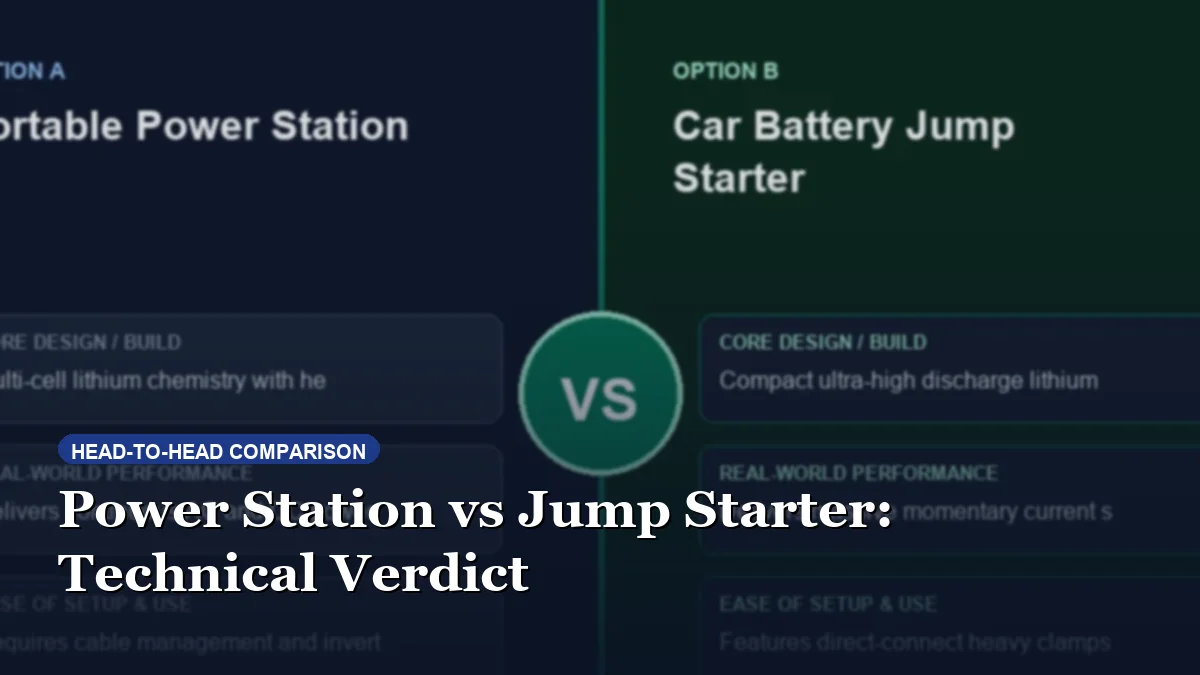
Choose a portable power station for versatile multi-device emergency backup power, or select a car battery jump starter if you strictly need dedicated roadside vehicle recovery capabilities.
Compare all top models in our Best Portable Power Station: Top Picks for 2026.
Side-by-Side Breakdown
| Criteria | Portable Power Station | Car Battery Jump Starter | Edge |
|---|---|---|---|
| Core Design / Build | Multi-cell lithium chemistry with heavy inverter architecture. | Compact ultra-high discharge lithium or lead-acid packs. | Tie |
| Real-World Performance | Delivers continuous AC and DC power for hours. | Delivers massive momentary current spikes for engine starts. | Side B for Vehicles |
| Ease of Setup & Use | Requires cable management and inverter activation steps. | Features direct-connect heavy clamps and smart diagnostics. | Side B |
| Durability & Reliability | Built for deep cycle endurance and frequent daily cycling. | Engineered for intermittent storage and high-amp survival. | Side A |
| Efficiency / Operating Footprint | Larger physical footprint with passive cooling management. | Pocket-sized portability designed for glove compartment storage. | Side B |
| Maintenance Requirements | Requires periodic storage charges and firmware oversight. | Demands strict quarterly checks to maintain cranking readiness. | Tie |
| Best Ideal Use Case | Off-grid camping, power outages, and sensitive electronics. | Emergency roadside vehicle starting and dead battery recovery. | Depends on Goal |
Core Design and Engineering Architecture
Engineering a portable power station involves integrating large lithium battery packs with complex DC-to-AC inverters. You can inspect top options within our home power station selection to evaluate sustained watt-hour delivery capacities.
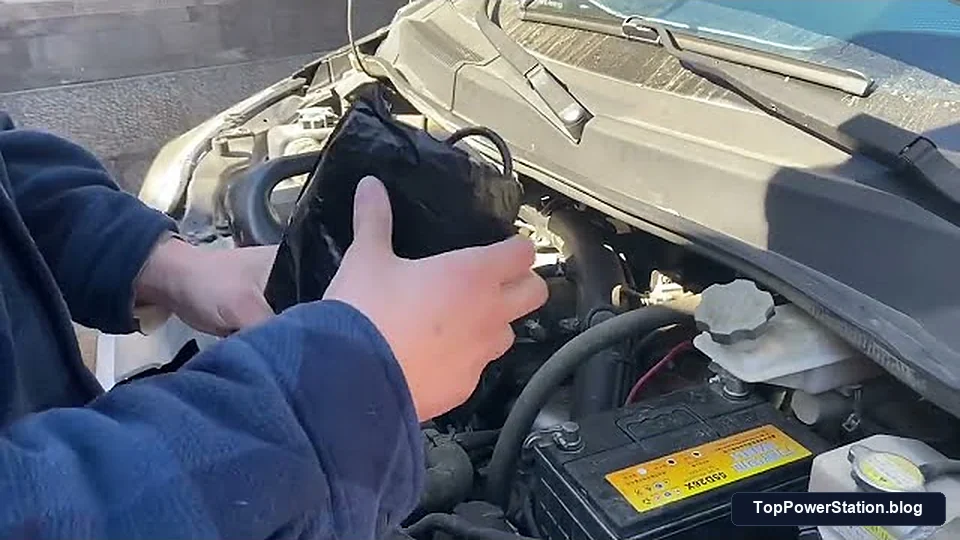
Conversely, a car battery jump starter prioritizes high peak amperage discharge rates. Internal architecture uses ultra-thin cell plates designed to dump hundreds of amperes instantly without thermal runaway risks.
Understanding these foundational design variances prevents equipment damage. Using an inverter system incorrectly for automotive cranking can easily overload internal fuses and permanently ruin delicate circuit boards.
Portable power stations integrate inverter technology to convert DC energy from lithium-ion cells into clean AC power. Their internal architecture relies on complex battery management systems to regulate thermal output and cell balancing efficiently.
Conversely, jump starters utilize high-discharge lithium-iron-phosphate or lead-acid chemistries capable of releasing massive current instantly. Their physical structure prioritizes ultra-short, thick copper cables to minimize electrical resistance during heavy cranking cycles.
Engineering divergences dictate their intended applications, balancing continuous watt-hour capacity against peak amperage output. Understanding these foundational blueprints ensures users select the correct hardware for prolonged off-grid living or automotive roadside emergencies.
- Power stations focus on high watt-hour capacity ratings.
- Jump starters focus on high cold-cranking amp ratings.
- Internal circuit protections differ significantly by device category.
Battery Chemistry and Inverter Topologies
Modern power stations typically utilize LiFePO4 chemistry for extended cycle life and thermal stability. Pure sine wave inverters ensure clean power delivery for sensitive medical equipment or laptops.
Jump starters favor high-discharge lithium-polymer packs capable of handling extreme internal resistance. Their internal circuitry lacks robust AC inversion stages, keeping physical dimensions remarkably small.
- LiFePO4 cells provide thousands of stable operational cycles.
- High-discharge cells handle brutal short-circuit engine cranking.
Real-World Performance and Power Delivery
Evaluating real-world performance requires analyzing how each device releases stored energy. A power station acts as a mobile wall outlet, sustaining moderate electrical loads across many continuous hours.
A jump starter acts as an electrical defibrillator for your engine bay. It delivers a massive surge of cranking power lasting just a few seconds to force a seized or depleted starter motor.
Attempting vehicle recovery with a standard power station usually fails immediately. Review our jump-starting safety guide to understand why power station DC ports limit output current below engine requirements.
Power stations excel at running sensitive electronics by delivering stable pure sine wave AC current over extended periods. They sustain moderate loads smoothly, utilizing advanced cooling fans to manage internal temperatures during continuous multi-port operation.
Dedicated jump starters focus on a singular, high-intensity task: delivering up to two thousand amps within mere seconds. This specialized surge capacity effortlessly overcomes frozen engine blocks where standard low-draw supplies would immediately fail.
Evaluating real-world performance requires matching your expected load profile against the device's surge rating threshold. Mismatched expectations often lead to thermal shutdowns or tripped internal circuit breakers during critical operating scenarios.
- Power stations sustain continuous multi-hour electrical loads safely.
- Jump starters deliver brief, massive electrical current surges.
- Cross-purpose application often triggers internal overload protection modes.
Handling Surge Loads and Motor Inductive Draw
Inductive loads like compressors or power tools demand high startup surges. Power stations feature smart surge management to bridge this temporary gap without shutting down completely.
Automotive starting requires raw amperage rather than smooth sine waves. Jump starters bypass complex voltage regulation to dump maximum raw energy directly into starter terminals.
- Inverters manage inductive motor surges through software throttling.
- Jump starters use heavy copper leads for direct raw power transfer.
Maintenance, Efficiency, and Longevity
Maintaining energy storage equipment dictates long-term reliability during emergencies. Explore our replaceable battery power station guide to discover units featuring routine firmware checks and regular cycling capabilities.
Jump starters require vigilant quarterly voltage monitoring because they sit dormant in trunk environments. Extreme seasonal temperature swings degrade their internal standby capacity much faster than indoor units.
Self-discharge rates vary significantly based on internal chemical composition and environmental exposure. Proper storage protocols directly influence whether your equipment functions when an unexpected crisis strikes.
Lithium power stations require periodic firmware updates and strategic storage state management to preserve internal cell health. Keeping the unit charged near fifty percent prevents accelerated capacity degradation during extended periods of seasonal inactivity.
Jump starters demand rigorous maintenance routines, including monthly voltage checks and preventative trickle charging to avoid deep self-discharge. Neglecting these protocols often results in a dead emergency tool when you need it most.
Overall system longevity depends heavily on ambient operating temperatures and avoiding extreme thermal cycling during heavy usage phases. Proper care directly translates to reliable multi-year operational readiness across both device categories.
- Power stations need software updates and regular battery cycling.
- Jump starters require frequent manual voltage checks in storage.
- Thermal management directly impacts total operational service lifespan.
Self-Discharge Rates and Environmental Factors
Lithium-based storage systems lose charge slowly over extended storage periods. Storing units in hot vehicles accelerates chemical degradation and permanently reduces total maximum capacity.
Smart monitoring circuits draw parasitic power even when units remain powered off. Regular recharging schedules prevent deep discharge states that permanently ruin expensive lithium cells.
- Trunk heat accelerates permanent battery capacity degradation rates.
- Parasitic standby drain requires proactive recharging every three months.
Safety Protocols and Circuit Protection
Electrical safety remains paramount when handling high-capacity portable energy storage systems. Power stations incorporate multiple layers of short-circuit protection and thermal shutdown sensors to prevent catastrophic failures.
Jump starters feature specialized smart clamp modules containing microprocessors. These modules prevent reverse polarity connections, spark generation, and back-charging from the running alternator.
Ignoring safety warnings can cause severe chemical burns or electrical fires. Always verify manufacturer safety certifications before deploying any high-amperage backup equipment in residential spaces.
Modern power stations incorporate multi-tiered electronic safety protocols including short-circuit, over-voltage, and thermal protection mechanisms. These automated safeguards instantly cut power delivery if internal component temperatures exceed manufacturer-specified safety thresholds.
Jump starters feature heavy-duty clamps equipped with reverse polarity protection to prevent catastrophic electrical system damage. If connected backward, smart microprocessors block current flow completely, protecting both the vehicle computer and operator.
Adhering to established UL certification standards ensures that internal fuses and physical housings contain potential thermal runaways effectively. Never bypass built-in safety features when managing high-capacity portable energy equipment in the field.
- Thermal sensors protect power stations from overheating internally.
- Smart clamps prevent dangerous reverse polarity vehicle hookups.
- Certified safety builds prevent catastrophic electrical fire hazards.
Understanding Smart Clamps and Inverter Safeguards
Modern jump starter cables utilize solid-state switches to ensure complete isolation. The device will not release electrical current until proper terminal contact is positively verified.
Power stations protect their sensitive inverter boards via active fan cooling. Overloading the AC outlets triggers an instant electronic shutdown to safeguard internal transformer windings.
- Solid-state switches isolate power until correct clamp contact occurs.
- Active cooling fans prevent internal transformer overheating failures.
Ergonomics, Portability, and Physical Footprint
Physical dimensions dictate how easily you can transport and deploy your backup gear. Power stations are heavier and bulkier due to dense inverter modules and large casing structures.
Jump starters prioritize glove box portability and lightweight grab-and-go usability. Their streamlined designs omit heavy AC sockets, reducing total weight to mere pounds for effortless roadside handling.
Evaluating your typical storage environment helps narrow down the correct physical form factor. Heavy units suit garage shelves, while compact units belong in dedicated vehicle storage compartments.
Portable power stations feature robust molded handles optimized for two-handed transport across campsites. Following our LiFePO4 battery maintenance protocol ensures your larger footprint power station remains reliable for basecamp usage.
Jump starters emphasize pocket-sized or glovebox-friendly form factors engineered for rapid one-handed deployment during roadside emergencies. Their lightweight construction prioritizes mobility over expansive multi-hour energy storage capacity.
Assessing ergonomic trade-offs involves balancing physical weight against your specific transportation logistics and storage constraints. Selecting the right form factor ensures effortless deployment whether hiking trails or commuting on highways.
- Power stations feature carrying handles and heavier chassis builds.
- Jump starters fit easily inside standard vehicle glove compartments.
- Weight differences dictate suitability for mobile emergency situations.
Weight Distribution and Carrying Convenience
Distributed internal weight makes power stations feel heavier during long walking carries. Ergonomic handles help mitigate fatigue when moving units across rough campsites.
Compact jump starters use sleek polymer casings designed for single-handed operation. This optimized weight distribution allows rapid deployment during stressful roadside emergencies.
- Dual handles assist with carrying heavier power station units.
- One-handed jump starter designs speed up roadside recovery.
Cost Efficiency and Investment Value
Analyzing financial investment requires looking at functional versatility over time. Power stations command higher prices because they function as comprehensive multi-device micro-generators.
Jump starters represent a focused single-purpose investment tailored specifically for automotive rescue tasks. Their restricted feature set keeps acquisition costs significantly lower than general power stations.
Purchasing the correct tool prevents wasteful spending on redundant emergency gear. Evaluate your actual daily utility needs rather than buying oversized equipment for improbable scenarios.
Investing in a portable power station delivers high long-term value through versatile dual-purpose utility across recreational and emergency scenarios. Their ability to power multiple appliances justifies the steeper upfront financial commitment required.
Jump starters offer targeted economic efficiency for drivers seeking a dedicated, single-purpose automotive safeguard without unnecessary bulk. Their lower acquisition cost matches their specialized role in maintaining vehicle starting readiness.
Maximizing investment value requires analyzing your actual frequency of use alongside critical emergency preparedness requirements to avoid purchasing redundant power hardware that sits idle.
- Power stations offer broad multi-device utility and high cost.
- Jump starters provide affordable, dedicated vehicle recovery solutions.
- Matching equipment to actual needs maximizes financial efficiency.
Weighing Feature Sets Against Operating Expenses
Versatile power stations replace gas generators for quiet camping trips and outages. This broad utility justifies their higher initial purchase price for active outdoor enthusiasts.
Dedicated jump starters sit idle for months between rare roadside emergencies. Their lower cost reflects this narrow functional scope and simpler internal manufacturing.
- Multi-use capability justifies higher power station investment costs.
- Narrow functional scope keeps jump starter replacement expenses low.
Determining Your Ideal Emergency Power Setup
Selecting the right device depends entirely on your primary emergency preparation goals. Campers and homeowners facing grid failures benefit most from expandable power station ecosystems.
Commuters and frequent drivers should prioritize keeping a reliable jump starter inside their trunk. This ensures independence from waiting hours for roadside assistance during battery failures.
Advanced users often maintain both devices in their emergency preparedness inventory. Combining a jump starter with a power station covers every conceivable electrical contingency.
Determining the correct backup setup begins with auditing your primary vulnerability, whether facing frequent grid power outages or dead vehicle batteries. Your risk profile dictates whether you need multi-kilowatt storage or targeted cranking amps.
Many advanced users maintain a hybrid approach, pairing a high-capacity generator station with a compact lithium jump pack inside their trunk. This layered strategy guarantees complete preparedness for both personal mobility and household resilience.
Consult manufacturer specifications carefully and verify that your chosen equipment complies with recognized electrical safety standards before finalizing your emergency preparedness gear collection.
- Homeowners and campers need versatile power station capacity.
- Commuters require dedicated jump starters for roadside reliability.
- Combining both tool types offers absolute emergency preparedness.
Building a Comprehensive Emergency Kit
Layering your emergency supplies ensures you remain prepared for any crisis scenario. Assigning specific roles to each piece of equipment eliminates confusion during high-stress situations.
Regularly test all integrated backup systems to guarantee seamless operation when disaster strikes. Proactive maintenance remains the ultimate safeguard for your household and vehicle.
- Assign dedicated roles to prevent confusion during emergencies.
- Routine testing guarantees reliable operation when disaster strikes.
Frequently Asked Questions
Can a portable power station jump-start a dead car battery?
Most power stations cannot jump-start vehicles because their DC ports limit current output. Always verify if your specific model features a dedicated 12V jump port before attempting vehicle recovery.
Why cannot I use a jump starter to run household appliances?
Jump starters lack internal AC inverters and pure sine wave generation circuitry. They are engineered strictly to dump high-amp DC current rather than sustain continuous loads over time.
How often should I recharge my emergency jump starter?
You should check and recharge your lithium jump starter every three months. Maintaining optimal voltage prevents self-discharge and ensures reliable cranking performance during roadside emergencies.
Are lithium-ion jump starters safe to store in hot cars?
Extreme cabin heat degrades lithium battery capacity and poses safety risks. Storing your device in a temperature-controlled space maximizes its overall operational service lifespan.
Which device offers better overall value for daily commuters?
Daily commuters benefit most from a dedicated compact jump starter for vehicle emergencies. Selecting a focused single-purpose tool keeps initial investment costs low and storage simple.