Portable Power Station AC Charging vs Solar Charging
Wall outlets offer rapid backup replenishment, whereas photovoltaic panels provide off-grid independence. Choosing your power source determines your emergency readiness and outdoor lifestyle flexibility.

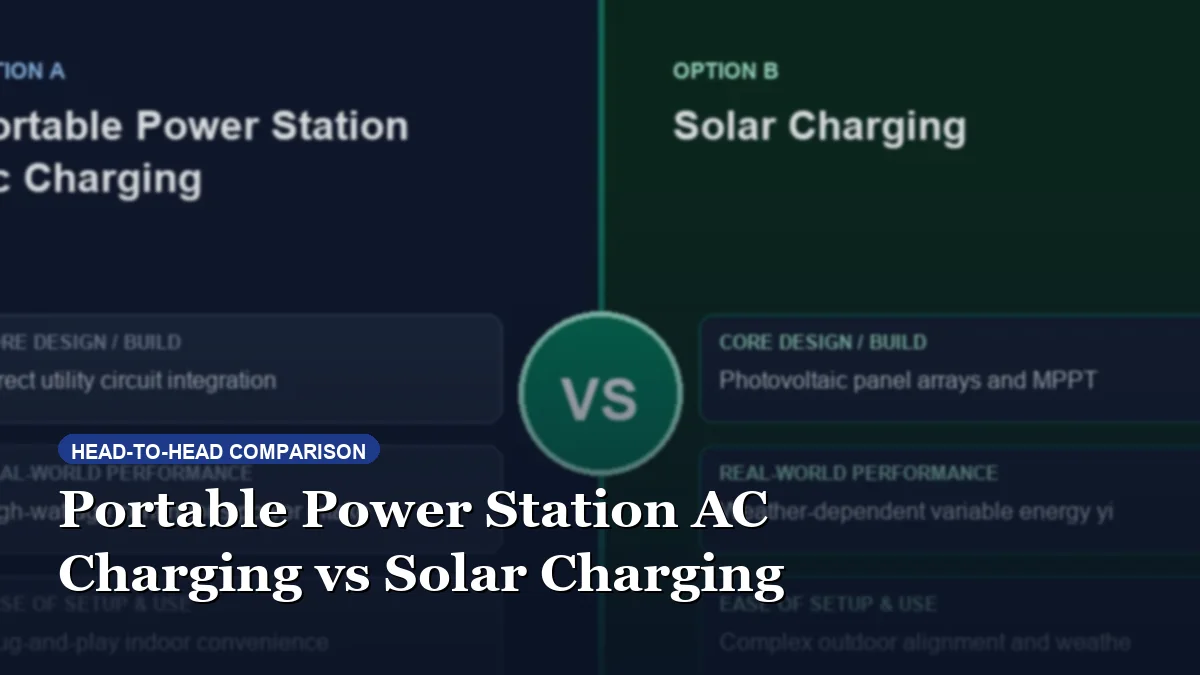
Rely on wall outlets for immediate hurricane recovery and rapid turnaround. Choose solar arrays when camping remotely or sustaining extended grid outages without fuel.
Compare all top models in our Best Portable Power Station: Top Picks for 2026.
Side-by-Side Breakdown
| Criteria | Portable Power Station Ac Charging | Solar Charging | Edge |
|---|---|---|---|
| Core Design / Build | Direct utility circuit integration | Photovoltaic panel arrays and MPPT | AC Charging |
| Real-World Performance | High-wattage continuous power intake | Weather-dependent variable energy yield | AC Charging |
| Ease of Setup & Use | Plug-and-play indoor convenience | Complex outdoor alignment and weather management | AC Charging |
| Durability & Reliability | Protected indoor electronic housing | Exposed outdoor weather resistance ratings | Solar Charging |
| Efficiency / Operating Footprint | Incurs regular utility billing costs | Harvests free renewable ambient sunlight | Solar Charging |
| Maintenance Requirements | Minimal cord and port inspections | Regular surface cleaning and cable care | AC Charging |
| Best Ideal Use Case | Urban emergency backup and rapid turnover | Extended off-grid wilderness camping excursions | Tie |
Understanding Core Power Architecture
Portable power stations require reliable energy inputs to maintain internal battery health. Selecting the best portable power station for drone charging reveals stark differences in how electrons enter the system.
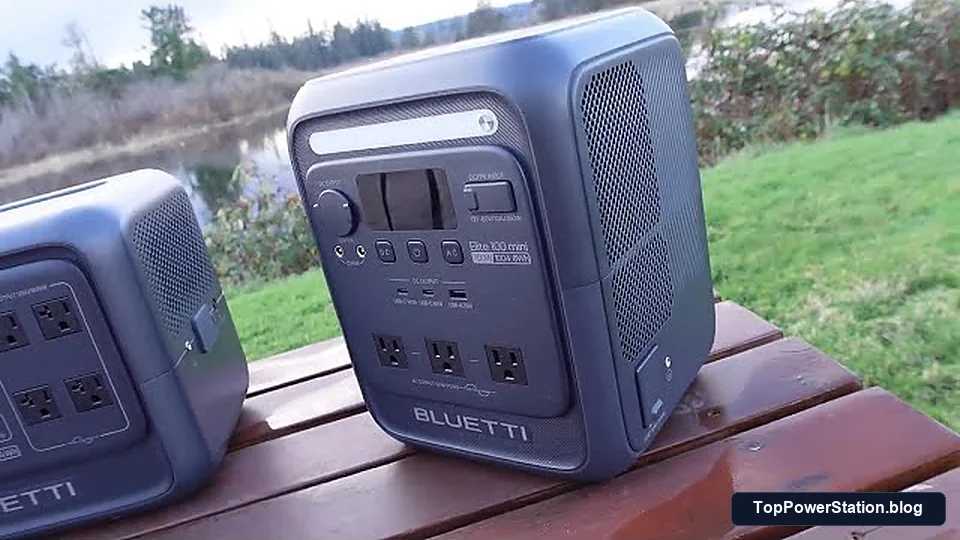
Engineers design modern battery management systems to safely handle both high-voltage alternating current and variable direct current inputs. Understanding these pathways ensures optimal hardware longevity during use.
Selecting the correct input method depends entirely on your immediate access to electrical infrastructure and your specific environmental operating conditions in the field.
Modern portable power stations utilize complex internal topologies, converting alternating wall current through onboard AC-to-DC rectifiers before storing energy safely inside lithium-ion battery management systems.
Conversely, photovoltaic replenishment relies on external panels generating variable direct current, which requires dedicated Maximum Power Point tracking regulators to optimize voltage and amperage delivery efficiently.
Understanding these distinct pathways helps technicians evaluate conversion losses, thermal dissipation rates, and overall electrical load capacities during heavy off-grid deployment cycles across remote locations.
- Direct current conversion efficiency rates
- Alternating current waveform stability metrics
- Maximum power point tracking operational limits
Grid-Tie Inverters and Wall Speeds
Standard utility wall outlets deliver consistent alternating current directly to internal conversion circuits. This architecture enables rapid energy transfer without complex intermediary conversion losses.
Most high-capacity generators utilize built-in rapid charging circuits to reach full capacity within hours. Such speeds prove critical during short-notice emergency evacuations or sudden blackouts.
- Standard voltage outlet compatibility
- Internal transformer heat dissipation capacity
Photovoltaic Panels and MPPT Efficiency
Solar charging relies on semiconductor cells converting sunlight into usable direct current energy. Advanced controllers optimize this variable output to match battery voltage requirements efficiently.
External photovoltaic arrays introduce multiple variables including shading, temperature shifts, and angular alignment. Harnessing these panels requires patience and strategic placement under open skies.
- Open-circuit voltage safety limits
- Series versus parallel wiring configurations
Evaluating Operational Speeds and Throughput
Charging speed remains a primary differentiator when comparing wall outlets with solar collection methods. Integrating a best portable power station with wireless charging helps users balance time constraints against availability.
Emergency scenarios demand predictable replenishment times that match rolling blackout schedules. Grid electricity provides this exact predictability, whereas weather patterns dictate renewable generation speeds.
Analyzing your typical power consumption habits helps clarify whether slow solar harvesting or fast utility replenishment best satisfies your daily operational energy demands.
Wall charging typically delivers rapid replenishment via high-amperage grid connections, often pushing stations from zero to full capacity within two to four hours depending on inverter limits.
Solar input speeds fluctuate dramatically based on atmospheric irradiance, seasonal sun angles, and panel shading, rarely sustaining peak wattage specifications for more than four hours daily outdoors.
Operators must balance time-sensitive energy demands against unpredictable weather patterns, establishing reliable hybrid protocols that leverage grid speed alongside renewable harvesting for uninterrupted operational continuity.
- Peak wattage input capacity ratings
- Variable charging duration performance metrics
- Daily energy yield estimation calculations
Rapid Utility Replenishment Metrics
Plugging into a standard household circuit typically yields hundreds or thousands of watts continuously. Units often reach eighty percent capacity in less than sixty minutes of charging.
High-speed grid charging generates substantial internal heat requiring active cooling fan operation. Users should monitor ambient temperatures to prevent thermal throttling during intense replenishment cycles.
- Dedicated circuit breaker current limits
- Active cooling fan thermal activation
Weather-Dependent Solar Generation Rates
Solar arrays rarely achieve their theoretical maximum output due to atmospheric interference and seasonal shifts. Owners must manage expectations regarding daily watt-hour collection totals.
Clear summer skies maximize photovoltaic yields, while winter storms drastically reduce daily energy harvesting capabilities. Deploying multiple portable panels helps mitigate these environmental limitations significantly.
- Insolation hour seasonal variations
- Cloud cover mitigation positioning strategies
Usability and Field Deployment Realities
Practical ergonomics dictate how easily users can hook up their power stations for daily replenishment. Operational simplicity often determines whether equipment gets maintained regularly.
Indoor utility connections require minimal physical effort beyond plugging in a heavy-duty cord. Conversely, deploying external photovoltaic gear demands careful physical positioning and cable management.
Assessing your physical workspace ensures you choose a charging modality that matches your strength, mobility, and spatial constraints during everyday deployments.
Deploying AC charging requires permanent physical infrastructure, binding operators to standard wall outlets, generator terminals, or restricted indoor environments that limit true wilderness mobility.
Conversely, solar field setups demand extensive physical footprint management, requiring careful tilt-angle adjustments and continuous manual tracking to maximize sun exposure across shifting daylight hours.
Technicians must weigh the ergonomic burden of hauling heavy monocrystalline panels against the logistical simplicity of plugging into standard electrical grids during emergency response scenarios.
- Cable weight and physical flexibility
- Connector locking mechanism security
- Storage footprint dimensional requirements
Indoor Outlet Convenience Factors
Connecting a generator inside a garage or living room involves zero weather exposure and immediate accessibility. Users enjoy effortless power restoration with the flick of a switch.
Fixed wall locations restrict mobility while charging, anchoring heavy battery units near permanent architectural fixtures. Extension cords help bridge distances but introduce potential tripping hazards.
- Ground fault circuit interrupters
- Permanent outlet positioning constraints
Outdoor Panel Placement Challenges
Setting up solar panels requires navigating uneven terrain, direct sunlight exposure, and secure tie-downs. Operators must constantly adjust panel angles to track the moving sun.
Protecting portable solar gear from unexpected rain showers requires constant vigilance in remote environments. Waterproof rating standards offer partial defense against sudden moisture infiltration.
- Telescoping kickstand stability features
- Weatherproofing ingress protection ratings
Long-Term Durability and Component Wear
Hardware longevity depends heavily on the electrical stresses experienced during routine charging and discharging cycles. Different power sources apply unique mechanical and thermal loads.
Protecting lithium chemistry batteries from accelerated degradation requires strict adherence to manufacturer voltage limits. Both charging methods incorporate safeguards to prevent premature cell failure.
Understanding how thermal stress accumulates over years of usage helps owners maximize the operating lifespan of their expensive portable energy investments.
Frequent high-speed AC charging frequently generates elevated thermal loads inside the housing unit, potentially accelerating internal electrolyte degradation across sensitive lithium iron phosphate cell configurations.
Solar charging provides a gentler, variable current profile, which naturally reduces cumulative thermal stress but introduces wear on external Anderson connectors exposed to weather elements.
Maintenance technicians should regularly inspect cable insulation, port seals, and cooling fan bearings to ensure reliable long-term hardware survivability under harsh environmental operating parameters.
- Thermal sensor internal monitoring
- Overvoltage protection safety circuits
- Cycle life degradation performance curves
Internal Charger Thermal Management
High-wattage AC charging pushes significant electrical current through internal power bricks, generating concentrated heat. Effective internal heatsinks prevent solder joint fatigue over extended usage periods.
Frequent rapid utility charging can gradually increase internal battery resistance compared to slower methods. Maintaining adequate ventilation during wall charging protects delicate semiconductor components.
- Passive aluminum heatsink structures
- Temperature-controlled internal airflow paths
Solar Panel Weather Resistance
Portable solar blankets and rigid glass panels face constant ultraviolet radiation and physical abrasion. Durable ETFE coatings protect photovoltaic cells from delamination and scratching outdoors.
Hinges and fabric seams on folding solar panels represent common failure points during frequent field deployment. Proper folding techniques prevent internal micro-cracks within silicon wafers.
- Ultraviolet radiation material resistance
- Hinge stress mitigation structural designs
Economic Footprint and Energy Efficiency
Financial considerations extend beyond initial equipment purchase prices into daily operating overhead and energy conversion losses. Efficiency metrics reveal the true cost of stored electricity.
Utility electricity incurs direct monthly billing costs based on local kilowatt-hour consumption rates. Harnessing sunlight eliminates recurring fuel or grid energy expenses completely over time.
Balancing upfront hardware expenditures against ongoing utility savings provides a clear picture of total cost ownership for both charging infrastructure options.
Grid electricity incurs direct monetary costs through utility billing rates, yet offers exceptional round-trip conversion efficiencies exceeding ninety percent during standard wall charging cycles.
Solar replenishment eliminates ongoing fuel or utility expenses, though initial capital investment in portable panels, mounting brackets, and charge controllers requires careful amortization planning.
Calculating total cost of ownership demands balancing regional utility tariffs against photovoltaic equipment lifespans to determine true energy independence metrics for stationary or mobile applications.
- Conversion energy loss percentage metrics
- Recurring utility billing financial impacts
- Long-term amortization calculation models
Utility Power Loss Calculations
Converting alternating current to direct current inside power stations involves minor thermal energy dissipation. Users pay slightly more on their utility bills than the actual energy stored.
Peak demand pricing hours can make grid charging significantly more expensive during late afternoon periods. Smart scheduling features allow users to recharge during cheaper overnight windows.
- Time-of-use electrical rate structures
- In-line watt-meter monitoring devices
Harnessing Free Renewable Sunlight
Photovoltaic panels harvest ambient photons without generating any ongoing fuel or utility costs. This renewable energy stream provides ultimate financial sustainability for off-grid homesteaders.
Initial investments in high-output portable solar arrays require substantial upfront capital commitments. Weather unpredictability also means energy harvesting timelines remain occasionally unreliable for critical schedules.
- Upfront equipment financial amortization
- Zero marginal fuel operating costs
Maintenance Protocols for Peak Performance
Routine upkeep ensures your power station and charging accessories remain operational during emergencies. Upgrading to a best fast charging portable power station prevents unexpected equipment failure.
Both wall charging cords and solar harnesses require regular physical inspections for frayed wires or oxidation. Clean electrical contacts guarantee maximum energy transfer efficiency.
Establishing a consistent seasonal maintenance routine prevents minor environmental wear from developing into catastrophic hardware malfunctions during blackouts.
Wall-charged portable units require routine firmware updates for internal management systems, ensuring that optimal charge voltage thresholds precisely match changing battery chemistry specifications over time.
Solar arrays demand rigorous surface cleaning protocols, wiping away dust, pollen, and grime buildup that can severely degrade overall panel wattage output during peak daylight hours.
Implementing a comprehensive seasonal maintenance schedule safeguards both power station electronics and renewable accessories against premature failure during extended deployment in demanding remote environments.
- Electrical contact cleaner application
- Insulation jacket physical examination
- Firmware update management checks
Cable Integrity and Port Care
High-amperage cables can develop microscopic fractures under repeated coiling and uncoiling stresses. Storing cords loosely prevents internal conductor fatigue and dangerous electrical resistance hotspots.
Dust and moisture inside aviation plugs or Anderson connectors degrade electrical conductivity over time. Protective rubber caps should remain installed whenever charging ports are idle.
- Terminal corrosion prevention steps
- Strain relief boot physical inspections
Cleaning and Positioning Panels
Accumulated dust, pollen, and bird droppings obstruct sunlight and reduce photovoltaic panel output significantly. Regular washing with mild soap restores optimal energy harvesting performance.
Storing folding solar panels in protective padded bags prevents fabric tears and glass impacts during transport. Careful handling extends the functional lifespan of expensive renewable gear.
- Non-abrasive cleaning cloth selection
- Padded transport case utilization
Tailoring Your Setup to Regional Climates
Geographic location and local weather patterns heavily influence whether utility or solar charging dominates your strategy. Adapting your setup to regional realities ensures reliable backup.
Urban environments benefit immensely from rapid wall charging infrastructure during rolling grid disturbances. Conversely, remote wilderness expeditions demand versatile solar collection equipment for survival.
Evaluating your local climate and infrastructure limitations helps you build a resilient power ecosystem tailored specifically to your regional geographic profile.
Cold northern climates necessitate insulated battery enclosures and careful thermal monitoring to prevent low-temperature lithium plating during rapid AC charging cycles inside unheated freezing garages.
Arid desert environments require advanced heat management, carefully positioning solar arrays and power stations to avoid severe thermal throttling caused by intense ambient sunlight exposure.
Adapting equipment deployment strategies to local regional weather guarantees maximum energy yield, protecting delicate circuitry from moisture, excessive heat, or extreme sub-zero operational temperatures.
- Regional insolation mapping data
- Grid reliability historical statistics
- Emergency evacuation contingency planning
Urban Infrastructure and Grid Access
City dwellers enjoy robust electrical grids with minimal downtime, making rapid wall charging ideal. Quick utility replenishment supports fast-paced lifestyles and sudden emergency departures.
High-rise living often eliminates rooftop solar access, forcing reliance on balcony panels or indoor AC options. Urban microclimates also feature frequent shading from neighboring skyscrapers.
- Balcony solar mounting bracket options
- High-density grid electrical redundancy
Rural Exploration and Solar Skies
Off-grid cabins and remote campsites lack traditional electrical infrastructure entirely. Deploying heavy-duty solar arrays becomes the only viable method for sustaining electronic gear indefinitely.
Mountainous terrain and heavy forest canopy obstruct direct sunlight, complicating rural solar strategies. Pairing a robust best portable power station with solar panels with vehicle charging bridges these environmental gaps.
- Canopy shade management techniques
- Vehicle auxiliary charging port connections
Frequently Asked Questions
Can I combine AC charging and solar charging simultaneously?
Modern high-capacity portable power stations frequently support advanced dual-input charging capabilities by connecting standard indoor wall utility adapters and external photovoltaic solar panels simultaneously for maximum energy intake.
This innovative hybrid operational approach drastically reduces overall replenishment time during urgent grid failure scenarios where every single minute counts toward achieving your comprehensive emergency survival readiness goals.
Does leaving a power station plugged into AC power damage the battery?
Most modern portable power stations feature highly sophisticated internal battery management systems that automatically halt AC charging once internal battery capacity reaches one hundred percent.
However, keeping units plugged into a live wall outlet continuously during high ambient summer temperatures can accelerate internal chemical degradation over extended multi-year operational periods.
How long do portable solar panels last in outdoor field conditions?
High-quality monocrystalline portable solar panels featuring durable protective ETFE outer coatings typically maintain high energy output efficiency for well over a decade of continuous outdoor field use.
Regular daily exposure to harsh ultraviolet radiation, severe weather events, and rough physical handling will gradually diminish their overall photovoltaic generation capacity over time.
Can I use third-party solar panels with my power station?
You can successfully connect third-party solar panels as long as their open-circuit voltage and operating current remain safely within strict manufacturer technical specifications and input limits.
Exceeding maximum voltage limits will permanently destroy delicate internal charge controllers, whereas mismatched connector types require specialized adapter cables for safe electrical integration.
Which charging method is safer for long-term battery health?
Both charging methods are fundamentally safe when using properly certified electrical equipment, but slow solar charging typically generates significantly less internal thermal stress on sensitive internal components.
Minimizing heat accumulation during routine replenishment cycles helps preserve delicate lithium battery chemistry integrity over thousands of continuous operational charge and discharge cycles.