MPPT vs PWM Solar Charge Controller Power Station
Understanding solar charge controllers is vital for maximizing portable generator efficiency. Selecting the correct architecture directly impacts daily charging speeds and overall system lifespan.

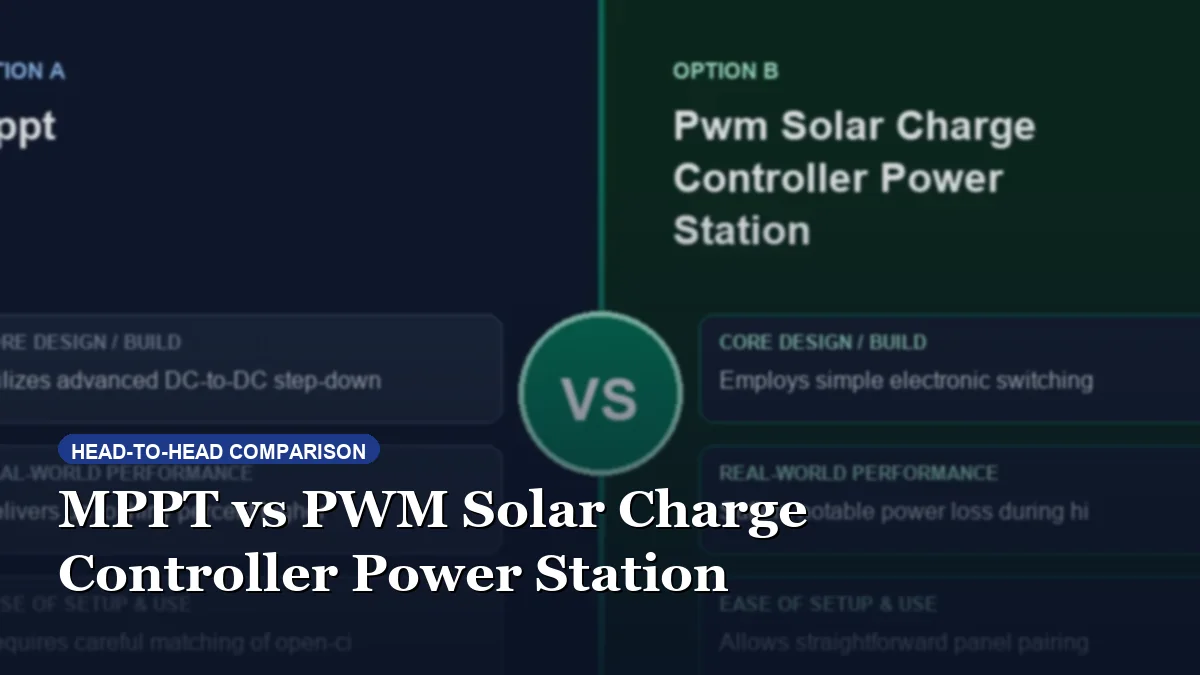
Choose MPPT systems for high-wattage panel arrays requiring maximum energy harvest and rapid battery replenishment. Opt for PWM units only when operating budget-constrained, low-capacity camping configurations under consistent sunlight.
Compare all top models in our Best Portable Power Station: Top Picks for 2026.
Side-by-Side Breakdown
| Criteria | Mppt | Pwm Solar Charge Controller Power Station | Edge |
|---|---|---|---|
| Core Design / Build | Utilizes advanced DC-to-DC step-down conversion microprocessors. | Employs simple electronic switching transistors for regulation. | Mppt |
| Real-World Performance | Delivers up to thirty percent higher energy harvest daily. | Suffers notable power loss during high-temperature operations. | Mppt |
| Ease of Setup & Use | Requires careful matching of open-circuit voltage limits. | Allows straightforward panel pairing matching battery voltage. | Pwm Solar Charge Controller Power Station |
| Durability & Reliability | Features robust thermal shielding and over-voltage protection. | Relies on basic components with fewer failure points. | Mppt |
| Efficiency / Operating Footprint | Operates at up to ninety-nine percent conversion efficiency. | Caps efficiency around seventy-five to eighty percent. | Mppt |
| Maintenance Requirements | Demands firmware checks and secure terminal torque inspections. | Requires minimal oversight due to simpler circuit layouts. | Pwm Solar Charge Controller Power Station |
| Best Ideal Use Case | Off-grid home backup and large mobile solar generators. | Casual weekend camping and small emergency power packs. | Mppt |
Fundamental Architecture and Operating Principles
Modern portable power stations rely on internal charge regulators to manage incoming photovoltaic energy safely. These components bridge fragile lithium battery packs and variable solar panel arrays.
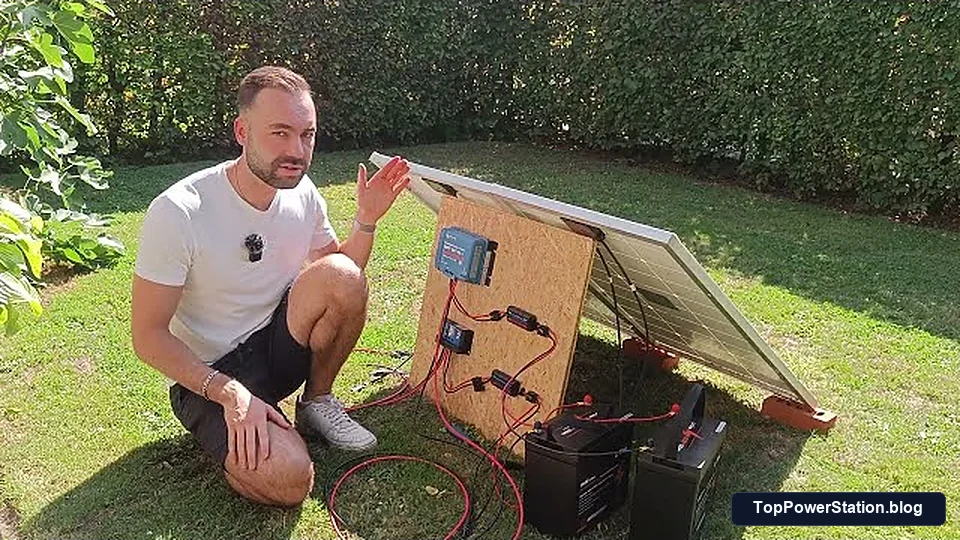
Engineers design internal charging circuits to prevent overcharging while optimizing energy transfer rates. Understanding these underlying topologies helps users select appropriate hardware configurations.
The core electronic layout dictates how efficiently solar photons convert into storable chemical energy inside the internal battery modules.
A Pulse Width Modulation controller acts as a high-speed electronic switch connecting your solar array directly to units like those in our best solar power station roundup during bulk charging.
Conversely, a Maximum Power Point Tracking device incorporates a sophisticated DC-to-DC converter that dynamically alters its electrical operating impedance, matching panel output to battery voltage requirements for optimal harvesting.
When examining internal topology, PWM units use simple MOSFET switches causing array voltage to be forcibly pulled down, whereas MPPT systems utilize inductors and capacitors for advanced voltage step-down operations.
- Regulates voltage from attached solar panels.
- Prevents catastrophic battery overcharging failures.
- Stabilizes output current for safe power storage.
Circuitry Design Variations
Circuit topologies differ significantly between advanced tracking systems and traditional switching regulators. Advanced units continuously sample photovoltaic current to find optimal operating points.
Simple controllers act as high-speed electronic switches connecting panels directly to the battery bank.
- Microprocessor-driven tracking algorithms.
- Direct electronic switching gates.
Energy Conversion Efficiency and Yield
Maximum power point tracking technology continuously adjusts electrical operating points to extract optimal wattage. This dynamic adaptation ensures users capture maximum available sunlight throughout changing weather conditions.
Traditional pulse width modulation designs force solar panels to operate at battery voltage levels, a mismatch often resolved by upgrading components found in our best solar panels for power station guide.
Users frequently notice faster recharge times when deploying high-efficiency tracking systems during overcast or hazy afternoons.
PWM regulators typically achieve a conversion efficiency ranging from 70 to 80 percent, because any voltage drop between the solar panel and battery terminal directly translates to wasted electrical potential energy.
Modern MPPT architectures boast impressive conversion efficiencies reaching 95 to 99 percent, successfully capturing excess voltage from high-output photovoltaic panels and converting it into usable charging amperage safely.
In cold weather conditions, when solar panel voltage spikes significantly, MPPT technology captures this surplus energy yield, whereas PWM units simply discard the extra voltage as unusable thermal dissipation.
- Dynamic voltage and current adjustment capabilities.
- Significant energy loss during mismatched panel voltages.
- Superior performance during partial cloud cover events.
Yield Calculations in the Field
Field tests consistently demonstrate superior daily amp-hour generation from advanced tracking regulators. Users experience tangible benefits when powering essential devices during extended off-grid expeditions.
Standard switching controllers struggle to capitalize on high-voltage residential panels connected in series configurations.
- Higher daily watt-hour accumulation totals.
- Better utilization of series-wired panel arrays.
Thermal Management and Component Durability
Thermal management dictates how electronics handle internal heat buildup during peak sunlight hours. Advanced systems utilize heavy-duty aluminum heatsinks to dissipate excess thermal energy safely away.
Simpler charging units generate less internal heat due to fewer active conversion stages operating simultaneously. However, they dissipate thermal loads less effectively when subjected to high ambient temperatures.
Robust housing materials protect sensitive circuit boards from environmental dust, moisture, and mechanical shock.
Effective thermal management is critical for maintaining controller longevity, as excessive heat buildup degrades internal semiconductor junctions, reduces overall operational efficiency, and accelerates permanent capacity fade in power stations.
PWM controllers frequently dissipate substantial heat because they continuously short-circuit the panel input, necessitating robust aluminum heatsinks to prevent premature thermal throttling during peak afternoon solar irradiance intervals.
MPPT systems manage internal temperatures better through intelligent switching algorithms, though high-end models still require active cooling fans or finned chassis designs to handle massive wattage inputs safely.
- Integrated aluminum heatsink fins for cooling.
- Environmental sealing against dust and moisture ingress.
- Thermal throttling protection against overheating.
Heat Dissipation Mechanisms
Effective thermal dissipation prevents premature component degradation during continuous high-load operations in summer environments. Passive cooling fins maintain safe operating temperatures without requiring noisy internal fans.
Engineers balance physical enclosure size against required thermal dissipation capacity.
- Passive cooling through extruded aluminum chassis.
- Critical temperature sensor integration.
Voltage Compatibility and Array Configuration
Advanced tracking controllers accept wide input voltage ranges from complex multi-panel solar arrays. This flexibility allows users to wire multiple panels in series safely and efficiently.
Traditional PWM controllers require strict voltage matching between the solar panels and battery bank. Operating mismatched voltages causes extreme efficiency drops or complete system charging failure.
Planning a portable solar generator setup requires careful attention to maximum open-circuit voltage specifications.
PWM controllers enforce strict electrical matching, which you can evaluate further inside our best portable power station with solar panels guide, ensuring your panel's operating voltage matches the battery bank.
Because of this strict limitation, users cannot wire multiple photovoltaic panels in series when using a PWM controller, restricting system expansion and complicating large-scale off-grid series configuration setups.
MPPT units accommodate high-voltage string configurations, allowing you to connect several panels in series to dramatically reduce resistive energy losses across long cable runs outdoors.
- Wide solar input voltage operating windows.
- Strict voltage matching requirements for basic units.
- Support for series and parallel array wiring.
Wiring Flexibility Guidelines
Series wiring configurations reduce resistive power losses across long extension cables deployed in the field. Advanced controllers easily step down these high voltages to match internal battery requirements.
Basic controllers limit array design flexibility significantly.
- Reduced cable gauge requirements over distance.
- Simplified multi-panel expansion pathways.
Cost Dynamics and Economic Value
Initial equipment investment varies substantially based on the internal charge controller technology utilized. Advanced tracking systems command higher manufacturing costs due to complex microprocessors and components.
Budget-friendly power stations leverage simpler charging circuits to maintain accessible retail price points for casual users. Consumers must weigh upfront expenses against long-term energy harvesting benefits.
Investing in higher-tier charging technology often reduces the overall number of solar panels required.
Upfront manufacturing expenses for PWM units remain remarkably low due to their simple circuit designs, making them an attractive budget-friendly option for entry-level portable power station applications.
Although MPPT systems command a significantly higher initial capital expenditure, their superior energy harvesting capabilities translate into faster long-term economic payback through increased daily watt-hour yields.
When calculating true economic value over a five-year deployment window, the higher daily energy yield of MPPT hardware easily justifies its elevated upfront component cost for serious users.
- Higher manufacturing complexity increases baseline hardware costs.
- Simplified circuits lower entry-level product retail prices.
- Long-term energy savings offset initial equipment investments.
Value Assessment for Buyers
Calculating total lifecycle value involves estimating daily solar energy harvest improvements over years of service. Frequent campers and emergency responders justify higher equipment costs through reliable performance.
Occasional users find basic units perfectly adequate.
- Lifecycle energy harvest return on investment.
- Suitability for specific usage frequencies.
Portability, Weight, and Physical Footprint
Physical dimensions and total unit weight influence how easily users transport portable power stations. Advanced charging hardware requires slightly larger internal spaces for specialized transformers and circuitry.
Simpler regulators occupy minimal internal volume, contributing to lightweight and compact chassis designs ideal for backpacking. Manufacturers continuously optimize internal layouts to reduce overall travel burdens.
Ergonomic handle placement and durable exterior shells enhance overall field mobility.
Physical footprint and weight characteristics matter immensely for emergency preparedness, themes we explore inside our best solar power station for camping review, where every ounce added impacts travel ergonomics.
PWM charge controllers feature lightweight, compact circuit boards because they lack heavy internal inductors, transformers, and complex microprocessors, keeping the overall enclosure footprint minimal and highly portable.
MPPT hardware incorporates bulky magnetic components like toroidal inductors and larger heat dissipation fins, resulting in slightly heavier power station assemblies that demand careful payload planning during transit.
- Compact internal component layouts save valuable space.
- Optimized weight distribution for easy carrying.
- Rugged exterior framing for active outdoor travel.
Ergonomics and Transportability
Balanced weight distribution ensures comfortable carrying during long hikes to remote basecamp locations. Heavy-duty folding handles withstand repeated deployment in harsh outdoor environments.
Compact footprints fit easily inside crowded vehicle trunks.
- Comfortable reinforced carrying handle integration.
- Space-saving rectangular chassis geometry.
Maintenance Protocols and Long-Term Reliability
Routine maintenance ensures reliable operation of portable power stations throughout their extended operational lifespans. Users should inspect charging ports, ventilation grills, and connection terminals regularly for debris.
Advanced tracking systems require occasional firmware checks and terminal torque verifications to maintain peak efficiency. Simpler units demand minimal upkeep due to their straightforward, solid-state electronic designs.
Proper storage practices protect internal lithium batteries from degradation during extended off-season periods.
Routine maintenance routines for charge controllers involve inspecting terminal connections for corrosion, cleaning cooling vents of dust accumulation, and monitoring firmware updates on advanced MPPT units.
Due to fewer moving parts and simpler solid-state topologies, basic PWM devices exhibit exceptional long-term reliability in harsh environments, provided they are protected from moisture and severe vibration.
MPPT systems rely heavily on sensitive microcontrollers and complex firmware, meaning they face a slightly higher risk of electronic failure if exposed to severe electrical surges or extreme temperatures.
- Regular inspection of ventilation ports and cables.
- Periodic firmware updates for advanced internal microprocessors.
- Proper seasonal storage voltage maintenance protocols.
Troubleshooting Common Issues
Promptly addressing minor error codes prevents unexpected power failures during critical off-grid deployment scenarios. Clear user interface displays simplify diagnosing input voltage warnings and temperature alerts.
Consulting manufacturer manuals ensures correct diagnostic procedures.
- Diagnostic error code interpretation guides.
- Safe terminal cleaning and inspection steps.
Frequently Asked Questions
What is the primary operational difference between these two controller types?
Advanced trackers convert excess voltage into usable amperage, whereas basic units simply pulse electricity to match battery voltage levels. This technological distinction gives MPPT systems a massive efficiency advantage in variable weather.
Can I connect high-voltage residential solar panels to a PWM power station?
Connecting high-voltage panels to basic units causes severe energy waste and potential hardware damage. Always verify that your panel voltage ratings match the specific input limits of your charging station.
Which controller technology performs better during cold weather conditions?
Cold temperatures increase solar panel voltage output, which advanced tracking systems readily convert into extra charging current. Consequently, cold climates heavily favor advanced controllers for maximizing daily renewable energy capture.
Are basic PWM power stations still worth purchasing for casual camping?
Budget units remain excellent choices for weekend trips requiring minimal energy and simple panel setups. Selecting a PWM power station saves money when continuous high-speed recharging is not required.
How do I determine which system best fits my daily power needs?
Calculate your daily watt-hour consumption and assess your available solar panel array configuration. Choosing high-capacity systems with advanced controllers ensures you never run short of off-grid electricity.