Jackery vs Goal Zero Portable Power Stations
Choosing between Jackery and Goal Zero requires evaluating their chemistry, inverter capacity, and ecosystem. This guide breaks down engineering trade-offs to help you select the ideal emergency backup or camping generator.

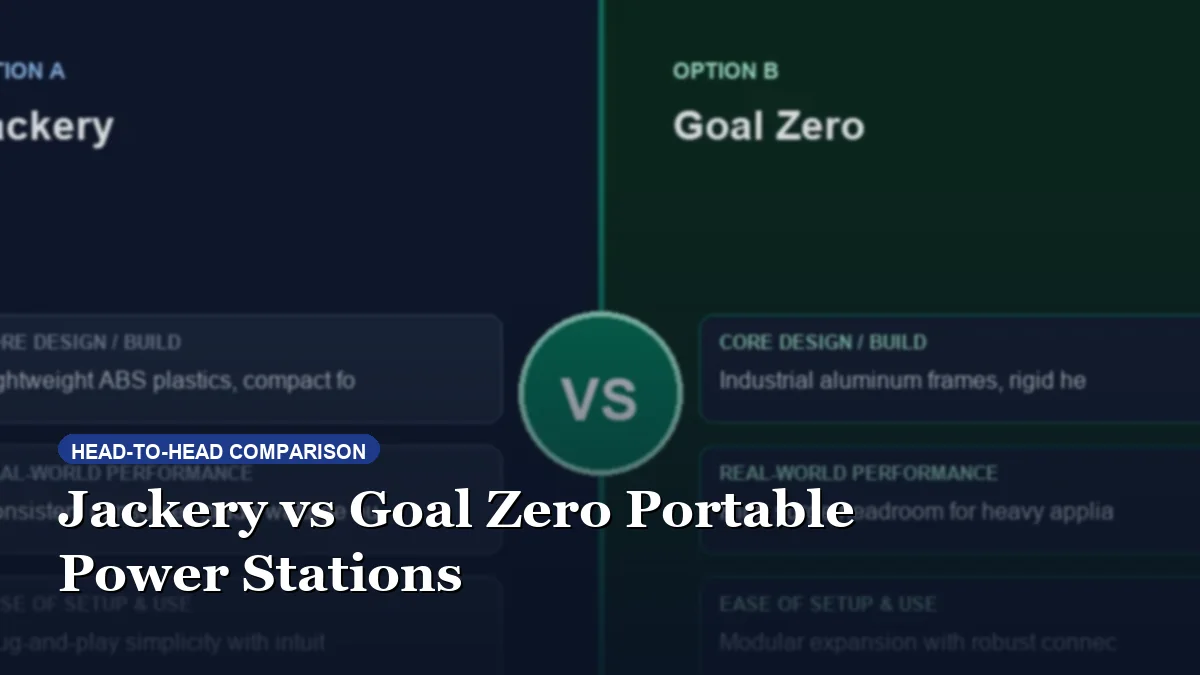
Pick Jackery for lightweight mobility, streamlined app controls, and rapid solar recharging. Choose Goal Zero when demanding industrial durability, modular expansion batteries, and heavy-duty surge capacity outweigh portability concerns.
Compare all top models in our Best Portable Power Station: Top Picks for 2026.
Side-by-Side Breakdown
| Criteria | Jackery | Goal Zero | Edge |
|---|---|---|---|
| Core Design / Build | Lightweight ABS plastics, compact folding handles. | Industrial aluminum frames, rigid heavy-duty grips. | Goal Zero |
| Real-World Performance | Consistent consumer-grade wattage output. | High surge headroom for heavy appliances. | Goal Zero |
| Ease of Setup & Use | Plug-and-play simplicity with intuitive apps. | Modular expansion with robust connectors. | Jackery |
| Durability & Reliability | Excellent for standard recreational camping. | Built for extreme field and job sites. | Goal Zero |
| Efficiency / Operating Footprint | Optimized portable dimensions and rapid solar kits. | Scalable energy footprint with modular batteries. | Tie |
| Maintenance Requirements | Standard LFP care and periodic app updates. | Rigorous firmware checks and terminal inspections. | Jackery |
| Best Ideal Use Case | Weekend camping and lightweight emergency backup. | Heavy-duty off-grid living and job sites. | Split by User |
Brand Evolution and Founding Engineering Philosophies
Examining the foundational origins of both manufacturers reveals starkly different engineering priorities. Jackery prioritized consumer-friendly portable electronics, whereas Goal Zero engineered rugged systems for remote industrial deployment and harsh field environments.
Understanding these corporate roots explains why their modern power stations handle environmental stress, recharge speeds, and modular system expansions differently. Buyers must weigh lifestyle convenience against professional-grade durability before purchasing.
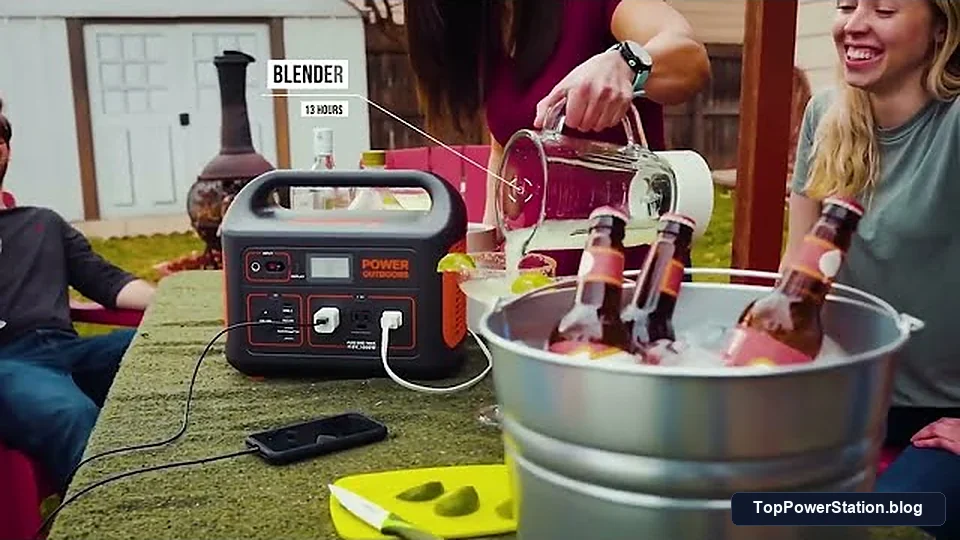
Jackery pioneered user-friendly portable solar generators by focusing on consumer accessibility and lightweight design, deploying high-efficiency lithium-ion cells housed in distinct orange-and-black fire-retardant enclosures engineered for outdoor recreational enthusiasts.
Our comprehensive Goal Zero Yeti 1500X review highlights how Goal Zero emerged from humanitarian roots, prioritizing heavy-duty industrial durability, modular expansion systems, and ruggedized aluminum frames built for professional field technicians.
- Jackery launched initial models targeting casual campers.
- Goal Zero supplied military and research expeditions.
- Both brands shifted toward lithium iron phosphate.
Jackery Origins and Consumer Focus
Jackery streamlined recreational power by focusing on bright color accents, lightweight plastic enclosures, and plug-and-play simplicity. Their design language targets users who value intuitive outdoor operation over modular rack-mounting capabilities.
This philosophy ensures effortless transport for weekend tailgating and emergency home preparedness. However, it occasionally sacrifices the rugged chassis armor demanded by overlanding enthusiasts facing severe weather conditions.
- Lightweight plastics reduce overall unit weight.
- Simplified interfaces lower the technical barrier.
Goal Zero Industrial Heritage
Goal Zero built its reputation supplying rugged solar gear for extreme environments, scientific expeditions, and emergency responders. Their heavy-duty units prioritize structural integrity, metal-reinforced frames, and modular battery expansion options.
Such industrial roots mean heavier overall weights and utilitarian aesthetics. Yet, these design choices guarantee superior drop resistance and long-term field reliability under punishing operational stressors.
- Reinforced corners absorb severe impact forces.
- High-capacity expansion ports scale total energy.
Core Architecture and Battery Chemistry Trade-Offs
Battery chemistry dictates the lifespan, weight profile, and overall safety margins of modern portable power stations. Both manufacturers transitioned their flagship lineups to lithium iron phosphate cells to maximize thermal stability.
Examining cell configurations highlights how each company optimizes energy density versus cycle longevity. Choosing the right chemistry directly impacts how many years your investment will deliver dependable daily power.
Modern Jackery Explorer units increasingly utilize LiFePO4 chemistry, delivering extended cycle lives exceeding three thousand charges before dropping below eighty percent original capacity, drastically reducing long-term degradation rates for frequent campers.
Detailed inside our Goal Zero Yeti 1000X review, Goal Zero integrates advanced Battery Management Systems protecting internal packs against thermal runaway, balancing high energy density against demanding power tool discharge thresholds.
- LFP chemistry offers thousands of cycles.
- NMC variants prioritize compact physical footprints.
NMC vs LFP Cell Longevity
Older NMC variants provided impressive energy density within smaller enclosures, but suffered from faster capacity degradation. Modern LFP cells drastically extend operational life, often guaranteeing three thousand cycles before dropping to eighty percent capacity.
Goal Zero and Jackery now utilize LFP for heavy-duty models, though older inventory may still feature NMC. Buyers should verify exact internal chemistries to ensure maximum long-term value.
- LFP withstands frequent deep discharging safely.
- NMC units remain lighter for identical capacities.
Thermal Management and BMS Design
An advanced battery management system monitors voltage, temperature, and current flow to prevent catastrophic thermal runaway. Both brands integrate multiple internal sensors, but their cooling algorithms and fan noise profiles differ noticeably.
Effective thermal dissipation prevents premature throttling during high-draw appliance usage under heavy summer heatwaves. Robust BMS programming protects your hardware investment from electrical short circuits.
- Active cooling fans engage during heavy inverter loads.
- Smart sensors cut power during overheating events.
Inverter Output, Surge Capacity, and Waveform Quality
The internal inverter transforms stored direct current into household alternating current to power sensitive electronics. Evaluating continuous wattage ratings and surge thresholds reveals which generator handles heavy motor loads best.
Clean power delivery prevents electrical humming and potential damage to microprocessors inside modern refrigerators and medical devices. Pure sine wave output remains non-negotiable for safe appliance operation.
Pure sine wave inverters are standard across both brands, ensuring sensitive medical devices and microprocessors operate smoothly without interference, backed by robust surge capacity ratings to handle sudden compressor motor startups.
Understanding continuous output wattage versus peak overload limits prevents premature thermal shutdowns, as sustained loads exceeding specified inverter thresholds will trigger internal circuit breakers to protect critical electrical components.
- Continuous wattage dictates running appliance limits.
- Surge capacity handles initial motor startup spikes.
Continuous Load Limits
Jackery units typically match their advertised continuous wattage with conservative thermal headroom for short bursts. Goal Zero systems often engineer higher peak surge tolerances to accommodate demanding compressor appliances.
Matching your specific household or camping loads to these exact inverter limits prevents unexpected overloads during crucial emergency situations. Always audit your peak running wattage before connecting sensitive equipment.
- Refrigerator compressors require high startup surges.
- Resistive heaters draw steady continuous current.
Pure Sine Wave Integrity
Delivering a smooth sinusoidal waveform ensures zero harmonic distortion for medical CPAP machines and audio gear. Both manufacturers incorporate quality inverters, yet Goal Zero exhibits superior harmonic stability under fluctuating loads.
Clean electrical output eliminates buzzing noises in audio speakers and protects sensitive laptop charging circuits. Prioritizing pure sine wave quality guarantees flawless device compatibility.
- Low total harmonic distortion protects microchips.
- Unfiltered modified sine waves cause overheating.
Solar Integration and Maximum Power Point Tracking
Recharging via renewable solar panels represents a primary use case for off-grid camping and emergency preparedness. Advanced maximum power point tracking controllers optimize incoming amperage and voltage to maximize solar harvesting.
Understanding input voltage limitations prevents hardware damage while ensuring you achieve optimal recharging speeds under varying sunlight angles. Efficient MPPT technology significantly reduces total off-grid charging times.
Efficient solar recharging relies on integrated Maximum Power Point Tracking controllers that optimize incoming voltage and amperage, transforming variable photovoltaic inputs into steady DC currents matching battery charging specs.
As detailed within our Goal Zero Yeti 700 review, while Jackery favors proprietary DC connectors for streamlined panel pairing, Goal Zero adopts standard Anderson connections, enabling versatile third-party renewable energy systems integration.
- High input voltage limits ease panel wiring.
- Fast controllers adapt dynamically to cloud cover.
MPPT Efficiency Ratings
Jackery leverages efficient MPPT algorithms within its proprietary solar generator kits to capture maximum daylight energy. Goal Zero matches this efficiency while adding heavy-duty Anderson connectors for permanent mounting applications.
Real-world solar yields depend heavily on panel placement, ambient temperature, and controller efficiency ratings. Selecting units with robust tracking prevents wasted energy during sub-optimal weather conditions.
- Proper panel tilt boosts daily amp hours.
- Shading single panels degrades string output.
Proprietary vs Universal Connectors
Jackery relies heavily on proprietary DC plug connections, restricting third-party solar panel compatibility without specialized adapters. Goal Zero embraces industry-standard Anderson Powerpole connections, facilitating flexible third-party integration.
Open standards allow users to mix and match heavy-duty solar arrays without purchasing manufacturer-locked wiring harnesses. This flexibility benefits advanced off-grid hobbyists seeking customized renewable setups.
- Adapters bridge proprietary and standard cables.
- Standard ports simplify custom rooftop arrays.
Physical Ergonomics, Weight Distribution, and Chassis Build
Physical design dictates how comfortably you can transport a heavy power station between your vehicle and campsite. Ergonomic handle placement, balanced weight distribution, and robust corner bumpers define superior chassis engineering.
Heavy units require dual-person lifting handles or integrated trolley wheels to prevent back strain during transit. Evaluating structural build quality ensures your generator survives rugged outdoor adventures.
Chassis construction heavily dictates portability, utilizing impact-resistant polymers and collapsible handles that minimize overall footprint during transport while maintaining structural integrity across rugged field conditions.
Ergonomic weight distribution prevents wrist fatigue when carrying mid-sized generators, whereas larger high-capacity models incorporate dual-person lifting grips or heavy-duty trolley attachments designed for jobsite mobility.
- Foldable handles save vertical storage space.
- Rubberized feet absorb transit vibrations.
Handle Design and Portability
Consulting our best solar panels for Goal Zero Yeti guide reveals how Jackery pioneered top-folding handles sitting flush with casings, whereas Goal Zero utilizes robust rigid side handles designed for heavy two-person lifting tasks.
Choosing between flush folding grips and rigid fixed handles depends entirely on your vehicle cargo space and lifting preferences. Streamlined handles prevent snagging inside tightly packed gear bags.
- Flush handles allow stacking light items.
- Rigid handles offer secure gloved grips.
Enclosure Material Toughness
Impact-resistant ABS plastics keep Jackery units lightweight while adequately protecting internal circuitry from minor bumps. Goal Zero incorporates powder-coated aluminum frames and reinforced polymers for ultimate impact protection.
Industrial environments demand rugged outer shells that resist scratching, cracking, and ultraviolet degradation under harsh sunlight. High-end materials directly influence the longevity of external housings.
- Aluminum shielding blocks electromagnetic interference.
- Polymer blends resist chemical solvent spills.
Software Ecosystems, App Connectivity, and Firmware Updates
Modern power stations increasingly integrate Bluetooth and Wi-Fi connectivity for remote monitoring and firmware updates. A responsive mobile application allows users to check battery percentages and adjust charging speeds remotely.
Seamless software interfaces enhance user convenience by alerting operators to thermal warnings or unexpected inverter shutdowns without checking the physical unit. Reliable telemetry improves overall system transparency.
Companion mobile applications communicate via Bluetooth or Wi-Fi protocols, granting remote monitoring of input wattage, output draws, and state-of-charge percentages without physically interacting with the hardware interface.
Firmware updates delivered through these software ecosystems optimize battery management algorithms and correct minor display discrepancies, ensuring long-term operational stability and enhanced system efficiency metrics.
- Bluetooth enables short-range campsite checks.
- Wi-Fi unlocks remote home backup monitoring.
Bluetooth and Wi-Fi Interfaces
Jackery provides a polished smartphone application with intuitive pairing procedures for monitoring power flow. Goal Zero offers robust connectivity focused on detailed energy analytics and historical usage graphs.
Reliable wireless communication prevents unnecessary trips outside during inclement weather to check generator status. Stable software connections remain essential for modern smart home integration.
- Apps display real-time input and output wattage.
- Firmware patches resolve rare charging bugs.
Diagnostic Telemetry Quality
Clear diagnostic readouts on device screens and mobile apps help troubleshoot error codes instantly. Both ecosystems provide comprehensive error logging, but Goal Zero displays granular voltage metrics for advanced diagnostics.
Detailed telemetry empowers technical users to diagnose minor faults before they escalate into major hardware failures. Transparent monitoring guarantees greater operational confidence.
- Error codes indicate specific subsystem failures.
- Cell voltage balancing prevents premature degradation.
Maintenance Protocols, Warranty Support, and Long-Term Reliability
Protecting your investment requires adhering to manufacturer maintenance guidelines and understanding warranty coverage terms. Long-term reliability depends heavily on proper storage practices and regular firmware maintenance.
Evaluating customer support infrastructure ensures you receive prompt assistance if hardware components fail unexpectedly during critical deployment periods. Reliable warranties reflect true manufacturer confidence.
Routine maintenance requires periodic charge cycles every three to six months during storage, coupled with dusting ventilation ports to prevent overheating and maintain optimal thermal dissipation.
Manufacturer warranty terms typically span two to five years, covering manufacturing defects while excluding normal capacity degradation, thereby emphasizing the importance of adhering to proper operational guidelines.
- Store units at partial charge during winters.
- Register warranties immediately after purchase.
Cycle Life Degradation Curves
Lithium iron phosphate batteries maintain healthy capacity across thousands of cycles if kept within moderate temperature ranges. Following proper charging habits prevents accelerated degradation and ensures maximum operational lifespan.
Both brands specify clear retention percentages over designated cycle counts, giving buyers predictable performance expectations. Understanding capacity decay helps plan future power station replacements.
- Avoid storing units in freezing garages.
- Charge batteries every three months during storage.
Customer Service Infrastructure
Responsive customer support and accessible repair centers simplify troubleshooting when hardware glitches arise unexpectedly. Goal Zero and Jackery both maintain dedicated service teams to handle warranty replacement claims.
Robust support networks provide immense peace of mind when investing heavily in emergency home backup equipment. Reliable service infrastructure separates industry leaders from budget competitors.
- Keep original packaging for safe shipping.
- Document error codes with clear photographs.
Frequently Asked Questions
Can I use third-party solar panels with Jackery power stations?
Jackery power stations generally require specialized adapter cables to connect non-branded solar panels without risking severe electrical damage to the internal Maximum Power Point Tracking charge controller.
Purchasing compatible manufacturer wiring harnesses ensures your entire mobile system maintains proper voltage regulation while safely harvesting maximum renewable outdoor energy during extended off-grid camping trips.
How do Goal Zero and Jackery differ in extreme cold weather performance?
Goal Zero models often incorporate robust internal heating elements and heavy-duty metal chassis shielding to maintain battery chemistry stability in freezing outdoor environments.
Jackery units require careful thermal monitoring because extreme cold temperatures can temporarily halt charging processes to protect lithium iron phosphate cells.
Are Goal Zero power stations truly modular for whole-home emergency backups?
Goal Zero systems excel at modular expansion by allowing users to safely daisy-chain heavy-duty external battery banks directly into the main generator unit for extended emergency runtimes.
This sophisticated architectural flexibility enables residential homeowners to scale total energy storage capacity effortlessly when preparing for extended severe weather electrical grid utility failures.
Which brand offers a better mobile application for remote power monitoring?
Jackery provides a streamlined smartphone application featuring highly intuitive touch controls and rapid Bluetooth pairing procedures for quick campsite management.
Goal Zero delivers deeper technical telemetry with comprehensive energy analytics, making it ideal for users who demand granular system diagnostic visibility.
Do these power stations support simultaneous pass-through charging capabilities safely?
Both manufacturers engineer their advanced portable power stations to support pass-through charging, allowing you to power household appliances while simultaneously recharging the internal battery pack.
However, running continuous heavy loads during high-temperature solar inputs may occasionally trigger protective thermal shutdowns to prevent permanent internal battery degradation.