Jackery vs Bluetti: Technical Comparison
Choosing the right portable power station requires balancing chemistry and portability. This guide compares Jackery and Bluetti across critical electrical metrics.

Choose Jackery for lightweight outdoor portability and rapid solar deployment. Select Bluetti for expandable high-capacity residential backup and advanced LiFePO4 chemistry.
Compare all top models in our Best Portable Power Station: Top Picks for 2026.
Side-by-Side Breakdown
| Criteria | Jackery | Bluetti | Edge |
|---|---|---|---|
| Core Design / Build | Molded ABS plastic, fixed handles | Heavy-duty modular, rugged housing | Bluetti |
| Real-World Performance | Stable pure sine wave output | High surge capacity, expandable kWh | Bluetti |
| Ease of Setup & Use | Plug-and-play interface, simple screen | App-controlled management, complex settings | Jackery |
| Durability & Reliability | Premium NCM and modern LiFePO4 cells | Robust LiFePO4 architecture, long cycles | Bluetti |
| Efficiency / Operating Footprint | Optimized inverter conversion efficiency | Higher standby draw with expansion packs | Jackery |
| Maintenance Requirements | Minimal firmware updates, simple cleaning | Regular app updates, firmware monitoring | Jackery |
| Best Ideal Use Case | Recreational camping, weekend mobile setups | Whole-home emergency backup, off-grid cabins | Bluetti |
Core Design and Engineering Differences
Jackery prioritizes sleek portability by utilizing streamlined enclosures with integrated folding handles. Their engineering focuses on reducing overall footprint for seamless vehicle packing and weekend recreational camping trips.
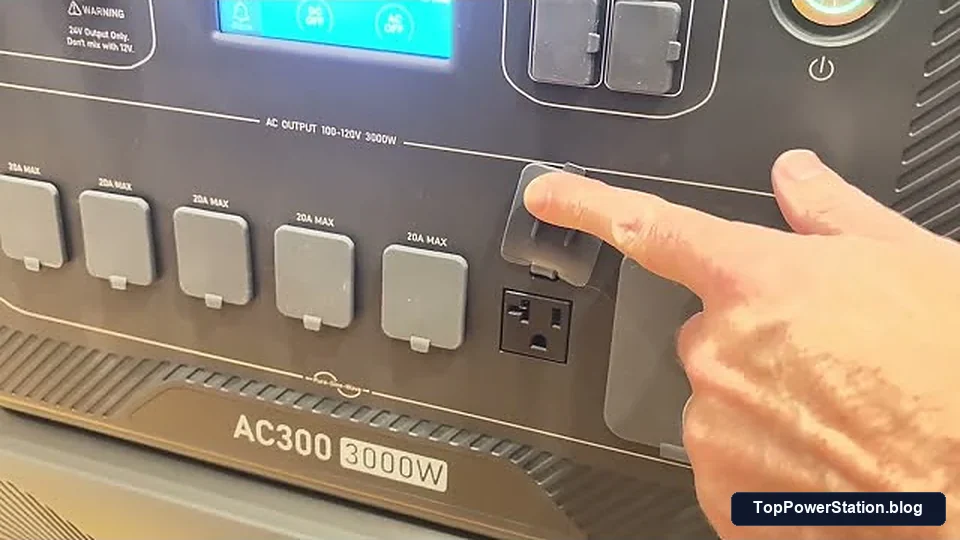
Bluetti takes a heavily modular approach, often incorporating expandable battery ports and heavy-duty chassis designs. Their engineering philosophy centers on stationary resilience, heavy energy reserves, and modular expansion capabilities.
When evaluating the best Jackery power station, models traditionally prioritize streamlined, vertical integration housings utilizing rigid ABS plastics to maintain low overall unit weight for recreational camping.
Conversely, Bluetti implements heavy-duty industrial framing using flame-retardant polycarbonate alloys, often featuring fixed side grips and modular expansion ports designed for heavy stationary usage and high-capacity off-grid setups.
- High-impact ABS outer shells
- Reinforced internal framing
- Integrated cooling air intake channels
Chassis Materials and Structural Layout
Both brands utilize flame-retardant polymers, but Bluetti often adds rubberized bumpers to absorb heavy impacts. Jackery maintains a cleaner, minimalist aesthetic that favors smooth surfaces and lightweight travel convenience.
- Molded polymer composite panels
- Textured grip corner guards
Real-World Performance and Inverter Output
Pure sine wave inverters are standard across both lineups, ensuring safe operation for sensitive medical devices and modern laptops. Voltage stability remains exceptionally high under fluctuating heavy electrical loads.
Bluetti units frequently deliver higher surge ratings, making them ideal for starting inductive motor loads like refrigerators. Jackery provides reliable continuous output ratings suited for standard household appliances.
Pure sine wave inverters from Jackery deliver stable alternating current with total harmonic distortion staying below five percent, protecting sensitive medical devices and modern laptops from electrical noise during extended grid outages.
As highlighted in our Bluetti AC180 review, these units frequently push higher surge thresholds, leveraging robust microprocessors to handle motor startup loads effortlessly for heavy kitchen appliances and tools.
- Sustained pure sine wave delivery
- Superior motor starting surge capacity
- Advanced thermal overload protection
Continuous Load Handling
Operating heavy tools requires careful monitoring of thermal thresholds and sustained wattage capacities. Bluetti models handle continuous high-draw scenarios efficiently through aggressive internal cooling fan arrays.
- Strict voltage regulation circuits
- Multi-port simultaneous power distribution
Battery Chemistry and Longevity Metrics
Modern portable power stations rely heavily on LiFePO4 battery chemistry to guarantee thousands of deep charge cycles. For instance, as noted in our Jackery Explorer 1000 V2 review, brand updates prioritize longevity.
Bluetti established its reputation early on by adopting lithium iron phosphate cells across almost their entire catalog. This commitment yields exceptional operational lifespans exceeding three thousand cycles.
Modern Jackery Explorer models adopt high-grade lithium iron phosphate cells, ensuring exceptional chemical stability and safely delivering over three thousand complete charge cycles before capacity degrades to eighty percent.
Similarly, Bluetti integrates premium LiFePO4 chemistry across its ecosystem, pairing advanced battery management systems to monitor individual cell voltages and prevent thermal runaway during rapid charging operations.
- Extended calendar lifespan metrics
- Predictable daily capacity degradation curves
- Low self-discharge rates during storage
Cycle Life and Degradation Rates
Understanding capacity retention helps users plan long-term off-grid investments without unexpected power drops. Both brands maintain high efficiency past eighty percent original capacity thresholds after years of daily usage.
- Accelerated aging test verification
- Cell balancing management architecture
Charging Speeds and Solar Integration
Recharging capabilities dictate how quickly units recover energy during extended grid outages. Selecting the best Jackery for camping ensures reliable solar panel compatibility with efficient built-in MPPT charge controllers.
Bluetti excels in dual-charging scenarios, allowing simultaneous AC wall input and heavy solar arrays for rapid replenishment. Their fast-charging circuitry significantly reduces total downtime between heavy usage cycles.
Jackery favors balanced charging profiles, utilizing proprietary MPPT controllers that accept moderate photovoltaic inputs to protect cell longevity while supporting standard wall outlet charging speeds for everyday convenience.
Bluetti excels in high-wattage solar array integration, frequently supporting ultra-fast dual charging inputs that combine AC grid power with high-voltage panels to achieve full capacity in under two hours.
- High-voltage MPPT controller ranges
- Secure aviation-style charging connectors
- Optimized panel angle tilt efficiency
Maximum Solar Input Limits
Matching photovoltaic panels requires strict adherence to open-circuit voltage limits specified by each manufacturer. Exceeding these thresholds triggers internal protection modes that safely shut down solar input channels.
- Overvoltage input protection circuits
- Standardized connector cable adapters
Safety Standards and Thermal Management
Comprehensive Battery Management Systems protect internal cells against overvoltage, short circuits, and extreme temperatures. Jackery integrates multiple thermal sensors to monitor heat dissipation during high-output operations.
Bluetti employs sophisticated software monitoring via dedicated mobile applications to track individual cell health continuously. Their active cooling systems engage automatically when internal temperatures exceed safe operating baselines.
Integrated multi-sensor arrays inside Jackery stations monitor internal temperatures continuously, activating variable-speed cooling fans only when heavy inverter loads trigger excessive thermal buildup within the chassis.
Bluetti employs comprehensive electronic safeguards complying with strict international certifications, featuring short-circuit protection, over-current limits, and advanced passive heat sinks to maintain optimal operating conditions safely.
- Multi-point internal temperature probes
- Automated fan speed modulation
- Hardware-level thermal fuse cutoffs
Passive and Active Cooling
Thermal management directly impacts acoustic noise levels and overall hardware longevity under heavy electrical strain. Variable-speed fans balance cooling efficiency against disruptive operating noise during quiet indoor environments.
- Low-noise brushless cooling fans
- Aluminum heatsink thermal coupling
Ergonomics, Portability, and Build Form
Physical layout and handle design dictate user comfort when transporting heavy power equipment across uneven terrain. Jackery features collapsible handles that allow multiple units to stack efficiently during transit.
Bluetti models often incorporate dual fixed side handles due to their heavier expansion-capable battery chassis. Users must evaluate lifting ergonomics and vehicle storage clearances prior to purchasing larger units.
Compact form factors define the Jackery design philosophy, utilizing collapsible top handles that fold flat to enable effortless stacking inside crowded vehicle trunks during weekend camping excursions.
Bluetti prioritizes structural rigidity and balanced weight distribution, incorporating recessed lifting grips and ruggedized outer shells built to withstand the demanding rigors of jobsite environments and remote expeditions.
- High-contrast monochrome and color displays
- Dedicated port activation push buttons
- Clear remaining runtime estimations
Interface Layout and Screen Clarity
LCD display screens provide real-time input wattage, output metrics, and remaining battery percentage estimations instantly. Clear backlighting ensures readability in direct sunlight or dark emergency situations.
- Scratch-resistant display lenses
- Tactile rubberized button feedback
Maintenance, Efficiency and Long-Term Value
Regular upkeep involves keeping ventilation ports clear of dust and updating mobile device management applications. Jackery requires minimal software intervention, offering a straightforward plug-and-play maintenance philosophy.
Bluetti systems benefit from periodic firmware updates that optimize inverter efficiency and charging algorithms over time. Owners must ensure stable Wi-Fi or Bluetooth connections for seamless software maintenance cycles.
Routine maintenance for Jackery power stations remains minimal, requiring only periodic firmware updates via mobile applications and routine port cleaning to ensure optimal energy conversion efficiency over years of operation.
Long-term value from Bluetti stems from modular expansion capabilities, allowing users to scale watt-hour capacities incrementally without purchasing entirely new systems as their off-grid energy demands grow.
- Low idle standby power consumption
- Automated AC output shutoff timers
- Long-term seasonal storage protocols
Operating Efficiency and Standby Draw
Parasitic draw from idle inverters can drain stored energy reserves if left powered on unnecessarily. Efficient power management settings automatically shut down inactive ports to preserve battery capacity.
- Configurable sleep mode timeouts
- Idle power draw minimization
Frequently Asked Questions
Which brand offers better solar charging speeds for remote off-grid camping trips?
Bluetti generally provides significantly higher maximum solar input wattage ceilings across their larger capacity generator models to reliably enable remarkably fast emergency power recovery during extended remote grid failures.
Meanwhile, Jackery thoroughly matches standard recreational camping needs with exceptionally lightweight and efficient portable monocrystalline folding panels that deploy quickly anywhere outdoors for immediate off-grid energy.
Are these power stations safe to store inside residential living spaces during winter?
Both manufacturers utilize advanced battery management systems and stable lithium iron phosphate chemistry to ensure complete operational safety inside occupied residential environments year-round without hazardous fumes.
Users should simply maintain moderate ambient storage temperatures and keep ventilation pathways completely unobstructed to prevent any potential thermal accumulation issues during prolonged indoor storage periods.
Can I run sensitive medical equipment like CPAP machines using these units?
Pure sine wave inverters integrated into both product lineups deliver exceptionally clean electrical current that safely matches standard household utility wall outlets for critical medical devices.
This stable power output reliably protects sensitive medical equipment, desktop computers, and precision electronics from unexpected voltage spikes or damaging harmonic distortion during continuous overnight operational cycles.
What maintenance is required to maximize the long-term lifespan of these batteries?
Routine maintenance involves keeping all exterior cooling vents meticulously clean, performing occasional mobile app firmware updates, and storing the main unit at half capacity if left unused for months.
Avoiding extreme temperature exposure and preventing complete zero-charge battery depletion will also preserve optimal chemical health across thousands of daily operational cycles.
How do I choose the correct battery capacity for my specific emergency backup needs?
Calculating total daily energy consumption requires summing the individual wattage ratings and running hours of all essential household appliances you plan to operate simultaneously during emergencies.
Selecting a power station model that exceeds your calculated daily kilowatt-hour total by at least twenty percent ensures reliable backup performance during unexpected multi-day power outages.