Jackery 2000 Pro vs Bluetti Ac200P: Concise Verdict
Evaluating two heavy-hitting solar generators reveals stark differences in chemical longevity, charging speeds, and physical portability. Choose your ideal backup unit wisely.

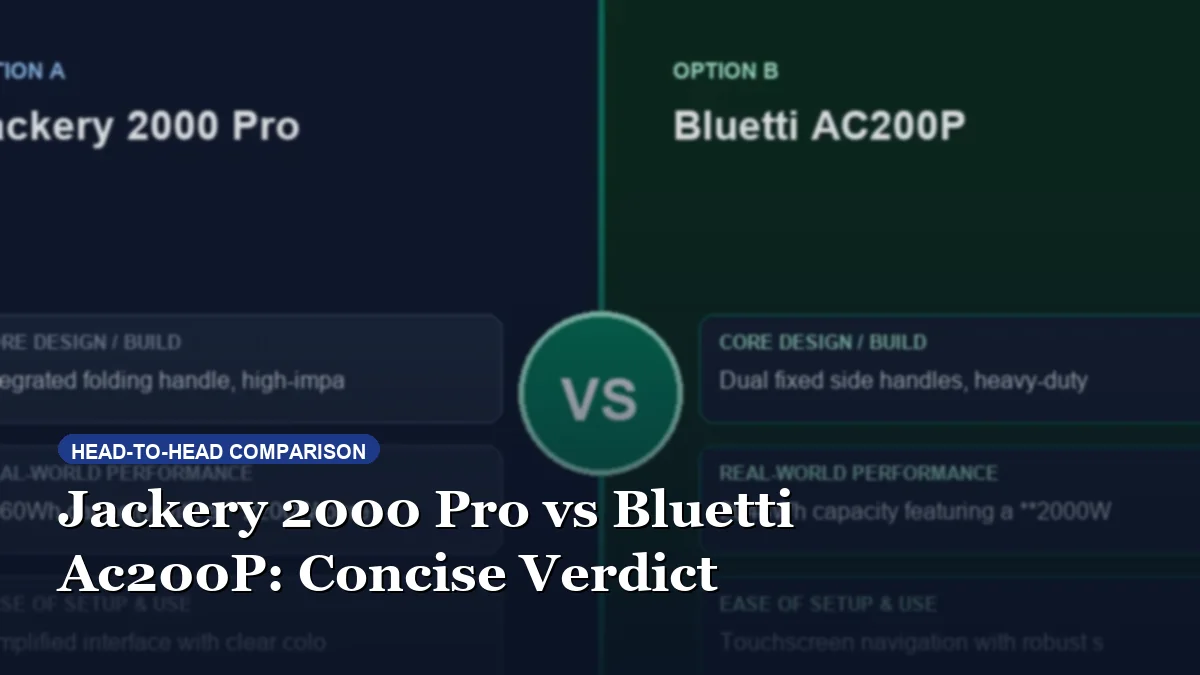
Pick the Jackery for rapid wall charging and lighter travel, or select the Bluetti for LiFePO4 chemical longevity and extensive port options.
Compare all top models in our Best Portable Power Station: Top Picks for 2026.
Side-by-Side Breakdown
| Criteria | Jackery 2000 Pro | Bluetti AC200P | Edge |
|---|---|---|---|
| Core Design / Build | Integrated folding handle, high-impact polymer housing. | Dual fixed side handles, heavy-duty industrial chassis. | Jackery 2000 Pro |
| Real-World Performance | 2160Wh capacity with a 2200W pure sine wave inverter. | 2048Wh capacity featuring a 2000W continuous load rating. | Bluetti AC200P |
| Ease of Setup & Use | Simplified interface with clear color status displays. | Touchscreen navigation with robust settings menus. | Jackery 2000 Pro |
| Durability & Reliability | NMC lithium battery rated for 1000 cycles to 80 percent. | LiFePO4 battery rated for 3500 plus cycles to 80 percent. | Bluetti AC200P |
| Efficiency / Operating Footprint | Optimized AC wall brick speeds under two hours total. | Slower internal brick requiring external adapters for speed. | Jackery 2000 Pro |
| Maintenance Requirements | Regular firmware updates and mandatory six-month top-off cycles. | Minimal upkeep with stable chemical storage characteristics. | Bluetti AC200P |
| Best Ideal Use Case | Frequent RV travelers needing fast deployment and easy handling. | Home backup enthusiasts prioritizing long-term daily cycle life. | Split Decision |
Architectural Design and Structural Build
Modern power station engineering demands robust enclosures to withstand rugged outdoor environments. Both units utilize tough composite materials, yet their physical handling profiles diverge significantly during transit.
Internal frame layouts dictate how well each generator absorbs mechanical shock. For instance, findings inside our Jackery Explorer 2000 V2 review highlight robust corner bumpers protecting sensitive internal inverters.
- Polymer shell construction minimizes overall travel weight.
- Internal structural ribs isolate vibration-prone circuit boards.
- Sealed port covers prevent dust and moisture ingress.
Chassis Engineering and Materials
Heavy-duty plastics endure ultraviolet exposure without degrading prematurely. Rigorous drop testing confirms that exterior ribs successfully deflect impact forces away from battery cells.
Thermal management channels direct airflow away from structural joints. This prevents localized heat accumulation during extended high-draw operations in warm weather conditions.
- Flame-retardant outer casings meet strict UL standards.
- Optimized vent placement shields electronics from rain.
Interface Layout and User Controls
Clear segment displays provide instant wattage feedback for incoming and outgoing loads. Tactile buttons offer positive mechanical click feedback even when operators wear heavy work gloves.
Logical grouping of alternating current and direct current outputs prevents cable clutter. Dedicated power switches eliminate parasitic drain when individual sections remain idle.
- Isolated circuit zones protect low-voltage USB ports.
- High-contrast screens remain visible in direct sunlight.
Chemical Composition and Battery Longevity
Battery chemistry dictates the operational lifespan and daily reliability of portable generators. Nickel Manganese Cobalt cells offer high energy density, while Lithium Iron Phosphate prioritizes cyclic endurance.
Understanding degradation curves helps users calculate long-term value. Data presented in the Jackery Explorer 2000 Plus review demonstrates how advanced chemistry maintains capacity across heavy usage.
- NMC cells pack more watt-hours into smaller physical footprints.
- LiFePO4 variants endure thousands of cycles before noticeable fade.
- Advanced thermal sensors protect cells from extreme temperatures.
Cycle Life and Degradation Metrics
Long-term testing reveals distinct capacity retention curves between these two models. Standard cycle thresholds define when a battery drops below eighty percent of its original factory rating.
Daily users benefit significantly from extended cycle ratings found in modern iron-based configurations. Weekend campers might never exhaust the standard cycle limits of traditional lithium formulations.
- Eighty percent retention marks standard battery end-of-life.
- Chemical stability prevents runaway thermal events effectively.
Thermal Management and Cell Safety
Integrated battery management systems continuously monitor individual cell voltages. Active cooling fans prevent dangerous heat buildup during maximum inverter output phases.
Emergency thermal cutoffs disconnect circuits immediately if internal temperatures exceed safe operating parameters. This proactive defense mechanism preserves overall hardware integrity during sudden overloads.
- Multi-point temperature probes track internal hotspots.
- Automatic throttling reduces stress during extreme heat.
Input Metrics and Rapid Charging Performance
Quick recharge capabilities remain vital during rolling blackouts or short weather windows. High-wattage solar arrays and wall inputs dramatically reduce downtime between power outage cycles.
Advanced maximum power point tracking controllers optimize incoming solar energy harvesting. Exploring best solar panels for Bluetti AC200P options ensures minimal wattage loss from connected photovoltaic panels.
- Wall charging speeds vary based on internal inverter limits.
- Solar input voltages require careful matching with specifications.
- Dual charging modes combine sources for maximum velocity.
Wall Outlet Charging Speeds
Direct alternating current charging utilizes heavy-duty internal circuitry to replenish energy quickly. Fast recharge protocols restore depleted capacity in under two hours without overheating components.
Standard charging profiles protect battery health by stepping down current near full capacity. This intelligent tapering prevents overvoltage stress on delicate lithium electrode structures.
- High-amp AC cables deliver rapid power restoration.
- Smart tapering protects cells during final charging stages.
Solar Array Integration and MPPT
Compatible solar panels must match the open-circuit voltage limits of the generator. Exceeding recommended voltage parameters can permanently damage internal charge controllers and void warranties.
High-efficiency MPPT algorithms adjust impedance dynamically to extract maximum power. Users enjoy faster off-grid replenishment even during partially overcast weather conditions.
- Strict voltage ceilings protect sensitive controller circuits.
- Parallel adapters allow multiple panel array connections.
Output Capabilities and Inverter Specifications
Pure sine wave inverters deliver clean electricity suitable for sensitive medical and computing devices. Harmonic distortion remains minimal, protecting microprocessors from premature electrical degradation during operation.
Surge capacity handles motor startup loads found in refrigerators and power tools. Exceeding continuous wattage ratings triggers protective shutdowns to prevent permanent transformer damage.
- Pure sine output mimics standard household wall outlets.
- Surge ratings accommodate heavy inductive appliance loads.
- Multiple outlet types support diverse regional plug standards.
Continuous and Surge Wattage Limits
Continuous output ratings determine which household appliances can run simultaneously. Running high-draw heating elements alongside kitchen appliances requires careful power budgeting.
Surge capacity provides a temporary wattage buffer for motorized equipment startup cycles. Motors require triple their running wattage for a fraction of a second.
- Refrigerator compressors demand high initial surge power.
- Continuous loads must stay below maximum inverter thresholds.
Port Diversity and Distribution
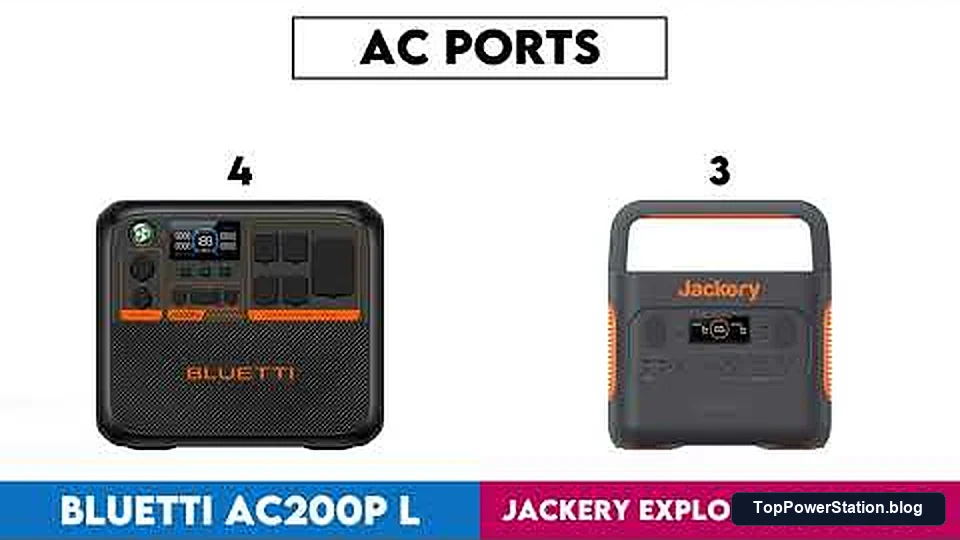
Abundant alternating current outlets prevent the need for dangerous power strips. Specialized heavy-duty ports accommodate high-amperage RV equipment without requiring awkward adapter pigtails.
Direct current USB ports feature fast-charging protocols for modern mobile devices. Regulated twelve-volt automotive sockets power portable refrigerators and camping accessories efficiently.
- Dedicated RV plugs simplify motorhome backup integration.
- USB-C power delivery ports charge laptops rapidly.
Ergonomics, Portability, and Field Usability
Physical dimensions and weight dictate how easily a user can transport heavy power stations. Ergonomic handle placement reduces strain during loading and unloading from vehicle trunks.
Balanced weight distribution prevents tipping during off-road transit over uneven terrain. Compact footprints conserve valuable storage space inside crowded camping trailers and vans.
- Folding handles save space during storage configurations.
- Heavy units require two-person lifting techniques safely.
- Rubberized feet prevent sliding on smooth vehicle surfaces.
Weight Distribution and Carrying
Ergonomic handles engineered into the chassis simplify lifting heavy loads. Balanced internal component placement prevents awkward tilting during manual transport phases.
Compact storage dimensions allow units to slide neatly beneath truck bed covers. Transporting heavy power stations requires careful consideration of vehicle payload capacities.
- Molded grips reduce hand fatigue during long carries.
- Low center of gravity prevents accidental tipping.
Display Clarity and Software Control
Comprehensive LCD screens provide real-time battery status and error diagnostics. Intuitive menu systems allow users to adjust settings without referencing physical instruction manuals.
Wireless smartphone connectivity enables remote monitoring from comfortable campsite chairs. Bluetooth and Wi-Fi links offer convenient tracking of input and output metrics.
- Backlit screens remain readable in dark environments.
- Remote apps provide firmware update notifications.
Maintenance Protocols and Safety Standards
Routine maintenance ensures backup power stations remain operational during unexpected emergencies. Keeping firmware updated and storing units at optimal charge levels prevents premature capacity degradation.
Adhering to strict electrical safety standards protects users from shock hazards. Built-in circuit breakers and ground fault protection mechanisms isolate faults instantly during operation.
- Store units at fifty percent charge for long periods.
- Inspect ventilation ports regularly for dust accumulation.
- Follow manufacturer guidelines for firmware update procedures.
Long-Term Storage Guidelines
Lithium batteries degrade faster when stored at full or empty states. Maintaining a fifty percent charge level during storage preserves internal chemical stability over time.
Ambient storage temperatures directly impact self-discharge rates and overall health. Keep units in climate-controlled spaces away from freezing cold and excessive heat.
- Check storage voltage levels every three months.
- Avoid damp basements and uninsulated outdoor sheds.
Safety Certifications and Protections
Independent laboratory testing verifies compliance with rigorous international electrical codes. Overcurrent and short-circuit protections safeguard both the equipment and the surrounding property.
Ground fault circuit interrupters prevent dangerous shocks in wet outdoor conditions. These safety layers ensure reliable operation during severe weather emergencies.
- UL and CE certifications confirm rigorous testing standards.
- Automatic fault isolation prevents cascading electrical failures.
Verdict Analysis for Diverse User Profiles
Selecting the ideal portable generator depends entirely on your specific lifestyle requirements. Frequent travelers prioritizing fast charging will appreciate lightweight polymer designs and rapid wall replenishment.
Homeowners seeking long-term backup resilience should evaluate larger stationary systems. Our detailed Bluetti EP500 Pro review demonstrates how heavy-duty chemical formulations guarantee maximum satisfaction from your hardware investment.
- Evaluate your typical daily watt-hour consumption carefully.
- Consider whether portability trumps maximum cycle lifespan.
- Review solar panel compatibility before purchasing accessories.
Best Choice for Mobile Adventurers
Campers and digital nomads benefit from lightweight builds and fast charging speeds. Quick replenishment via wall outlets or solar panels minimizes downtime during trips.
Compact dimensions fit easily inside crowded vehicle trunks alongside camping gear. Reliable power delivery keeps essential electronics charged throughout extended remote getaways.
- Rapid charging reduces generator runtime in camps.
- Lighter chassis eases loading into passenger vehicles.
Best Choice for Home Backup Support
Emergency preparedness demands exceptional cycle durability and stable chemical storage. Iron-based lithium batteries deliver years of reliable service during unexpected grid outages.
Extensive output ports power essential household refrigerators and medical devices simultaneously. Robust inverter systems handle heavy inductive motor loads without thermal throttling.
- High cycle counts ensure decades of weekend backup use.
- Robust inverters run essential home medical appliances.
Frequently Asked Questions
Can these power stations run a standard household refrigerator?
Yes, both units easily power standard refrigerators using their pure sine wave inverters. Their surge capacities handle motor startup loads without triggering safety shutdowns.
How long do these power stations take to charge via solar panels?
Solar charging times range from three to six hours depending on weather conditions. Connecting maximum compatible photovoltaic wattage ensures optimal energy harvesting speed.
What is the primary difference in battery chemistry between them?
The Jackery utilizes traditional NMC cells for higher energy density, while the Bluetti employs LiFePO4 chemistry for vastly superior cycle life.
Are these portable power stations safe to use inside a tent or RV?
Yes, they produce zero toxic emissions and feature silent operation. Proper ventilation prevents overheating during high-draw appliance usage inside enclosed spaces.
Do I need special adapters to connect third-party solar panels?
Some third-party panels require specific connector adapters to match proprietary input ports. Always verify voltage and amperage compatibility before plugging in external arrays.