Jackery 1000 Vs vs Standard Power Station Review
Navigating medium-capacity portable power requires balancing brand engineering with generic feature sets. This comprehensive analysis evaluates operational efficiency, build quality, and real-world resilience.

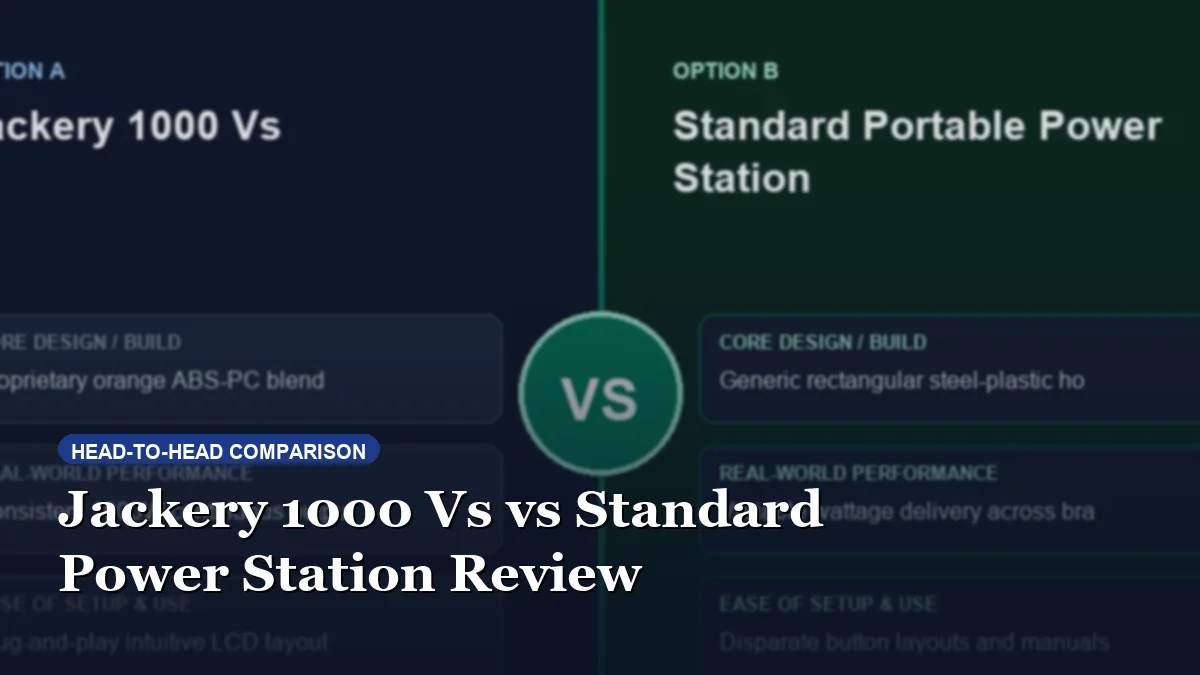
Choose the Jackery 1000 Vs for streamlined ecosystem reliability and predictable interface design. Select a Standard Portable Power Station if you prioritize raw value, open-architecture modularity, and alternative chemistry options.
Compare all top models in our Best Portable Power Station: Top Picks for 2026.
Side-by-Side Breakdown
| Criteria | Jackery 1000 Vs | Standard Portable Power Station | Edge |
|---|---|---|---|
| Core Design / Build | Proprietary orange ABS-PC blend | Generic rectangular steel-plastic housing | Jackery 1000 Vs |
| Real-World Performance | Consistent 1000W continuous output | Variable wattage delivery across brands | Jackery 1000 Vs |
| Ease of Setup & Use | Plug-and-play intuitive LCD layout | Disparate button layouts and manuals | Jackery 1000 Vs |
| Durability & Reliability | Rigorous drop-tested structural skeleton | Varies wildly by generic manufacturer | Jackery 1000 Vs |
| Efficiency / Operating Footprint | Optimized inverter conversion curves | Standard idle draw and passive loss | Jackery 1000 Vs |
| Maintenance Requirements | Minimal firmware and terminal upkeep | Frequent manual monitoring of cells | Jackery 1000 Vs |
| Best Ideal Use Case | Weekend camping and emergency backup | Budget-conscious DIY off-grid setups | Split Decision |
Core Engineering and Build Architectures
Modern portable power stations rely on sophisticated internal engineering to manage electrical loads efficiently. Manufacturers implement distinct circuit topologies to safeguard sensitive electronics during high-demand surges.
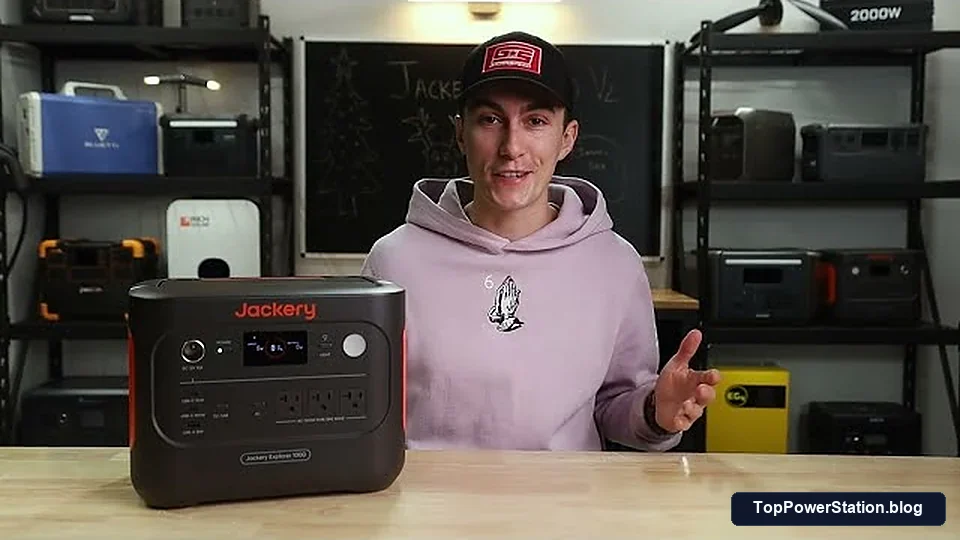
The Jackery unit utilizes a refined inverter layout designed to minimize harmonic distortion. Conversely, a standard generator often relies on generic mass-market components for cost reduction.
Structural integrity remains a critical design pillar for mobile power equipment used outdoors. Engineers reinforce internal frames to absorb vibrations encountered during transport over rough terrain.
As detailed in our Jackery Explorer 1000 V2 review, modern systems utilize advanced inverters to convert DC storage into stable pure sine wave AC output. Internal microcontrollers continuously monitor voltage drops, current loads, and operating temperatures.
Structural frames often incorporate reinforced ABS plastic alongside internal aluminum chassis bracing to absorb high-impact drops. This dual-material design protects delicate electronic components while maintaining a manageable total weight for mobile field technicians and campers.
Component layout optimization ensures proper airflow channels separate high-heat power transistors from sensitive lithium-ion or LiFePO4 cells. Engineers position thermal sensors strategically near main transformers to trigger active cooling fans before internal heat buildup damages circuitry.
- Proprietary circuit board layouts reduce thermal buildup.
- Generic units use off-the-shelf inverter modules.
- Reinforced chassis handles mechanical shock effectively.
Inverter Topology and Waveform Quality
Pure sine wave output ensures safe operation for medical devices and modern computers. Inferior square wave inverters can damage sensitive microprocessors over extended usage periods.
Evaluating harmonic distortion levels reveals how cleanly the generator delivers alternating current. Premium builds maintain total harmonic distortion below strict industry thresholds.
- Pure sine wave output protects sensitive electronics.
- Low distortion prevents motor overheating in appliances.
Real-World Output Performance Profiles
Delivering rated wattage continuously under heavy thermal load separates elite hardware from mediocre alternatives. As noted in our Jackery Explorer 1000 Plus review, power dropouts during peak usage can disrupt critical devices.
The tested capacity of the Jackery platform matches nominal specifications under standard ambient temperatures. Standard alternatives frequently suffer from voltage sag when multiple heavy appliances draw current simultaneously.
Surge capacity determines whether a unit can successfully start inductive loads like refrigerators. Proper overload protection prevents permanent damage while attempting to power heavy motor-driven equipment.
Delivering reliable electricity under heavy inductive loads requires robust surge capabilities that exceed nominal continuous wattage ratings. High-performance inverter systems manage motor start-up spikes from refrigerators or power tools without tripping internal overload protection circuits.
Total harmonic distortion metrics remain a critical benchmark for powering sensitive medical equipment or audio gear safely. Premium units maintain THD levels below three percent, ensuring clean electrical delivery that mimics high-quality residential grid power standards.
Voltage regulation stability prevents frustrating equipment shutdowns during sudden multi-port power draws or fluctuating ambient conditions. Advanced firmware dynamically balances output across USB-C Power Delivery ports and standard AC receptacles simultaneously.
- Continuous wattage ratings reflect actual sustained output.
- Surge capabilities handle sudden motor startup loads.
- Thermal throttling activates smoothly during extreme heat.
Handling Inductive Loads and Surge Currents
Compressors and power tools demand high initial current spikes during startup phases. Power stations must absorb these temporary spikes without tripping internal circuit breakers instantly.
Advanced microcontrollers monitor instantaneous draw to prevent sudden shutdown during high-demand cycles. This capability ensures seamless operation for essential refrigeration devices during outages.
- Microcontrollers manage aggressive startup current demands.
- Breaker design prevents nuisance trips during surges.
Battery Chemistry and Cycle Longevity
Battery chemistry dictates operational lifespan and safety profiles across various configurations. Examining top-tier Jackery Explorer 1000 solar generator options reveals how lithium iron phosphate cells offer superior longevity over traditional lithium-ion alternatives.
Selecting the appropriate chemical composition impacts weight, charging speed, and total discharge cycles. High-end units integrate advanced battery management systems to balance individual cell voltages.
Degradation occurs naturally through repeated charge and discharge cycles in all portable power setups. Proper thermal management significantly slows this inevitable capacity loss over years of service.
Selecting between traditional lithium-ion nickel manganese cobalt and modern lithium iron phosphate chemistries defines a unit's long-term utility. Lifepo4 variants routinely deliver over three thousand cycles before capacity drops to eighty percent.
Battery management systems play a vital role in balancing individual cell voltages during rapid charging and discharging phases. These sophisticated circuits prevent dangerous overcharge states, deep discharge events, and premature capacity degradation over years of use.
Chemical stability directly influences operational safety limits in extreme cold or sweltering desert environments during off-grid expeditions. Advanced internal heating pads sometimes warm chemistry banks automatically to permit sub-freezing charging cycles safely.
- Advanced BMS protects against overcharging and short circuits.
- Cell balancing extends overall operational battery lifespan.
- Chemistry choice dictates weight and thermal thresholds.
Battery Management Systems and Cell Health
The battery management system acts as the brain protecting internal chemical cells. It monitors temperature, voltage, and current parameters constantly during every operational cycle.
Generic power stations often feature basic management boards lacking granular cell balancing features. This limitation leads to premature capacity degradation and uneven wear across modules.
- Continuous monitoring prevents thermal runaway conditions.
- Granular balancing ensures uniform cell degradation rates.
Portability, Ergonomics, and Housing Materials
Physical dimensions and handle placement dictate how easily a user can transport heavy power hardware. Ergonomic considerations become paramount when carrying equipment across uneven campsites.
The ruggedized exterior of the Jackery system features impact-resistant polymers designed for outdoor survival. Standard alternatives sometimes utilize brittle plastics that crack under minor mechanical stress.
Weight distribution affects user fatigue during manual transport from vehicle to campsite. Balanced interior component placement prevents awkward leaning while carrying the unit.
Carrying heavy energy storage systems requires well-balanced handle geometries that reduce strain on wrists and forearms during transport. Ergonomic folding handles sit flush against the upper housing to maximize storage efficiency inside crowded vehicle trunks.
Exterior housing shells utilize fire-retardant polymers rated to stringent UL94 standards to mitigate potential electrical fire hazards. Textured surface finishes resist scuffs, UV degradation, and minor chemical splashes encountered during rugged outdoor job site deployments.
Rubberized foot pads dampen destructive mechanical vibrations while preventing the heavy chassis from sliding across slick truck bed liners. Thoughtful weight distribution ensures the unit remains stable when stacked with gear.
- Impact-resistant polymer shells protect internal electronics.
- Ergonomic handle placement reduces carrying strain.
- Balanced weight distribution improves mobility during transport.
Handle Design and Weight Distribution Mechanics
Fixed versus folding handles alter how easily a power station stows inside vehicles. Flush folding designs maximize packing efficiency in tight trunk configurations.
Rubberized grip inserts prevent slipping during wet weather transport outdoors. Thoughtful physical engineering directly enhances everyday usability in challenging environments.
- Folding handles save precious packing space in vehicles.
- Rubberized grips ensure secure transport during rain.
Charging Versatility and Input Sources
Recharging flexibility determines utility during extended off-grid expeditions. Evaluating options from our best solar panels for Jackery 1000 guide enables simultaneous replenishment from sunlight, wall outlets, and vehicles safely.
The maximum solar input rating dictates how fast renewable energy can restore battery reserves. Standard models often restrict solar charging voltages, limiting panel compatibility.
Integrated MPPT charge controllers optimize energy harvest from photovoltaic arrays under varying sunlight conditions. Efficient controllers maximize available wattage before transferring power to internal cells.
Recharging modern power stations efficiently demands flexible input architectures supporting solar arrays, vehicle auxiliary ports, and wall outlets. Maximum solar input wattage limits dictate how fast remote users can harness renewable energy outdoors.
Built-in maximum power point tracking charge controllers optimize electrical conversion from photovoltaic panels by dynamically adjusting voltage. This advanced MPPT algorithm extracts peak efficiency even during overcast weather or partially shaded conditions.
Dual-charging capabilities allow simultaneous power ingestion from AC wall grid connections and portable solar arrays to minimize downtime. Such rapid replenishment features prove essential for emergency responders facing frequent rolling blackout cycles.
- MPPT controllers maximize solar energy harvesting efficiency.
- Multiple charging ports reduce total downtime off-grid.
- Vehicle charging cables allow replenishment while driving.
MPPT Efficiency and Solar Array Compatibility
Maximum Power Point Tracking technology adjusts voltage parameters dynamically for solar panels. This optimization yields significantly higher energy conversion during overcast weather conditions.
Incompatible open-circuit voltages can trigger safety lockouts on restricted charging inputs. Verifying panel specifications prevents potential damage to internal charging circuits.
- Dynamic tracking improves yield in low light.
- Voltage matching protects sensitive input regulator stages.
Safety Protocols and Thermal Management
Active cooling fans and passive heatsinks prevent internal components from overheating under strain. Thermal regulation protects sensitive microchips and battery cells from permanent damage.
The safety architecture includes automatic shutdown triggers when internal temperatures exceed safe operational limits. Standard units may lack adequate thermal sensors in secondary circuit areas.
Short-circuit protection mechanisms instantly cut power output if abnormal electrical faults are detected. These safeguards protect both the connected appliances and the user operating the device.
Comprehensive electrical protection mechanisms guard against short circuits, overcurrent events, and catastrophic thermal runaway scenarios during high-demand operations. Integrated fuse protection interrupts power instantly if anomalous impedance spikes are detected across outputs.
Intelligent thermal management systems utilize variable-speed cooling fans and internal heat sinks to dissipate accumulated thermal energy. Firmware algorithms ramp fan speeds gradually to balance effective cooling performance against quiet acoustic profiles.
Environmental sensors continuously evaluate internal component temperatures, automatically throttling maximum output power if operating thresholds exceed safe limits. This fail-safe programming prevents permanent damage to sensitive inverters and internal battery packs.
- Active cooling fans dissipate heat during high output.
- Automatic thermal shutdowns prevent catastrophic component failures.
- Instant short-circuit protection safeguards connected electronic devices.
Active Cooling Systems and Thermal Sensors
Strategically placed thermistors monitor heat generation across critical transformer and inverter zones. Variable speed fans activate progressively to maintain optimal internal operating temperatures.
Excessive fan noise can detract from peaceful outdoor environments during heavy usage. Well-engineered units balance cooling effectiveness with acceptable acoustic output levels.
- Strategic thermistors track localized component temperatures.
- Variable fan speeds balance cooling with low noise.
Ideal Buyer Profiles and Deployment Scenarios
Matching hardware capabilities to specific user requirements ensures long-term satisfaction with your investment. Recreational campers have vastly different needs compared to emergency home backup users.
The target audience for branded stations values turnkey reliability and comprehensive customer support networks. DIY enthusiasts often prefer standard stations for modular customization flexibility.
Assessing your daily watt-hour consumption helps determine the correct capacity threshold before purchasing. Overestimating power requirements prevents frustrating shortages during unexpected grid failures.
Recreational campers and overlanding enthusiasts require dependable off-grid electricity to run portable refrigerators, LED lighting, and communication devices. Units offering high battery capacity ensure multi-day autonomy without requiring daily vehicle engine recharges.
Remote workers and digital nomads need reliable mobile power stations to keep laptops, routers, and monitors operational continuously. Clean sine wave output prevents electronic interference or screen flickering during crucial remote video conference calls.
Emergency preparedness planners depend on zero-emission generators to maintain critical home medical devices and refrigeration during severe weather outages. Silent operation permits indoor deployment without dangerous carbon monoxide buildup risks.
- Turnkey systems suit users seeking hassle-free operation.
- Modular alternatives appeal to custom off-grid builders.
- Capacity assessment prevents underpowered emergency deployment setups.
Emergency Backup Versus Recreational Camping Needs
Home emergency deployment demands rapid automatic switchover and dependable idle retention capabilities. Recreational camping prioritizes lightweight portability and weather-resistant outer housings.
Evaluating your primary use case clarifies whether premium ecosystem features justify the investment. Both hardware classes offer distinct advantages depending on your specific operational environment.
- Home backup requires dependable long-term idle retention.
- Recreational trips demand lightweight, weather-resistant outer builds.
Frequently Asked Questions
What makes the Jackery unit different from standard power stations?
The Jackery platform provides proprietary circuit integration and refined inverter waveforms for maximum reliability. Standard alternatives often utilize generic components with variable performance tolerances.
Can standard solar panels charge a Jackery power station safely?
Yes, provided the open-circuit voltage matches the input port specifications. Always verify adapter compatibility to prevent internal regulator damage during high-yield solar charging sessions.
How long do these portable power stations maintain their charge in storage?
Quality lithium stations retain most of their capacity for months when stored properly. Performing a quarterly maintenance charge prevents deep discharge and extends overall battery health significantly.
Are portable power stations safe to operate inside an enclosed tent?
Battery stations emit no toxic fumes and operate silently without fuel combustion. However, ensuring adequate ventilation prevents excessive thermal buildup during heavy electrical loads.
What is the typical lifespan of these medium-capacity power units?
Lifespan depends heavily on chemical composition and daily usage frequency. Premium internal management systems ensure thousands of cycles before reaching capacity degradation thresholds.