Home Standby Generator vs Portable Power Station
Choosing backup power requires balancing permanent whole-home capacity against clean, mobile energy. Evaluating these systems ensures reliable performance during unexpected grid failures.

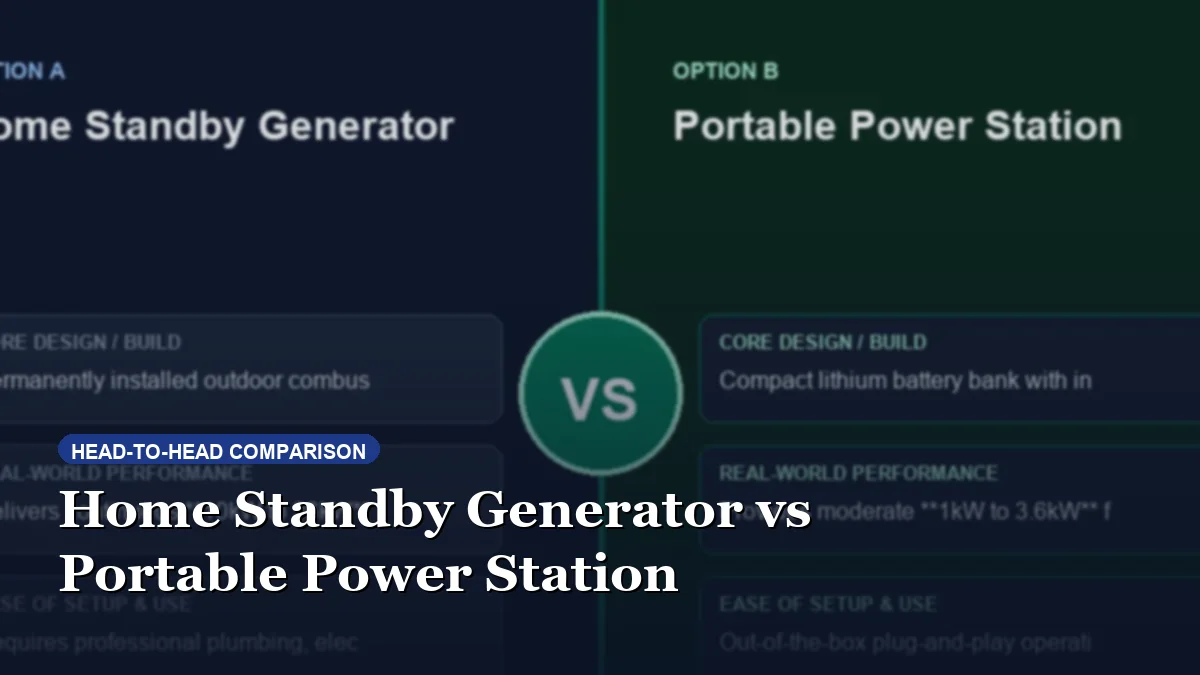
Choose home standby generators for permanent whole-house coverage during extended grid failures. Select portable power stations for clean, silent indoor power without liquid fuel dependencies.
Compare all top models in our Best Portable Power Station: Top Picks for 2026.
Side-by-Side Breakdown
| Criteria | Home Standby Generator | Portable Power Station | Edge |
|---|---|---|---|
| Core Design / Build | Permanently installed outdoor combustion engine with automatic transfer switch. | Compact lithium battery bank with integrated inverter and charging ports. | Depends on needs |
| Real-World Performance | Delivers continuous 10kW to 26kW for heavy central HVAC loads. | Provides moderate 1kW to 3.6kW for critical appliances and electronics. | Side A |
| Ease of Setup & Use | Requires professional plumbing, electrical wiring, and concrete pad installation. | Out-of-the-box plug-and-play operation requiring zero permanent home modifications. | Side B |
| Durability & Reliability | Engineered for decades of heavy outdoor use running on natural gas. | Solid-state electronics with thousands of charge cycles before degradation. | Side A |
| Efficiency / Operating Footprint | Consumes fossil fuels constantly while running, producing significant noise. | Operates silently with zero emissions, charging from solar or wall outlets. | Side B |
| Maintenance Requirements | Demands regular oil changes, filter replacements, and battery checks. | Requires minimal maintenance beyond occasional firmware updates and storage cycling. | Side B |
| Best Ideal Use Case | Large homes in frequent storm zones with heavy central air conditioning loads. | Apartments, renters, or modern efficient homes needing quiet emergency backup. | Depends on needs |
Core Design and Engineering Differences
Home standby systems operate via internal combustion engines permanently mounted outside your dwelling. These units connect directly to natural gas or propane lines for continuous fuel delivery.
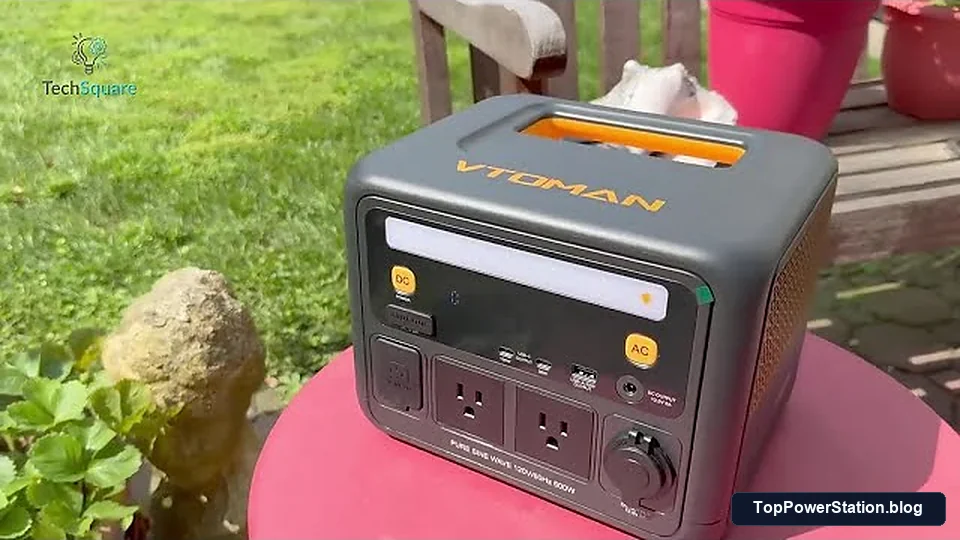
Portable units featured in the best portable battery power station for home rankings utilize advanced lithium iron phosphate chemistry. They store electrical energy safely inside sealed enclosures.
Engineering distinctions dictate how each platform integrates into your daily life. Standby units require professional hardwiring into your electrical panel through an automatic transfer switch mechanism.
Conversely, battery generators offer absolute mobility without permanent structural modifications. You can charge them via solar panels, wall outlets, or vehicle ports before deployment during emergencies.
Home standby units integrate heavy-duty internal combustion engines running at 3600 RPM paired with multi-pole alternators. They prioritize continuous mechanical generation for whole-house loads during prolonged grid outages.
Portable power stations rely on lithium-ion or LiFePO4 chemistry battery packs controlled by sophisticated battery management systems. Solid-state inverter architectures convert DC storage into clean AC household current silently.
Standby systems require permanent outdoor placement on concrete pads with dedicated natural gas or propane plumbing lines. Their thermal management uses heavy-duty forced-air cooling fans engineered for extreme ambient temperatures.
Power stations utilize passive aluminum heatsinks and internal thermal sensors to regulate cell temperatures safely during rapid charging. This modular engineering allows indoor placement without ventilation hazards during operation.
- Combustion engines demand fixed outdoor placement near fuel lines
- Battery banks use modular inverters suitable for indoor operation
- Automatic transfer switches detect grid failures instantly without intervention
Power Generation Architecture
Combustion generators convert chemical fuel energy into rotational mechanical force. This mechanical rotation drives an alternator to produce high-voltage alternating current matching utility power.
Battery stations store direct current chemically and invert it into usable alternating current. This solid-state conversion happens silently without moving parts or thermal exhaust emissions.
- Alternators generate traditional AC power through electromagnetic induction
- Inverters synthesize clean sine wave output safe for sensitive computers
Real-World Performance and Capacity
Standby generators dominate raw capacity metrics by delivering massive continuous wattages. A typical residential unit easily handles heavy inductive loads like central air conditioners and electric water heaters.
Portable stations operate within constrained output windows ranging from modest wattage to higher capacities. While sufficient for refrigerators and medical devices, they cannot run heavy central HVAC systems.
Voltage stability represents another critical performance metric during extended outages. Modern battery inverters provide extremely clean power with minimal harmonic distortion for sensitive electronics.
Standby generators deliver continuous outputs ranging from 12kW to 24kW, easily powering central air conditioners, electric ranges, and sump pumps simultaneously. Their fuel supply dictates runtime duration entirely.
Portable units typically offer 1kWh to 3kWh of baseline storage capacity, handling essential refrigeration, lighting, and medical devices. Expanding total capacity requires connecting compatible modular battery expansion packs.
Surge wattage limits differ significantly between both hardware categories. Standby alternators handle massive motor starting surges, while power stations rely on pure sine wave surge ratings constrained by inverter limits.
- Standby units provide continuous 10kW to 26kW of electrical power
- Portable units typically deliver 1kW to 3.6kW of continuous output
- Surge capacities allow motor-driven appliances to start successfully
Handling Heavy Household Loads
Running multiple high-draw appliances simultaneously requires substantial running wattage. Standby generators manage whole-house demands effortlessly without tripping internal overload protections.
Units highlighted in our best portable power station selections require careful load management to prevent exceeding maximum inverter limits. Users must prioritize essential household circuits.
- Central air conditioning demands heavy starting surge wattage
- Strategic circuit selection prevents portable station overloads
Setup, Installation and Ergonomics
Installing a home standby system involves complex civil and electrical engineering. Technicians must pour concrete pads, run gas piping, and install service-rated transfer switches.
Portable power stations eliminate installation barriers through plug-and-play design principles. You simply unpack the unit, charge the internal battery, and plug your appliances directly into the outlets.
Ergonomic factors also differ significantly between these two backup solutions. Standby units remain fixed outdoors while portable models feature integrated handles and wheels for easy repositioning.
Permanent standby installations demand professional electrical permitting, concrete pouring, trenching, and gas line plumbing by certified technicians. This complex process requires weeks of coordination and significant financial investment.
Portable power stations offer true plug-and-play ergonomics straight out of the box without requiring permanent building modifications. Users simply wheel or carry units indoors and plug critical appliances directly.
Transfer switch integration can streamline portable generator use, but manual cord deployment remains common. Standby units automate transfer completely using an automatic transfer switch during unexpected blackouts.
- Professional installation ensures compliance with local building codes
- Portable units require zero permanent modifications to your home structure
- Wheels and handles make battery stations surprisingly mobile
Physical Footprint and Placement
Standby generators require specific clearance from windows, doors, and vents for safety. Their large enclosures remain permanently affixed to a designated spot in your yard.
Portable stations offer flexible indoor placement thanks to zero exhaust emissions. You can keep them tucked inside a closet or garage ready for immediate deployment.
- Outdoor clearance rules govern standby generator placement locations
- Indoor storage friendly design benefits apartment and condo dwellers
Efficiency, Emissions and Fuel Logistics
Fossil fuel reliance introduces unique logistical challenges during prolonged regional grid failures. Standby generators consume continuous fuel supplies, requiring dependable natural gas pipeline infrastructure.
Portable stations champion zero direct emissions and superior operational efficiency indoors. You can recharge them silently using rooftop solar arrays during extended sunny weather events.
Fuel storage safety represents a major differentiator for urban and suburban homeowners. Storing gasoline cans for portable generators introduces fire risks that battery systems completely avoid.
Standby generators consume fossil fuels continuously while running, producing significant carbon monoxide and greenhouse gas emissions. They require code-compliant clearance away from windows and doors.
Power stations produce zero direct emissions during operation, allowing safe indoor usage in bedrooms or living areas without risking carbon monoxide poisoning. They recharge efficiently via wall outlets.
While fuel logistics favor standby units, models featured in the best solar power generator for home guide rely heavily on solar panel array inputs for off-grid replenishment.
- Natural gas lines provide unlimited fuel during standard utility outages
- Solar panel integration allows infinite off-grid recharging capabilities
- Zero toxic carbon monoxide exhaust makes indoor battery usage safe
Acoustic Footprint Comparison
Combustion engines generate noticeable noise levels during operation, often exceeding conversational limits. This acoustic output can disturb sleeping family members and close neighbors.
Battery stations operate with near-silent acoustic profiles under heavy electrical loads. Only small internal cooling fans activate during high-wattage charging or discharging cycles.
- Standby engines produce loud mechanical noise during operation
- Silent battery operation maintains peace during emergency situations
Maintenance Protocols and Longevity
Mechanical combustion engines demand rigorous routine maintenance schedules. Owners must perform regular oil changes, replace air filters, and test starter batteries to ensure reliability.
Battery power stations require virtually no mechanical maintenance throughout their lifecycle. Users only need to perform periodic firmware updates and store the unit at optimal charge levels.
Component lifespan varies based on core technology and usage frequency. Well-maintained standby engines last decades, while lithium chemistry batteries degrade gradually over thousands of cycles.
Combustion engines demand rigorous routine maintenance including oil changes, spark plug replacements, filter cleaning, and battery tender monitoring every one hundred operating hours or six months.
Portable power stations require virtually zero mechanical upkeep beyond firmware updates and occasional dusting. Their solid-state design eliminates moving parts, reducing mechanical failure points drastically over time.
Battery degradation remains the primary longevity factor for power stations, usually rated for 3000 charge cycles before retaining eighty percent of original capacity. Standby units can last decades.
- Regular oil and filter changes prevent premature engine wear
- Lithium iron phosphate batteries offer thousands of long-lasting cycles
- Routine self-tests keep standby systems ready for sudden outages
Long-Term Reliability Factors
Standby generators prove exceptionally reliable when serviced according to manufacturer guidelines. Their heavy-duty mechanical components withstand harsh weather and continuous running hours.
Battery stations protect themselves through advanced software management and thermal throttling. Solid-state construction resists physical shock better than complex internal combustion machinery.
- Mechanical wear dictates the lifespan of combustion engines
- Battery degradation occurs slowly over years of daily cycling
Safety, Weather Resistance and Operation
Weatherproofing is essential for equipment permanently exposed to outdoor elements. Standby units feature rugged, weather-resistant enclosures designed to withstand heavy rain, snow, and extreme temperatures.
Portable power stations require careful weather management during severe storms. While durable, most portable units must remain dry and sheltered beneath covered porches or indoors.
Carbon monoxide poisoning remains a severe hazard associated with outdoor combustion generators. Battery stations eliminate this risk entirely, allowing safe operation within enclosed living spaces.
Home standby enclosures feature weather-resistant powder-coated aluminum built to withstand heavy rain, snow loads, and extreme ambient temperatures without compromising internal electrical components or automated controls.
Power stations lack weatherproofing enclosures and must stay dry during operation. Users must protect units from moisture while leveraging overload protection circuits to prevent internal short circuits.
Standby systems conduct automated weekly self-tests to verify readiness. Power stations require manual checks of state-of-charge levels to ensure emergency preparedness during severe storm season warnings.
- Weatherproof enclosures protect standby units from severe storms
- Portable stations must be shielded from direct rain exposure
- Carbon monoxide detectors remain vital when operating fuel engines
Emergency Deployment Safety
Automatic transfer switches ensure standby units start safely without manual intervention. This prevents dangerous backfeeding into utility lines that could harm utility workers.
Portable units require manual connection via approved transfer switches or extension cords. Proper grounding procedures must be followed to prevent electrical shocks during wet weather.
- Transfer switches prevent hazardous electrical grid backfeeding
- Manual connection protocols require careful attention to safety
Which Backup Option Fits Your Home
Choosing between these systems depends heavily on your specific regional climate and power needs. Homeowners facing frequent multi-day blackouts benefit greatly from permanent standby installation.
Conversely, renters and apartment residents often choose options from our best portable power station for home backup guide. These versatile units provide reliable emergency backup without permanent property alterations.
Evaluating your budget, local building codes, and critical appliance requirements clarifies your path. Balancing these factors ensures you select the most practical emergency power solution.
Homeowners living in hurricane-prone regions with frequent multi-day outages benefit most from investing in a permanently installed standby generator providing comprehensive whole-house power coverage.
Residents in apartments, renters, or homeowners facing brief occasional blackouts will find portable power stations ideal for powering electronics, refrigerators, and lighting safely indoors.
Evaluating your specific budget, local climate risks, and electrical needs ensures you select the optimal backup power solution for long-term residential resilience and peace of mind.
- Assess your local grid reliability and historical outage durations
- Calculate exact running wattages for your essential medical or kitchen devices
- Review homeowners association rules regarding permanent outdoor generator placements
Making Your Final Decision
Prioritize permanent standby systems if you require complete climate control continuity. Whole-house protection guarantees seamless comfort during extended regional emergencies.
Select portable power stations if flexibility and quiet operation matter most. They offer clean, manageable backup power for refrigerators and communication devices.
- Whole-house comfort favors permanent standby generator investments
- Flexibility and quiet operation favor portable battery generators
Frequently Asked Questions
Can a portable power station run a central air conditioner?
Most portable power stations lack the massive surge capacity required for central air units. You should choose a home standby generator for heavy HVAC loads.
Do home standby generators require professional installation?
Yes, permanent standby systems require certified electricians and plumbers for safe integration. Professional setup ensures compliance with local gas and electrical safety codes.
How long do lithium battery power stations typically last?
Quality lithium iron phosphate stations deliver thousands of cycles before significant capacity loss. Regular firmware updates and proper storage maximize your battery longevity.
Are portable power stations safe to use indoors?
Yes, battery stations produce zero toxic emissions or carbon monoxide exhaust. This clean operation makes them ideal for safe indoor emergency appliance power.
What maintenance do standby generators need?
Standby units require routine oil changes, filter replacements, and battery testing. Following strict maintenance schedules guarantees dependable performance during unexpected grid failures.