Goal Zero Yeti 400 vs Jackery 500: Technical Breakdown
Comparing two legacy portable power stations reveals distinct engineering approaches to off-grid mobile electricity. Choosing between these units requires analyzing internal battery chemistry and inverter capabilities.

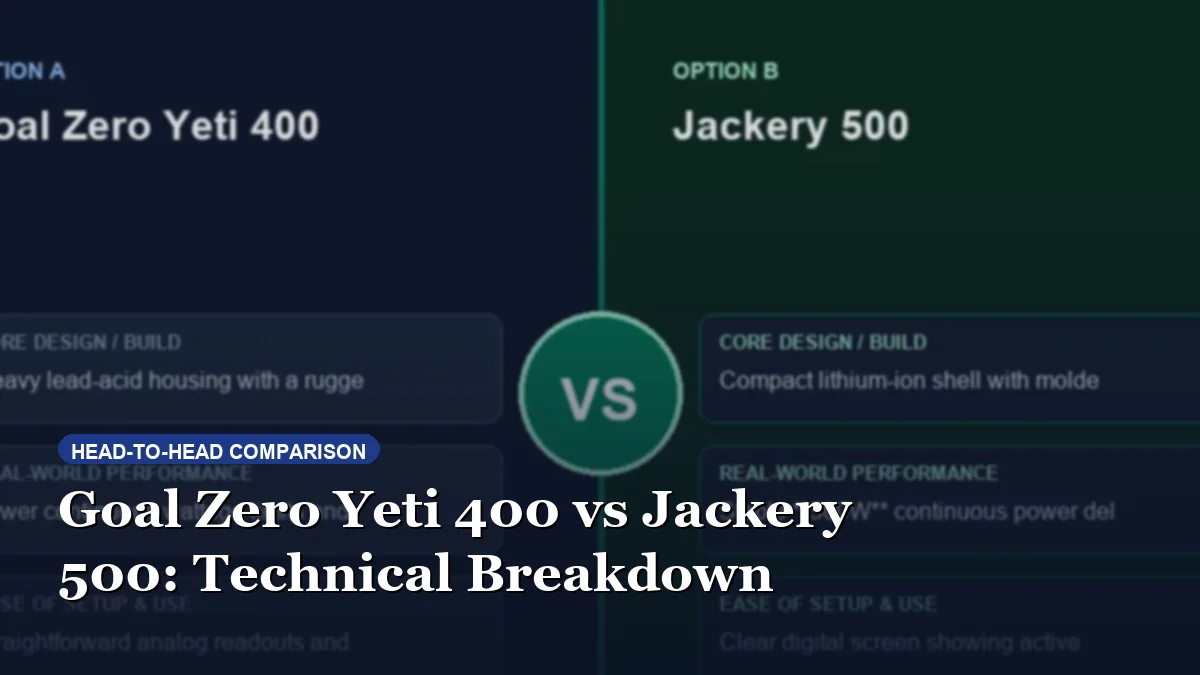
Select the Goal Zero Yeti 400 for rugged, modular lead-acid durability in stationary setups. Choose the Jackery 500 for lightweight lithium-ion mobility and higher continuous AC output capacity.
Compare all top models in our Best Portable Power Station: Top Picks for 2026.
Side-by-Side Breakdown
| Criteria | Goal Zero Yeti 400 | Jackery 500 | Edge |
|---|---|---|---|
| Core Design / Build | Heavy lead-acid housing with a rugged chassis. | Compact lithium-ion shell with molded handles. | Jackery 500 |
| Real-World Performance | Lower continuous wattage limits and voltage sag. | Stable 500W continuous power delivery profile. | Jackery 500 |
| Ease of Setup & Use | Straightforward analog readouts and basic ports. | Clear digital screen showing active load metrics. | Jackery 500 |
| Durability & Reliability | Heavier overall build prone to lead degradation. | Modern lithium architecture with BMS safeguards. | Jackery 500 |
| Efficiency / Operating Footprint | Lower usable depth of discharge limits. | Higher usable capacity with minimal idle drain. | Jackery 500 |
| Maintenance Requirements | Requires frequent top-off charging to prevent sulfation. | Minimal upkeep beyond periodic storage charging cycles. | Jackery 500 |
| Best Ideal Use Case | Stationary cabin backup or simple emergency prep. | Weekend camping trips and mobile office gear. | Jackery 500 |
Core Design & Engineering Differences
Evaluating these two portable power stations highlights a massive technological shift in energy storage design. One relies on legacy heavy materials, while the other embraces modern lithium engineering.
Engineers built the classic Goal Zero unit around traditional AGM lead-acid architecture. For deeper insights into this legacy design, consult our Goal Zero Yeti 500 review detailing build specs.
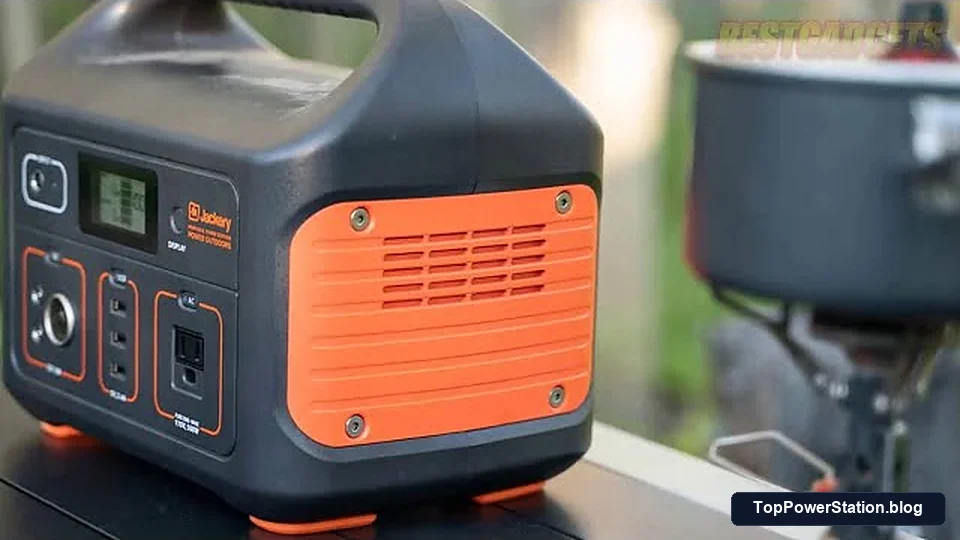
Conversely, the Jackery model utilizes a lithium-ion NMC cell configuration inside a molded plastic housing. This modern design significantly reduces overall physical dimensions and total travel weight.
- Goal Zero utilizes a heavier lead-acid core construction.
- Jackery incorporates a lightweight lithium-ion cell layout.
- Physical footprints reflect completely different era priorities.
Chassis Construction and Materials
External housings use high-impact plastics designed to withstand outdoor camping environments. However, the internal weight distribution differs dramatically based on the chosen battery chemistry.
Carrying the lead-acid unit requires noticeable physical effort due to dense internal plates. The lithium competitor offers vastly superior ergonomics for frequent transport between vehicles.
- Lead-acid models demand two-handed lifting techniques.
- Lithium models feature balanced top-handle ergonomics.
Internal Layout and Thermal Management
Passive cooling dominates both designs, relying on external casing ventilation rather than loud fans. This silent operation improves user comfort during quiet evening campsite deployments.
Component placement dictates how efficiently heat dissipates during heavy inverter loads. Proper ventilation clearance remains vital for maintaining optimal operating temperatures in summer.
- Passive cooling keeps both power stations whisper quiet.
- Internal thermal sensors prevent dangerous overheating conditions.
Real-World Performance Comparison
Benchmarking output capabilities reveals significant operational differences under typical camping loads. Users must evaluate their specific appliance wattage requirements before making a final purchasing decision.
The legacy lead-acid generator delivers steady power but struggles with voltage sag under heavy loads. As noted in our Goal Zero Yeti 700 review, this limits its ability to run motorized appliances.
The lithium alternative maintains stable voltage output curves throughout its entire discharge cycle. This ensures consistent performance for sensitive electronics like laptops and medical CPAP machines.
- Voltage sag affects heavy loads on lead-acid systems.
- Lithium units maintain steady voltage under peak draw.
- Inverter efficiency dictates total usable runtime hours.
Continuous and Surge Wattage Limits
Continuous AC output limits dictate which household electronics you can safely operate simultaneously. Exceeding these thresholds triggers automatic overload protection switches to prevent damage.
Motor starting surges require substantial headroom from the internal inverter circuitry. Checking starting watts prevents unexpected shutdowns when running small refrigerators.
- Inverter surge capacity handles brief motor startup spikes.
- Continuous ratings determine safe multi-device charging loads.
Appliance Compatibility and Load Handling
Pure sine wave output ensures sensitive audio and computing gear runs without electrical hum. Modified sine wave alternatives can cause overheating in specialized electronics over time.
Testing reveals both stations handle standard phone and tablet chargers without issue. High-wattage heating elements quickly expose the limitations of smaller battery capacities.
- Sine wave quality protects delicate digital microprocessors.
- High-draw heating devices drain capacities extremely fast.
Maintenance, Efficiency & Longevity
Long-term ownership costs depend heavily on routine maintenance and overall cycle life durability. Neglecting proper charging habits can permanently ruin expensive internal battery banks.
Lead-acid batteries demand diligent upkeep, including regular recharging intervals during storage periods. Failing to maintain a full charge leads to sulfation and permanent capacity loss.
Lithium batteries require virtually no active maintenance beyond standard storage charging practices every few months. Their advanced battery management systems protect cells from deep discharge damage.
- Lead-acid systems suffer from permanent sulfation if neglected.
- Lithium chemistry offers extended calendar and cycle life.
- Built-in management systems automate essential safety protections.
Cycle Life and Degradation Rates
Total usable charge cycles dictate how many years the power station will function reliably. Read our Goal Zero Yeti 1000X review to see why lithium chemistry provides significantly more cycles.
Lead-acid units degrade much faster, especially if discharged deeply on a regular basis. Shallow discharges help extend the operational lifespan of traditional chemistry models.
- Lithium cells endure thousands of reliable charge cycles.
- Lead-acid lifespan drops sharply with deep daily cycling.
Storage and Seasonal Upkeep
Preparing your equipment for long-term off-season storage requires specific environmental controls. Keeping units in temperature-controlled spaces prevents premature capacity degradation during winter months.
Checking battery voltage levels periodically ensures units remain ready for emergency deployment. Neglected batteries often fail precisely when reliable backup power matters most.
- Temperature-controlled storage preserves internal cell health.
- Periodic voltage checks prevent unexpected emergency failures.
Battery Chemistry & Discharge Profiles
Understanding internal chemistry helps buyers predict real-world runtime accuracy under varying environmental conditions. Different chemical compositions react uniquely to cold winter temperatures.
AGM lead-acid cells offer a lower usable depth of discharge to protect longevity. Draining them past fifty percent capacity frequently drastically shortens their overall operational lifespan.
Lithium-ion packs safely utilize up to eighty percent or more of their total rated capacity. This provides noticeably more usable watt-hours despite similar nominal rating labels.
- Lead-acid depth of discharge must remain strictly limited.
- Lithium packs deliver higher usable daily energy capacities.
- Cold weather impacts both chemistries in different ways.
Temperature Sensitivity and Performance
Freezing outdoor temperatures severely restrict the available output capacity of lead-acid power stations. Users camping in winter must insulate their gear to maintain reliable electrical output.
Lithium batteries also experience temporary capacity drops in extreme sub-zero weather conditions. Internal monitoring safeguards prevent dangerous low-temperature charging to protect cell integrity.
- Extreme cold reduces total available appliance runtime hours.
- Low-temperature charging lockouts prevent permanent cell damage.
Voltage Curves During Discharge
Monitoring output voltage helps users anticipate when the power station requires recharging. Lead-acid voltage drops steadily throughout the entire discharge cycle.
Lithium systems maintain a flat voltage profile until nearly depleted, then shut down abruptly. This behavior provides consistent power delivery for connected sensitive equipment.
- Flat lithium voltage curves support stable appliance performance.
- Stegrad lead-acid voltage signals approaching empty conditions.
Port Selection & Inverter Topology
Output port variety determines how many different electronic devices you can connect simultaneously. Modern stations feature versatile USB connections alongside traditional household alternating current outlets.
The older Goal Zero unit relies on standard cigarette lighter ports and traditional Anderson connections. Our Goal Zero Yeti 1500X review explains how these legacy ports handle specialized solar panel integration setups.
The Jackery competitor emphasizes modern USB-A and USB-C ports for mobile device charging. This arrangement matches the current ecosystem of consumer electronics and camping gear.
- Port selection reflects changing consumer electronics standards.
- Anderson connectors serve specialized off-grid solar hobbyists.
- USB-C integration enables faster modern device charging.
AC Outlets and Inverter Design
Inverter quality dictates whether connected appliances operate without buzzing or overheating issues. Clean alternating current waveforms protect delicate motorized equipment from premature electrical failure.
Evaluating total plug count helps prevent awkward power strip daisy-chaining at camp. Adequate spacing between outlets accommodates bulky wall-wart charger blocks easily.
- Clean AC output prevents connected appliance motor damage.
- Ample outlet spacing accommodates bulky power adapters.
DC and USB Charging Ports
Direct current ports bypass the inverter entirely, maximizing overall energy conversion efficiency. This proves ideal for running efficient LED lighting strings and small fans.
Fast-charging USB protocols reduce the time needed to replenish phone batteries. Multiple output ports allow simultaneous charging for family camping expeditions.
- DC ports eliminate inverter conversion energy losses.
- Multiple USB outputs support family device charging needs.
Ergonomics, Portability & Field Use
Physical dimensions and handle design heavily influence user satisfaction during outdoor excursions. Heavy equipment discourages frequent repositioning around camp or vehicle setups.
The heavy lead-acid housing demands deliberate lifting and secure vehicle cargo positioning. Transporting this unit requires careful consideration of its significant dead weight.
The lightweight lithium option features a folding handle and streamlined rectangular profile. Packing this unit into crowded car trunks proves effortless for weekend travelers.
- Heavy chassis weights complicate casual outdoor transport.
- Streamlined lithium profiles optimize crowded trunk packing.
- Ergonomic handle designs reduce strain during carries.
Weight Distribution and Carrying Comfort
Carrying heavy power supplies across uneven terrain tests user patience and physical endurance. Balanced weight distribution makes short walks from the vehicle manageable.
Compact footprints allow placement on small picnic tables without crowding gear. This versatility enhances convenience during active outdoor recreational activities.
- Balanced weight distribution eases short campsite walks.
- Compact footprints fit easily on crowded picnic tables.
Display Panels and Interface Readouts
Clear information displays help users monitor remaining battery percentage and active wattage loads. Analog dials provide basic feedback, while digital screens offer precise metrics.
Illuminated screens make nighttime checks effortless inside dark tents or cabins. Easy-to-read interfaces prevent unexpected power depletion during critical moments.
- Digital readouts offer precise remaining capacity percentages.
- Illuminated screens simplify dark tent status checks.
Which Option Fits Your Setup
Choosing the right power station depends entirely on your specific mobility and power needs. Stationary emergency backups have different requirements than mobile weekend camping trips.
Budget-conscious buyers with stationary garage needs might appreciate the rugged traditional build. However, most modern outdoor enthusiasts will prefer lightweight lithium performance.
Assessing your typical appliance wattage and travel frequency clarifies the ideal purchasing choice. Matching your hardware to your lifestyle guarantees long-term satisfaction.
- Stationary backup setups favor durable traditional designs.
- Mobile camping excursions require lightweight lithium power.
- Matching specifications to habits ensures optimal value.
Scenario-Based Buyer Recommendations
Weekend tent campers prioritizing lightweight gear will find the lithium option superior. Its manageable size and high usable capacity fit active outdoor lifestyles perfectly.
Emergency preppers seeking a stationary garage backup can utilize traditional lead-acid units effectively. Keeping them plugged into wall outlets ensures constant readiness.
- Tent campers benefit from lightweight lithium portability.
- Emergency preppers can utilize stationary lead-acid backups.
Final Decision Matrix Summary
Weighing portability against upfront costs highlights the evolution of portable energy technology. Modern lithium solutions outperform legacy chemistry across almost every practical metric.
Selecting the appropriate unit ultimately protects your investment and ensures reliable off-grid power. Review your specific appliance demands before making your final decision.
- Lithium technology dominates modern portable power comparisons.
- Assessing appliance demands ensures proper hardware selection.
Frequently Asked Questions
Can I run a small refrigerator with these power stations?
The Jackery 500 easily handles small camping refrigerators due to its higher continuous wattage limits. The older lead-acid unit struggles with motor startup surges.
How long do these power stations take to recharge fully?
Wall charging typically takes between six to eight hours using standard AC adapters. Solar panel recharge times vary widely based on weather conditions.
Are these power stations safe to use inside a tent?
Both units operate silently without emitting toxic carbon monoxide exhaust fumes. This makes them completely safe for indoor or tent use.
What is the primary difference in battery chemistry?
The Goal Zero uses heavy AGM lead-acid chemistry designed for stationary applications. The Jackery employs modern lithium-ion cells optimized for lightweight mobility.
Can I charge these stations using portable solar panels?
Both models feature dedicated solar input ports compatible with various manufacturer panels. Proper adapter cables may be required for third-party solar arrays.