Goal Zero Yeti 150 vs Jackery Power Stations
Compare the legacy Goal Zero Yeti 150 against modern Jackery alternatives. Discover which compact power station best fits your emergency or camping setup.

Choose the Goal Zero Yeti 150 for rugged lead-acid durability and heavy binding posts, or select Jackery for lightweight lithium portability and modern USB-C charging speeds.
Compare all top models in our Best Portable Power Station: Top Picks for 2026.
Side-by-Side Breakdown
| Criteria | Goal Zero Yeti 150 | Jackery | Edge |
|---|---|---|---|
| Core Design / Build | Lead-acid chemistry with a heavy metallic chassis | Lithium-ion chemistry with a compact plastic shell | Jackery |
| Real-World Performance | 150Wh capacity with lower usable depth of discharge | High efficiency output with stable voltage delivery | Jackery |
| Ease of Setup & Use | Straightforward analog dashboard with heavy binding posts | Digital LCD screen with straightforward button layouts | Jackery |
| Durability & Reliability | Rugged industrial housing built for rough conditions | Durable consumer housing requiring careful impact protection | Goal Zero |
| Efficiency / Operating Footprint | Heavier footprint with self-discharge losses over time | Lightweight footprint with exceptional energy retention | Jackery |
| Maintenance Requirements | Requires frequent quarterly charging to prevent sulfation | Low maintenance chemistry requiring semi-annual storage checks | Jackery |
| Best Ideal Use Case | Stationary backup for low-draw DC equipment | Mobile camping trips and modern electronics charging | Jackery |
Core Design and Engineering Differences
Evaluating portable power requires examining foundational chemistry. As noted in our goal zero yeti 1500x review, the Goal Zero Yeti 150 utilizes heavy sealed lead-acid technology designed for stationary utility rather than ultra-light backpacking expeditions.
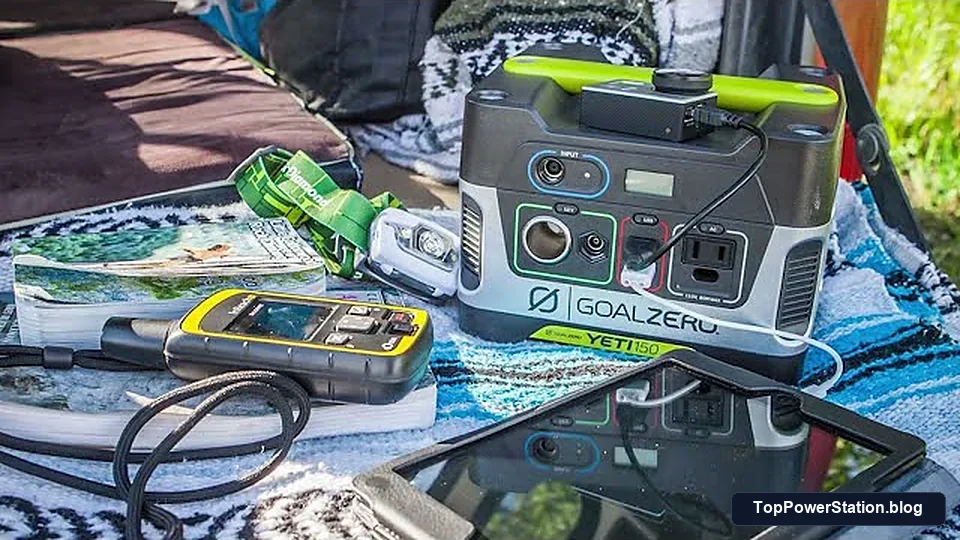
Conversely, Jackery units rely on modern lithium-ion cells housed in high-impact plastic enclosures. This architectural shift significantly reduces overall weight while improving spatial efficiency across the entire portable generator category.
- Goal Zero utilizes sealed AGM lead-acid chemistry.
- Jackery implements lightweight lithium-ion battery cells.
- Physical housings prioritize different weight tolerances.
- Internal inverters feature distinct continuous wattage limits.
Housing Materials and Thermal Management
Thermal management dictates how efficiently internal components dissipate heat during high-draw operations. Goal Zero relies on a passive metallic casing to handle thermal loads without requiring noisy internal cooling fans.
Jackery incorporates structured ventilation channels paired with efficient internal regulators. This engineering approach maintains safe operating temperatures while preserving a compact exterior footprint for easy packing.
- Passive metallic cooling on legacy units.
- Active and passive airflow designs on modern builds.
- Thermal threshold limits protect internal circuits.
Interface Layouts and Connection Ports
Interface design impacts how quickly users can connect devices during emergency outages. The Yeti series features classic 12V automotive sockets alongside traditional Anderson power poles for specialized DC connectivity.
Jackery focuses on consumer electronics by packing multiple USB ports, AC outlets, and regulated DC outputs into a clean, unified dashboard layout with digital status screens.
- Anderson power poles on legacy Goal Zero systems.
- Abundant USB-A and AC outlets on Jackery models.
- Clear digital readouts replace analog meters.
Real-World Performance Comparison
Testing power stations under load reveals significant operational disparities between legacy and modern designs. Capacity ratings do not always translate to equivalent runtimes due to inherent chemical discharge curve differences.
The Yeti 150 experiences noticeable voltage sag when powering continuous loads. Users often consult our goal zero solar panel guide before noting that modern lithium competitors maintain stable voltage outputs reliably.
- Lead-acid voltage sag under heavy continuous loads.
- Stable lithium voltage profiles through discharge cycles.
- Inverter conversion efficiency favors newer lithium models.
Inverter Efficiency and AC Output Quality
Pure sine wave versus modified wave output determines compatibility with sensitive electronics. Older legacy units often generate modified waveforms that can introduce audible hums in sensitive audio gear.
Modern competitors supply clean sinusoidal AC power mirroring standard household wall outlets safely. This ensures laptops, cameras, and medical devices operate without risk of electrical interference or component stress.
- Modified sine wave limitations on older hardware.
- Clean sinusoidal wave output on modern units.
- Safe operation for sensitive microprocessors.
Sustained Runtime Under Mixed Loads
Calculating runtime requires factoring in inverter idle draw and conversion losses. When powering small LED lights and charging smartphones simultaneously, lithium alternatives deliver greater usable energy totals.
Lead-acid capacity suffers severely when subjected to high discharge rates due to Peukert effect losses. Users must account for these chemical realities when planning off-grid power budgets.
- Peukert effect impacts legacy lead-acid runtimes.
- Lower idle draw maximizes lithium efficiency.
- Mixed DC and AC loads test thermal limits.
Maintenance, Efficiency and Longevity
Long-term ownership costs depend heavily on routine maintenance and battery cycle life expectations. Lead-acid batteries demand strict adherence to charging schedules to prevent permanent capacity degradation from sulfation.
Lithium power stations require minimal upkeep beyond storing them at optimal charge percentages. This stark contrast makes modern lithium systems much more forgiving for occasional recreational users.
- Lead-acid sulfation risks during prolonged storage.
- Lower maintenance overhead for lithium chemistry.
- Cycle life expectations favor modern battery tech.
Battery Chemistry Degradation Factors
Chemical aging occurs naturally whether the power station is actively used or sitting idle. Lead-acid cells lose capacity rapidly if left in a partially discharged state for extended periods.
Lithium-ion cells degrade gradually based on total cycle count and ambient storage temperatures. Keeping units in climate-controlled environments extends operational lifespan significantly across both platforms.
- Quarterly charging mandates for lead-acid systems.
- Temperature-controlled storage preserves lithium health.
- Cycle life ratings differ by hundreds of cycles.
Self-Discharge Rates and Storage Protocols
Understanding self-discharge rates prevents unexpected power loss during critical emergency situations. Legacy lead-acid batteries bleed stored energy relatively quickly while sitting on garage shelves.
Lithium power stations retain their charge for many months with minimal internal leakage. Owners can store lithium generators with greater confidence regarding immediate readiness during storms.
- High monthly self-discharge in lead-acid units.
- Excellent charge retention in lithium alternatives.
- Routine verification protocols prevent emergency failures.
Ergonomics, Portability and Usability
Physical dimensions and handle design dictate how comfortably equipment travels. As evaluated in our goal zero yeti 700 review, the Yeti 150 features a bulky, top-mounted handle paired with a dense, heavy chassis.
Jackery engineered their lineup around ergonomic balance, utilizing folding handles and space-saving profiles. Transporting a lithium generator requires considerably less physical effort during long outdoor excursions.
- Heavy weight distribution in older lead-acid designs.
- Ergonomic folding handles on modern lithium units.
- Compact form factors optimize vehicle trunk space.
Weight Discrepancies and Transport
Weight is often the primary deciding factor for backpackers and mobile campers. Carrying a heavy lead-acid battery across uneven terrain quickly becomes fatiguing compared to lightweight alternatives.
Modern lithium engineering slashes dead weight while maintaining robust energy capacities. This dramatic reduction transforms a stationary backup tool into a truly portable outdoor companion.
- Significant weight penalties in legacy hardware.
- Featherlight lithium portability for hikers.
- Balanced chassis design reduces carrying strain.
User Interface Readability in the Field
Checking remaining battery percentage in bright sunlight requires clear display screens. Older analog needles lack precision and readability compared to backlit digital panels.
Contemporary digital displays provide exact input wattage, output wattage, and percentage indicators instantly. This precise feedback eliminates guesswork during critical off-grid power management tasks.
- Analog meters offer limited precision metrics.
- Backlit LCD screens ensure clear visibility.
- Real-time wattage tracking improves power planning.
Input Charging and Power Management
Recharging capabilities determine how quickly a unit returns to operational readiness. Expanding on this, our goal zero yeti 1000x review highlights how legacy models accept standard wall chargers and compatible solar panels via proprietary plugs.
Jackery incorporates versatile charging inputs supporting wall adapters, car cigarette lighters, and regulated solar arrays out of the box without requiring specialized adapter cables.
- Proprietary charging ports on older Goal Zero hardware.
- Universal adapter compatibility on modern units.
- Multiple simultaneous input methods reduce recharge time.
Solar Panel Compatibility and Regulators
Harnessing renewable energy requires built-in charge controllers to prevent overcharging batteries. Older systems often necessitate external charge controllers when pairing with third-party solar panels.
Modern power stations feature integrated Maximum Power Point Tracking controllers safely housed internally. Users can plug compatible solar blankets directly into the unit for efficient off-grid harvesting.
- Internal MPPT controllers optimize solar intake.
- External regulators required for legacy setups.
- Direct plug-and-play solar panel connectivity.
Wall and Car Charging Speeds
Replenishing stored energy from standard infrastructure should be fast and reliable. AC wall bricks supply steady current, though older battery chemistries charge slowly near maximum capacity.
Advanced battery management systems allow modern lithium units to accept higher current safely during the initial charging phases, dramatically reducing total time tethered to wall outlets.
- Controlled current tapering protects cell health.
- Car adapter cables included for mobile top-offs.
- Faster recharge intervals enhance operational utility.
Which Option Fits Your Setup
Selecting the ideal portable power station depends entirely on your specific off-grid requirements. Buyers prioritizing ultra-light weight and modern device charging will find lithium systems superior.
Conversely, users seeking heavy-duty industrial builds for stationary low-draw applications might still appreciate legacy engineering. Assessing your power budget ensures long-term satisfaction with your equipment investment.
- Match battery chemistry to your exact load profile.
- Consider portability demands versus stationary needs.
- Evaluate maintenance willingness before purchasing.
Ideal User Profiles for Legacy Systems
Traditional lead-acid power stations suit users who keep units plugged into permanent trickle chargers in workshops. These rugged systems handle garage environments well where weight is completely irrelevant.
Budget-conscious buyers finding secondhand legacy units can also utilize them for basic DC lighting tasks. Understanding these niche use cases prevents unrealistic performance expectations during emergencies.
- Workshop backup for low-draw DC tools.
- Stationary placement minimizes transport challenges.
- Secondhand availability offers budget alternatives.
Ideal User Profiles for Modern Lithium Units
Outdoor enthusiasts, remote workers, and emergency preppers benefit immensely from modern lithium technology. The high energy density and abundant USB ports cater directly to contemporary portable electronics.
Choosing a lightweight lithium generator ensures effortless transport during weekend camping trips and reliable power during unexpected regional power outages affecting modern households.
- Weekend campers needing lightweight portability.
- Remote professionals charging laptops off-grid.
- Emergency preparedness for modern device fleets.
Frequently Asked Questions
Can I replace the battery inside a Goal Zero Yeti 150?
Yes, you can physically open the chassis and swap the internal AGM lead-acid battery. This requires basic mechanical skill and careful handling of heavy internal wiring components.
Are Jackery power stations safe to use inside a tent?
Yes, lithium power stations produce zero toxic exhaust fumes or carbon monoxide during operation. This makes them completely safe for indoor, vehicle, and tent use.
Why does my lead-acid power station lose charge while sitting?
Lead-acid batteries suffer from a natural self-discharge phenomenon that accelerates over time. Storing them uncharged causes permanent sulfation damage that ruins the internal capacity.
Can I charge a Jackery power station with third-party solar panels?
Yes, as long as the open-circuit voltage and connector plugs match the manufacturer specifications. Always verify adapter compatibility before connecting external solar arrays.
How long do these compact power stations typically last?
Modern lithium units typically deliver hundreds of cycles before dropping to eighty percent capacity. Legacy lead-acid options often have shorter lifespans unless maintained with strict charging routines.