Goal Zero Yeti 150 vs Yeti 200X Head-to-Head Comparison
The Goal Zero Yeti 150 represents legacy portable power, while the Yeti 200X introduces modern lithium efficiency. Choosing between them depends on your chemistry preferences and budget limits.

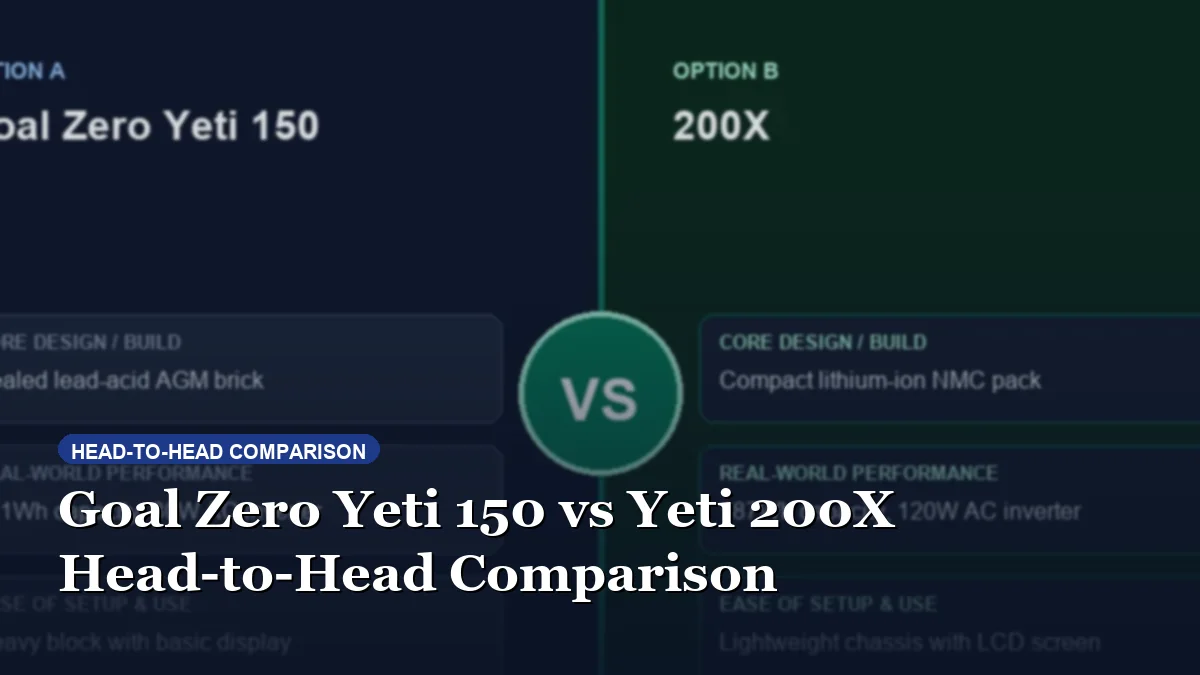
Choose the Yeti 200X for significantly lighter lithium-ion portability and faster charging speeds. Opt for the Yeti 150 only if you find a heavily discounted lead-acid unit for basic stationary backup.
Compare all top models in our Best Portable Power Station: Top Picks for 2026.
Side-by-Side Breakdown
| Criteria | Goal Zero Yeti 150 | 200X | Edge |
|---|---|---|---|
| Core Design / Build | Sealed lead-acid AGM brick | Compact lithium-ion NMC pack | 200X |
| Real-World Performance | 151Wh capacity, 80W AC inverter | 187Wh capacity, 120W AC inverter | 200X |
| Ease of Setup & Use | Heavy block with basic display | Lightweight chassis with LCD screen | 200X |
| Durability & Reliability | Heavy duty casing, sensitive to deep cycling | Modern BMS protection, robust casing | 200X |
| Efficiency / Operating Footprint | Lower usable depth of discharge | High energy density and efficiency | 200X |
| Maintenance Requirements | Must be kept charged every 3 months | Minimal maintenance, store at half charge | 200X |
| Best Ideal Use Case | Budget desktop trickle charging | Modern mobile device and drone charging | 200X |
Core Architectural Differences and Engineering Evolution
Examining the underlying engineering reveals a generational gap between these two portable power stations. The older architecture relies on heavy lead-acid chemistry, whereas the newer model embraces modern lithium tech.
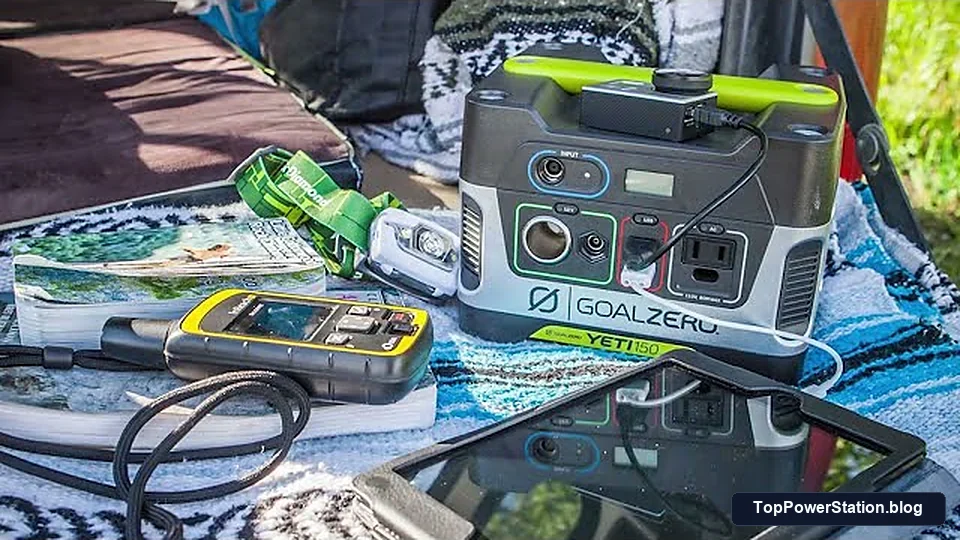
Internal layout changes dictate how each unit handles thermal dissipation and physical weight distribution. Engineers redesigned the internal wiring harness to maximize airflow and reduce overall system resistance.
User interface upgrades are equally dramatic when comparing the legacy analog meter to the modern digital display. You receive precise readouts for input wattage and remaining runtime percentages instantly.
- Lead-acid AGM internal battery vs lithium-ion NMC cell configuration
- Analog charge indicator lights vs comprehensive digital percentage screen
- Redesigned thermal management enclosure for better passive cooling efficiency
Internal Chemistry and Structural Layout
The physical layout of the legacy model is dominated by a heavy lead-acid block. This creates a dense, bottom-heavy profile that sacrifices packability for traditional structural rigidity.
Conversely, the lithium variant arranges smaller cylindrical cells within a ventilated protective housing. This modern arrangement drastically slashes weight while improving impact resistance during transport.
- Heavy lead acid block creates high center of gravity
- Cylindrical lithium cells distribute weight evenly across the chassis
Interface Evolution and Monitoring Precision
Similarly, our Goal Zero Yeti 1000X review examines advanced metrics displays. These modern interfaces replace basic LED indicators, offering precise remaining capacity estimation during heavy power draws.
The newer alternative features a crisp LCD screen tracking input and output metrics in real time. This precision prevents unexpected shutdowns during critical device charging tasks.
- Basic multi-stage LED capacity bar on legacy unit
- Advanced digital LCD screen with wattage input and output tracking
Capacity, Output Limits, and Real-World Performance
Evaluating raw electrical specifications shows clear advantages for the newer lithium-based system. It provides higher watt-hour capacity alongside a more capable AC inverter for household plugs.
Sustained power delivery determines which sensitive electronics you can safely operate in the field. Voltage sag under load is notably worse on the older lead-acid generation.
Furthermore, insights from our Goal Zero Yeti 700 review show significant surge improvements. Motor-driven appliances will trip older units much faster than contemporary lithium-ion alternatives.
- 151 watt-hours versus 187 watt-hours of total stored energy capacity
- 80 watt modified sine wave AC inverter versus 120 watt modified output
- Improved voltage stability under heavy loads on the lithium system
AC Inverter Capacity and Waveform Behavior
Running standard household electronics requires a reliable inverter capable of handling startup surges. The legacy station limits you to modest 80W continuous loads.
Upgrading to the newer platform pushes your continuous threshold up to 120W safely. This extra headroom allows you to power small laptops and specialized medical devices.
- Eighty watt limit restricts modern laptop charging capabilities
- One hundred twenty watt limit accommodates more versatile field equipment
Voltage Stability and Real-World Runtime
Lead-acid chemistry suffers from pronounced voltage sag when drawing heavy current. Your connected devices may experience performance throttling before the battery reads empty.
Lithium chemistry maintains a stable voltage curve throughout the entire discharge cycle. You extract nearly full rated capacity without premature low-voltage disconnect events.
- Severe voltage sag reduces effective runtime on legacy chemistry
- Flat discharge curve maximizes usable energy on lithium models
Chemistry Shift: Lead-Acid Legacy vs Lithium Innovation
The transition from sealed lead-acid to lithium-ion chemistry represents a massive leap in portable power technology. Energy density increases dramatically while physical footprint shrinks substantially.
Cycle life expectations favor the lithium variant by an enormous operational margin. You can recharge the newer unit thousands of times before noticing severe degradation.
Environmental sensitivity remains a notable factor when deploying these stations in extreme temperatures. Both chemistries require careful thermal management during freezing conditions.
- Roughly 300 to 500 cycles for sealed lead acid AGM packs
- Up to 500 cycles or more while retaining significant capacity for lithium
- Massive reduction in dead weight per watt-hour delivered
Cycle Life and Long-Term Degradation
Lead-acid batteries degrade rapidly if left in a partially discharged state for extended periods. Their chemical lifespan is measured in a few hundred shallow cycles.
Lithium cells offer vastly superior longevity under proper maintenance protocols. They retain useful capacity over many years of regular outdoor recreational use.
- Lead acid demands strict adherence to shallow depth of discharge
- Lithium technology tolerates deeper cycling with minimal long-term wear
Energy Density and Weight Reductions
Carrying a heavy power station on a hike or camping trip tests your endurance. The legacy unit weighs over twelve pounds for a modest amount of energy.
The lithium alternative slashes that weight down significantly while packing more watt-hours. Your shoulders will thank you during long treks away from the vehicle.
- Excessive weight penalty on older lead acid configurations
- Featherlight lithium design transforms mobile off-grid experiences
Charging Speeds, Input Ports, and Solar Integration
Recharging efficiency dictates how quickly you can restore power during emergency grid outages. Modern power stations utilize advanced charge controllers to speed up replenishment.
Solar panel compatibility is essential for extended off-grid camping excursions and preparedness. Both units accept portable photovoltaic inputs via dedicated charging ports.
Wall outlet charging times highlight the architectural improvements of modern power station designs. You spend significantly less time tethered to a traditional AC wall socket.
- Standard wall adapter charging times vary between old and new designs
- Regulated solar input ports protect internal cells from overcharging
- Car charging accessories allow mobile replenishment via 12V ports
Solar Panel Compatibility and Regulators
When pairing outdoor gear, exploring options in our best solar panels for Goal Zero Yeti guide helps you select compatible arrays. Both models integrate essential charge regulation circuitry to protect internal cells.
However, the modern lithium unit handles variable solar output with greater electrical efficiency. This ensures maximum wattage transfer from your photovoltaic arrays.
- Built-in charge controllers prevent overvoltage during solar charging
- Optimized MPPT or PWM tracking yields faster solar replenishment
Wall Outlet and Vehicle Charging Speeds
Plugging into a standard household wall outlet is the most common charging method. The legacy model requires many hours to achieve a full state of charge.
The newer lithium station utilizes updated power brick designs to accelerate wall charging. You get back to full capacity in a fraction of the time.
- Slow AC wall charging speeds on legacy lead-acid hardware
- Accelerated charging profiles on modern lithium power stations
Ergonomics, Portability, and Physical Footprint
Physical dimensions and handle design dictate how comfortably you can transport your gear. A clumsy enclosure makes quick loading difficult during sudden emergency evacuations.
The legacy unit features a bulky block shape with a rigid top handle. Its sheer weight makes single-handed carrying exhausting over moderate distances.
The lithium model adopts a streamlined housing with optimized weight distribution. It fits easily into packed vehicle trunks alongside other camping supplies.
- Bulky rectangular block design on the legacy AGM model
- Compact, space-saving chassis architecture on the lithium unit
- Balanced carrying handle integration for fatigue-free transport
Chassis Design and Handle Integration
Carrying heavy equipment requires ergonomic handles that do not strain your fingers. The older model features a basic molded handle on a heavy frame.
The newer alternative refines the handle geometry to balance the lighter lithium core. Transporting the station feels balanced and effortless in various environments.
- Basic top handle design struggles with heavy lead weight
- Ergonomic handle placement improves overall transport comfort
Storage and Packing Efficiency in Vehicles
Maximizing cargo space inside a packed vehicle is crucial for overland travelers. The bulky footprint of the older unit wastes valuable packing volume.
The smaller footprint of the lithium variant slides neatly into tight spaces. You can stack gear around it without risking damage to the outer shell.
- Inefficient rectangular dimensions complicate vehicle packing
- Compact profile allows seamless integration into cargo boxes
Maintenance Protocols, Efficiency, and Longevity
Proper upkeep ensures your portable power station remains functional when emergencies strike unexpectedly. Neglecting basic maintenance routines will permanently ruin lead-acid batteries.
Lead-acid chemistry demands regular top-off charges every few months during storage. Failing to do this causes irreversible sulfation and total capacity loss.
Lithium units require much less obsessive oversight during off-season storage periods. Keeping them at a partial charge state preserves cell health for years.
- Strict quarterly recharge requirement for lead-acid AGM packs
- Low self-discharge rates on lithium cells during long storage
- Built-in battery management systems protect against user error
Lead-Acid Sulfation and Storage Rules
Leaving a lead-acid power station uncharged in your garage is a recipe for disaster. Permanent sulfation ruins the internal plates within a few short months.
You must religiously plug the unit into a wall outlet every three months. This tedious routine is unnecessary with modern lithium alternatives.
- Irreversible chemical sulfation ruins neglected lead acid
- Mandatory quarterly charging schedule prevents sudden bricking
Lithium Battery Management System Protections
Modern lithium stations feature an internal computer monitoring every cell. This battery management system prevents overcharging, short circuits, and overheating.
Such automated safeguards remove the guesswork from daily operation and long-term storage. Your equipment stays protected even if you make a connection mistake.
- Advanced BMS prevents catastrophic electronic failure modes
- Automated temperature cutoffs safeguard against thermal runaway
Final Selection Guide for Your Power Needs
Deciding between these two generations of power stations ultimately comes down to practical performance. The technological superiority of the lithium model makes it the undisputed winner.
Avoid purchasing the legacy lead-acid unit unless you find one extremely cheap. Its heavy weight and short lifespan outweigh any initial cost savings.
Invest in the lithium alternative to ensure reliable power for your upcoming adventures. You will benefit from modern engineering, lighter weight, and superior safety features.
- Legacy lead acid is outdated for modern portable power needs
- Lithium technology delivers vastly superior value and performance
- Choose the modern option for hassle-free emergency preparedness
Why the Lithium Option Wins Outright
For instance, our detailed Goal Zero Yeti 1500X review highlights how a massive capacity upgrade transforms off-grid reliability. It thoroughly outperforms the older generation in every measurable technical category.
Upgrading your gear ensures you are never stranded with a heavy, dead battery. Modern power stations provide the reliability modern users demand.
- Lighter weight makes lithium infinitely more portable
- Higher usable capacity keeps your devices running longer
Making Your Final Purchasing Decision
Assess your specific power requirements before purchasing any portable generator. Ensure the inverter output matches the peak wattage of your essential gear.
Prioritize lithium chemistry for long-term satisfaction, reliability, and peace of mind. Your off-grid setup will perform significantly better with contemporary technology.
- Match continuous inverter wattage to your required device loads
- Prioritize modern lithium stations for maximum longevity
Frequently Asked Questions
Can I replace the internal battery in the legacy model myself?
Yes, you can swap the internal AGM battery if you possess basic wiring skills. However, sourcing a direct replacement battery can be difficult and expensive today.
Why does the lithium unit cost more than the older lead-acid version?
Lithium chemistry and advanced battery management systems require sophisticated manufacturing processes. This engineering investment delivers significantly higher energy density and a much longer operational lifespan.
Are both power stations approved for airline carry-on luggage?
No, neither of these specific power stations meets airline safety limits for cabin baggage. Lithium capacity limits restrict commercial air travel to much smaller personal power banks.
How long will the lithium station hold its charge in storage?
The lithium unit boasts a very low self-discharge rate when powered completely off. You can safely store it for several months without losing critical operating capacity.
Can I charge the lithium power station while simultaneously running devices?
Yes, pass-through charging is fully supported on the modern lithium model. You can replenish the internal battery using solar panels while powering small electronics concurrently.