Generac vs Jackery Portable Power Stations
Generac brings industrial pedigree to mobile backup, while Jackery focuses on user-friendly camping tech. This detailed comparison evaluates both brands across engineering, performance, and everyday usability.

Choose Generac for heavy-duty whole-home integration and robust backup capacities. Opt for Jackery for lightweight outdoor recreation and intuitive plug-and-play simplicity during travel and emergencies.
Compare all top models in our Best Portable Power Station: Top Picks for 2026.
Side-by-Side Breakdown
| Criteria | Generac | Jackery | Edge |
|---|---|---|---|
| Core Design / Build | Industrial-grade rugged plastics and steel reinforcement | Compact, consumer-friendly aesthetic with integrated handles | Generac |
| Real-World Performance | High surge capacity for heavy motorized appliances | Consistent output optimized for sensitive electronics | Generac |
| Ease of Setup & Use | Requires professional integration and heavier lifting | Instant out-of-the-box operation with clear digital displays | Jackery |
| Durability & Reliability | Engineered for harsh job sites and severe weather | Designed for frequent camping and recreational transport | Generac |
| Efficiency / Operating Footprint | Heavier chassis with larger overall physical dimensions | Space-saving vertical towers with optimized cooling vents | Jackery |
| Maintenance Requirements | Periodic firmware updates and terminal inspection needed | Minimal upkeep with standard storage charge cycles | Jackery |
| Best Ideal Use Case | Home backup integration and heavy job site power | Mobile camping, RV trips, and light emergency relief | Split |
Core Design & Engineering Differences
Examining the underlying engineering reveals starkly different corporate philosophies between these two major manufacturers. Generac leverages decades of traditional generator experience to construct units built for severe industrial environments.
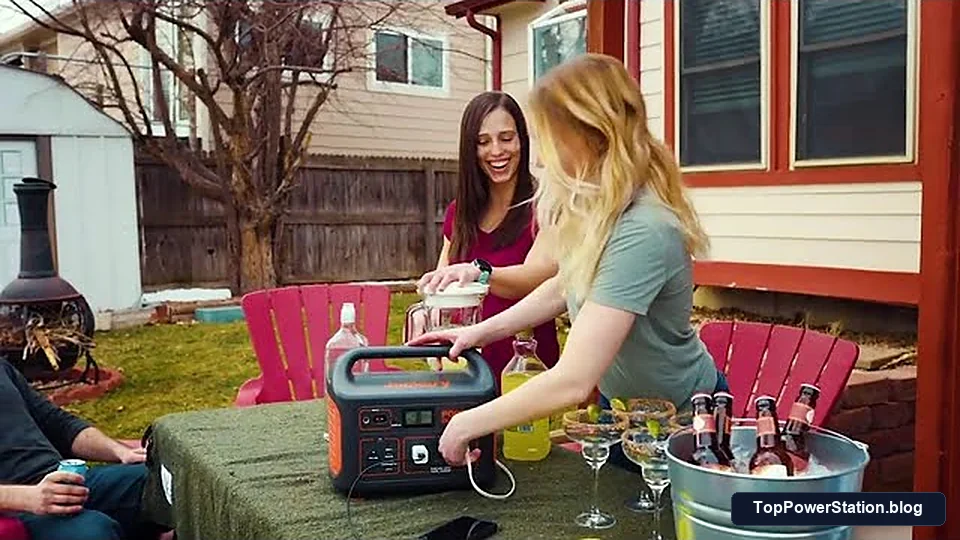
Conversely, Jackery focuses heavily on consumer electronics ergonomics, prioritizing sleek aesthetics and lightweight portability. As highlighted within our Jackery Explorer 2000 v2 review, intuitive user interfaces help manage physical stress effectively.
Materials selection plays a vital role in overall durability during transport. Generac relies on thick composite shells and reinforced corners, whereas Jackery utilizes high-grade ABS plastics optimized for weight reduction.
- Generac emphasizes industrial-grade chassis construction and high thermal tolerance.
- Jackery focuses on consumer-friendly ergonomics and lightweight composite housings.
- Internal cooling systems differ significantly in airflow routing and fan noise.
Chassis Construction and Materials
Heavy-duty housing protection is essential when transporting portable generators across rough terrain. Generac incorporates heavy rubber bumpers and steel framing to absorb shock impacts effectively.
Jackery streamlines outer shells to reduce dead weight, making it much easier for single-person carries. Both approaches serve distinct user bases effectively depending on expected travel conditions.
- Generac utilizes thick rubberized molding for impact deflection.
- Jackery employs streamlined modular casing to minimize physical bulk.
Thermal Management and Airflow
Managing internal temperatures directly impacts continuous inverter performance under heavy loads. Generac units feature aggressive forced-air ventilation tunnels designed for prolonged high-output operational cycles.
Jackery implements quieter, variable-speed fan arrays that balance cooling efficiency with minimal acoustic footprint during quiet indoor emergency use.
- Generac prioritizes high-volume airflow for extreme ambient temperatures.
- Jackery focuses on acoustic dampening for indoor living spaces.
Real-World Performance Comparison
Putting these power stations through practical load tests reveals distinct operational thresholds. Generac units excel at managing high surge demands from large motorized appliances like well pumps.
Jackery excels in maintaining steady, clean sinusoidal output for sensitive modern electronics such as laptops and medical equipment. Evaluating your specific appliance inventory dictates which performance profile matters most.
Voltage stability under fluctuating loads remains a critical metric for long-term device safety. Both brands employ advanced digital inverters, but their tuning parameters reflect different priority targets.
- Generac handles high startup surge watts for heavy motorized compressors.
- Jackery delivers exceptional voltage stability for sensitive IT hardware.
- Continuous output ratings match real-world sustained appliance draws.
Surge Capacity and Motor Starting
Starting an electric motor requires a momentary surge well above normal running watts. Generac power stations feature robust inverter headroom capable of tackling demanding compressor motor startups.
Jackery units offer adequate surge protection but typically target moderate household electronics rather than heavy workshop tools or large stationary appliances.
- Generac accommodates high inductive loads with minimal voltage sag.
- Jackery protects circuits via strict automated overload shutoffs.
Sinusoidal Purity and THD Limits
Pure sine wave output ensures that connected equipment operates without audible humming or component degradation. Both brands maintain Total Harmonic Distortion levels below three percent.
This clean power delivery safeguards microprocessor-controlled refrigerators, medical CPAP machines, and high-end audio gear from premature electrical wear during extended outages.
- Low THD protects sensitive microprocessor-driven household appliances.
- Clean AC output prevents overheating in variable-speed motors.
Battery Chemistry & Longevity
Internal energy storage technology dictates the operational lifespan and safety profile of your investment. Generac incorporates advanced chemistry variants engineered for high cycle counts and thermal stability.
Jackery adopts modern lithium iron phosphate technology in its newer series, drastically improving cycle longevity compared to older ternary lithium alternatives found in legacy models.
Understanding degradation rates helps users calculate long-term value across years of regular seasonal camping or emergency home backup deployments.
- Generac emphasizes high-density cells built for rigorous multi-year deployment.
- Jackery utilizes modern LiFePO4 chemistry for thousands of discharge cycles.
- Thermal runaway protection is integrated into both battery management systems.
Cycle Life and Degradation Rates
Battery capacity naturally diminishes over hundreds of charge and discharge cycles. High-tier models from both manufacturers guarantee retainable capacities above eighty percent past two thousand cycles.
Proper storage practices, temperature regulation, and avoiding deep discharges significantly extend operational horizons for both hardware lineups.
- LiFePO4 cells maintain strong capacity past 3000 charge cycles.
- Advanced BMS algorithms prevent damaging over-discharge states.
Battery Management System Safeguards
A sophisticated BMS monitors individual cell voltages, internal temperatures, and current flow continuously. Generac and Jackery both deploy multi-tier protection circuits to prevent hazardous operating conditions.
These integrated safeguards automatically disconnect the unit if short circuits, extreme thermal spikes, or severe voltage irregularities occur during operation.
- Real-time temperature sensors guard against localized cell overheating.
- Hardware-level fuses protect against catastrophic short-circuit events.
Portability, Ergonomics & Form Factor
Moving a heavy power station requires thoughtful handle placement, balanced weight distribution, and manageable physical dimensions. Generac models feature industrial pull handles and sturdy frame bars.
Jackery utilizes folding top handles and stackable vertical footprints designed to maximize storage efficiency. You can find more options suited for outdoor trips in our best Jackery for camping guide.
Evaluating your physical lifting capabilities and transportation methods ensures you select a unit that does not become a burden to relocate.
- Generac incorporates heavy-duty structural handles for two-person lifts.
- Jackery features space-saving vertical towers with fold-flat top grips.
- Wheel kit availability varies across heavy industrial models.
Weight Distribution and Lifting Mechanics
Heavy energy storage units place significant strain on the lower back if poorly balanced. Generac distributes weight evenly across a wider structural base to improve physical stability.
Jackery concentrates weight downward within a compact tower design, enhancing center-of-gravity stability during transit on uneven camping terrain.
- Wide-base chassis designs prevent tipping on uneven ground.
- Lower center of gravity improves stability inside moving vehicles.
Storage and Transportation Footprint
Maximizing available cargo space is crucial during emergency evacuations or extended overlanding trips. Jackery towers take up minimal floor space inside tightly packed vehicle cabins.
Generac units demand more dedicated cargo footprint due to their reinforced outer shells and heavy-duty frame reinforcement structures.
- Vertical tower profiles slip easily between camping gear boxes.
- Reinforced housing requires dedicated tie-down straps in transit.
Solar Charging & Inverter Efficiency
Harnessing renewable energy during grid failures relies heavily on built-in Maximum Power Point Tracking controllers. Both brands support extensive solar panel array inputs for off-grid recharging.
Inverter conversion efficiency determines how much stored battery energy is actually delivered to your AC devices. High conversion rates minimize wasted power during continuous usage.
Understanding input voltage limits prevents accidental damage when pairing third-party rigid or flexible solar panels with your power station.
- Integrated MPPT controllers optimize solar panel charging yields.
- High inverter conversion efficiency reduces idle power drain.
- Flexible DC input ports accommodate diverse portable solar blankets.
MPPT Controller Performance
Efficient solar harvesting depends on rapid voltage tracking under shifting cloud cover. Generac and Jackery integrate advanced MPPT algorithms to maximize wattage recovery.
Fast tracking ensures your battery bank absorbs every available ray of sunlight during daytime emergency operations without wasting precious input energy.
- Rapid voltage sampling adapts instantly to passing cloud cover.
- Optimized charging algorithms accelerate off-grid replenishment.
AC and DC Conversion Efficiency
Inverting direct current into alternating current always incurs a slight thermal loss. Both manufacturers achieve respectable conversion efficiencies hovering around eighty-five to ninety percent.
Minimizing idle standby draw ensures that leaving the inverter switched on does not silently drain your battery reserve overnight.
- High-frequency switching transformers reduce conversion heat loss.
- Low idle consumption preserves battery capacity during standby.
Maintenance, Diagnostics & Firmware Support
Maintaining optimal hardware health requires simple diagnostic tools and reliable software support. Jackery provides clean smartphone companion apps for monitoring battery stats and adjusting settings.
Generac offers robust diagnostic readouts directly on high-visibility LCD screens, appealing to users who prefer direct physical controls over wireless connectivity.
Periodic firmware updates ensure long-term bug fixes and improved battery charging algorithms throughout the operational lifespan of the unit.
- Smartphone apps provide convenient remote monitoring capabilities.
- On-board LCD screens display real-time input and output metrics.
- Regular firmware updates optimize internal charging parameters.
Digital Interfaces and App Integration
Monitoring power consumption remotely allows users to manage loads without checking physical units. As noted in our Jackery Explorer 1000 v2 review, mobile app integration puts crucial telemetry directly into your pocket.
Generac focuses on rugged, weather-sealed physical display panels that function reliably even when digital wireless networks fail completely during severe storms.
- Wi-Fi and Bluetooth connectivity enable remote status checks.
- Weather-sealed physical screens guarantee reliability during storms.
Upkeep and Long-Term Care
Portable power stations require minimal maintenance compared to gas generators. Periodic terminal cleaning and storing units at moderate charge levels prevent premature degradation.
Following manufacturer storage guidelines ensures your equipment remains ready to deploy instantly when unexpected grid emergencies occur.
- Keep units charged near fifty percent during long storage periods.
- Inspect input and output ports periodically for dust or debris.
Which Option Fits Your Setup
Selecting the ideal portable power station depends on your specific deployment environment. Homeowners seeking robust backup integration will find Generac aligns with heavy demands, whereas our best Jackery power station roundup highlights lighter alternatives.
Campers, RV enthusiasts, and remote workers needing agile portability will appreciate Jackery lightweight engineering and straightforward operation.
Evaluating your budget, lifting capacity, and intended appliance loads guarantees complete satisfaction with your final brand selection.
- Match power station capacity to your core critical appliance inventory.
- Consider your physical strength when evaluating heavier industrial units.
- Assess whether you need whole-home transfer switch compatibility.
Home Backup vs Recreational Use
Stationary home emergency setups demand high continuous wattages and heavy surge thresholds. Generac bridges the gap between portable units and permanent standby generators.
Recreational deployments prioritize lightweight mobility, quiet operation, and easy solar recharging, making Jackery the superior choice for outdoor adventures.
- Generac supports high-demand household emergency circuits.
- Jackery excels in mobile outdoor recreation and camping trips.
Making Your Final Purchasing Decision
Review your daily power consumption logs to determine exact capacity requirements before buying. Prioritizing build toughness versus weight savings clarifies your path.
Both brands deliver exceptional engineering within their respective niches, ensuring reliable emergency power whenever the electrical grid fails.
- Calculate peak running wattage for your essential household devices.
- Weigh physical portability against maximum energy storage capacity.
Frequently Asked Questions
Can Generac and Jackery power stations run refrigerators during a blackout?
Yes, both brands easily power standard household refrigerators for multiple hours. Generac provides extra surge headroom for compressor motors, while Jackery handles modern efficient fridges with strong energy conservation.
How long do these portable power stations take to recharge via solar panels?
Recharge times depend entirely on connected solar panel wattage and sunlight intensity. Optimal high-output solar arrays can replenish both battery systems from empty to full within four to eight hours.
Are these power stations safe to operate inside an enclosed living space?
Yes, because they utilize enclosed lithium battery chemistry without producing toxic exhaust fumes. You can safely run medical devices and electronics indoors without any carbon monoxide risk.
Do I need professional installation for Generac or Jackery backup systems?
Jackery units operate entirely via plug-and-play outlets requiring no installation whatsoever. Generac larger backup models may integrate with manual transfer switches requiring professional electrician assistance.
What is the expected lifespan of these modern lithium battery stations?
Modern units utilizing advanced lithium iron phosphate cells deliver thousands of discharge cycles. With proper storage care, your power station will easily provide reliable service for over a decade.