Flashfish vs Ecoflow: Essential Head-to-Head Power Comparison
Choosing between Flashfish and EcoFlow defines your portable power experience. Budget buyers favor Flashfish units, while advanced users demand EcoFlow technology.

Choose Flashfish for lightweight budget portability and basic emergency backup tasks. Select EcoFlow for rapid charging speeds and advanced smart app integrations.
Compare all top models in our Best Portable Power Station: Top Picks for 2026.
Side-by-Side Breakdown
| Criteria | Flashfish | Ecoflow | Edge |
|---|---|---|---|
| Core Design / Build | Basic plastic housing with fixed handles | Modular industrial chassis with reinforced frames | Ecoflow |
| Real-World Performance | Standard modified sine wave options available | High-surge pure sine wave inverters | Ecoflow |
| Ease of Setup & Use | Simple plug-and-play mechanical switches | Digital displays and smart app control | Ecoflow |
| Durability & Reliability | Adequate for casual weekend camping | Engineered for rigorous off-grid field use | Ecoflow |
| Efficiency / Operating Footprint | Standard conversion rates with passive cooling | Advanced X-Stream inverter technology integration | Ecoflow |
| Maintenance Requirements | Basic terminal cleaning and dry storage | Firmware updates and battery calibration cycles | Flashfish |
| Best Ideal Use Case | Lightweight emergency preparedness on budgets | Heavy-duty professional off-grid power stations | Ecoflow |
Core Architecture and Engineering Philosophy
Flashfish engineers power stations with a focus on cost-effective entry points and straightforward utility. Their enclosures utilize impact-resistant plastics designed for casual campers and basic emergency readiness.
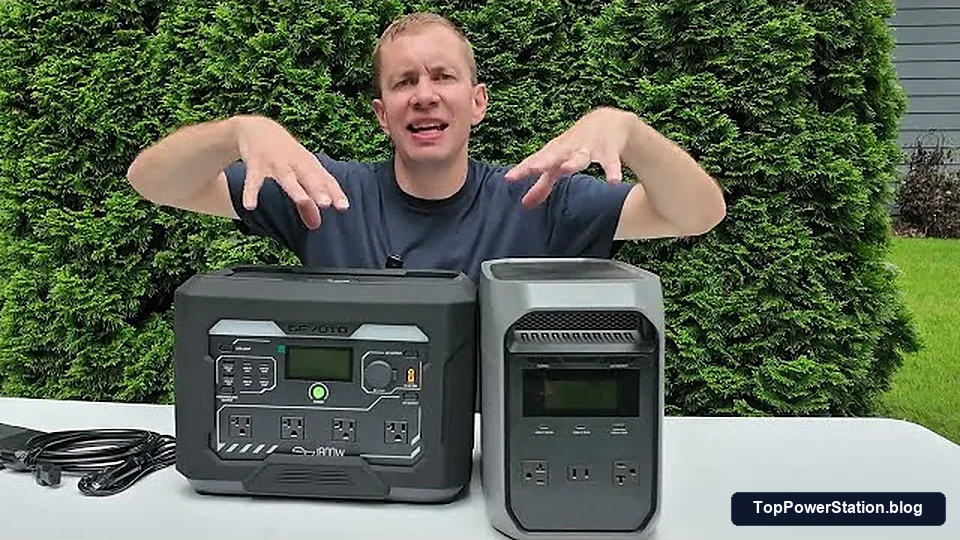
EcoFlow adopts an industrial-grade engineering philosophy prioritizing modularity, heavy-duty chassis designs, and sophisticated internal layouts. Their structural frames often integrate reinforced rubber corners to absorb high-impact drops.
Internal wiring geometry differs significantly between both brands during rigorous assembly inspections. Flashfish relies on traditional point-to-point connections, whereas EcoFlow implements integrated circuit boards to minimize internal resistance.
Flashfish utilizes traditional modified sine wave topologies in entry models, prioritizing compact circuit board layouts over complex digital signal processing to keep baseline manufacturing expenditures exceptionally low for casual weekend campers.
EcoFlow engineers their units around advanced proprietary inverters and multi-tiered microprocessors, focusing heavily on bidirectional fast-charging architectures that bypass heavy external adapter bricks entirely during standard household wall charging.
Architectural differences dictate distinct user applications, as Flashfish serves budget-conscious occasional users while EcoFlow targets demanding professionals requiring robust grid-tie simulation and heavy-duty appliance support in remote field environments.
- Flashfish uses simple plastic casings for lightweight portability.
- EcoFlow implements modular internal busbars for better energy flow.
- Chassis design on EcoFlow models prioritizes drop-shock absorption.
Chassis Materials and Structural Rigidity
Evaluating exterior housing requires checking drop resistance and overall shell thickness. Flashfish enclosures provide adequate protection for trunk storage and light camping trips without adding bulk.
EcoFlow shells undergo rigorous stress testing to ensure structural integrity under harsh field conditions. Their polymer blends resist UV degradation and extreme thermal expansion effectively.
- Flashfish maintains a lighter overall travel weight.
- EcoFlow provides superior resistance to harsh environmental elements.
Real-World Performance and Inverter Output
Delivering stable alternating current under heavy loads remains a critical benchmark for portable generators. Flashfish units typically handle moderate wattage demands suitable for charging phones and small lights.
EcoFlow stations utilize proprietary inverter technology capable of surging past nominal ratings safely. As detailed in our Ecoflow Delta 2 review, this allows users to power heavy resistive loads like coffee makers seamlessly.
Total harmonic distortion levels vary between these competitors during continuous heavy operation. EcoFlow maintains exceptionally clean sine wave outputs safeguarding sensitive medical and computing hardware.
When evaluating continuous output, Flashfish units generally experience voltage sag under heavy resistive loads, delivering lower sustained wattage due to basic pulse-width modulation limitations inherent in their budget circuitry.
EcoFlow implements true pure sine wave delivery with aggressive surge headroom, allowing sensitive medical equipment and motorized tools to operate without harmonic distortion or thermal overheating risks during extended runtime sessions.
Harmonic distortion measurements reveal EcoFlow maintaining total harmonic distortion below three percent, whereas Flashfish systems register higher distortion levels that can occasionally interfere with sensitive audio gear or microprocessors.
- Flashfish handles standard USB and small AC loads well.
- EcoFlow drives high-wattage appliances using advanced surge protection.
- Pure sine wave consistency protects delicate electronics from voltage spikes.
Surge Capacities and Continuous Wattage
Continuous output ratings dictate which household appliances you can run simultaneously. Flashfish models suit low-draw devices like LED lanterns and small portable refrigeration units.
EcoFlow systems excel when powering heavy inductive loads requiring high startup wattage spikes. Their internal microcontrollers manage sudden electrical surges without tripping safety mechanisms.
- Check continuous wattage limits before plugging in heavy tools.
- Surge headroom prevents unexpected system shutdowns during motor startups.
Battery Chemistry, Lifespan, and Chemistry Standards
Battery chemistry dictates the operational lifespan and safety profile of any portable generator. Flashfish primarily employs traditional lithium-ion cells balancing upfront affordability with standard cycle counts.
EcoFlow transitions heavily toward lithium iron phosphate chemistry across modern product lineups. This advanced formulation delivers thousands of safe charge cycles before reaching capacity degradation thresholds.
Thermal stability under high discharge loads remains superior in modern battery management systems. EcoFlow units monitor individual cell temperatures continuously to prevent hazardous thermal runaway events.
Flashfish frequently relies on legacy ternary lithium-ion cells or entry-level chemistry configurations, achieving roughly five hundred cycles before dropping to eighty percent of their original rated nominal capacity.
Modern EcoFlow stations transition toward advanced lithium iron phosphate chemistry, pushing operational lifespans past three thousand cycles while maintaining exceptional thermal stability under demanding high-draw discharge protocols.
Chemistry selection directly dictates safety profiles, as lithium iron phosphate formulations resist thermal runaway significantly better than older cobalt-based variants found in cheaper portable generator market segments.
- Flashfish utilizes standard lithium-ion cells for cost efficiency.
- EcoFlow adopts lithium iron phosphate for extended operational lifespans.
- Advanced battery management systems protect against overcharging.
Cycle Life Expectations and Degradation
Understanding long-term battery degradation helps estimate the true value of your investment. Flashfish units provide dependable service for several years of intermittent weekend use.
EcoFlow models sustain daily cycling over a decade while retaining high usable capacity percentages. As highlighted in our Ecoflow Delta Pro 3 review, this makes them ideal for full-time van lifers.
- Regular depth-of-discharge habits influence long-term battery retention.
- LiFePO4 chemistry resists premature capacity loss significantly better.
Charging Mechanics and Solar Input Efficiency
Recharging speed directly impacts how quickly you can restore power during grid outages. Flashfish offers standard wall charging adapters combined with basic solar panel input voltage ranges.
EcoFlow integrates fast-charging circuitry allowing wall outlets to replenish large capacities rapidly. Their high-voltage solar inputs permit flexible array configurations without exceeding safe current limits.
Maximum power point tracking controllers optimize energy harvesting efficiency from portable panels. Evaluated thoroughly in our Ecoflow River 2 Pro review, these algorithms react swiftly to changing cloud cover to maximize daily watt-hours.
Flashfish solar inputs typically employ basic pulse-width modulation charge controllers, restricting maximum array voltage and resulting in lower solar conversion efficiency during suboptimal overcast weather conditions.
EcoFlow integrates sophisticated maximum power point tracking algorithms capable of handling high open-circuit voltages, drastically accelerating solar replenishment speeds when paired with rigid or flexible photovoltaic panels.
AC recharging speeds also diverge sharply, with EcoFlow utilizing direct wall inputs for zero-to-eighty percent replenishment in under an hour, contrasting with slower adapter-dependent charging cycles standard for Flashfish.
- Flashfish relies on standard adapter blocks for wall charging.
- EcoFlow features rapid internal charging technology for fast turnaround.
- Advanced MPPT controllers optimize solar energy harvest efficiency.
Solar Panel Compatibility and Voltage Limits
Connecting third-party solar arrays requires strict adherence to maximum open-circuit voltage specifications. Flashfish units demand careful matching with lower-voltage panels to prevent internal damage.
EcoFlow stations accept wide voltage ranges from various manufacturers, simplifying solar expansion. Users can chain multiple panels together safely when following manufacturer guidelines.
- Verify open-circuit voltage before connecting external solar panels.
- Wide voltage tolerance prevents controller damage during peak sun hours.
Port Layout, Ergonomics, and Usability Factors
Physical interface design dictates how easily users can connect multiple devices simultaneously. Flashfish organizes standard AC outlets, DC ports, and USB connections across straightforward front panels.
EcoFlow arranges comprehensive port arrays alongside informative digital status screens displaying input metrics. Their clear labeling and logical grouping enhance user experience in low-light environments.
Ergonomic handle placement affects carrying comfort when transporting heavy power stations outdoors. Noted across our Ecoflow Delta Pro Ultra review, EcoFlow balances weight distribution effectively, whereas Flashfish features offset designs.
Flashfish designs prioritize lightweight portability, featuring integrated fold-down plastic handles and straightforward front-facing DC port layouts that accommodate basic USB connections and twelve-volt cigarette lighter sockets easily.
EcoFlow emphasizes comprehensive interface ecosystems, incorporating rubberized dust covers, dedicated app-controlled zones, and prominent digital LCD screens displaying real-time input and output metrics with absolute precision.
Ergonomic housing materials differ notably; Flashfish utilizes standard ABS plastics, whereas EcoFlow reinforces structural chassis corners with heavy-duty rubber bumpers to withstand rugged transport and accidental drops.
- Flashfish keeps port layouts simple and easily accessible.
- EcoFlow integrates digital screens with comprehensive real-time data.
- Ergonomic handles reduce strain during campsite transportation.
Interface Clarity and Digital Displays
Clear LCD screens provide vital information regarding remaining runtime and battery health. Flashfish displays offer basic percentage indicators and active output status lights.
EcoFlow units feature detailed dashboards calculating exact minutes of remaining power based on current draw. This precision helps users manage energy consumption during extended emergencies.
- Detailed runtime estimations improve emergency energy planning.
- Backlit screens remain legible in direct sunlight and dark rooms.
Thermal Management and Safety Compliance Systems
Internal cooling systems prevent overheating during sustained high-wattage power delivery operations. Flashfish utilizes passive cooling vents alongside basic internal fans to manage thermal loads.
EcoFlow implements intelligent variable-speed cooling fans paired with internal heat sinks. These systems activate dynamically based on load intensity to maintain optimal operating temperatures safely.
Comprehensive safety protections guard against short circuits, overcurrent, and low-voltage scenarios. Both brands adhere to recognized international electrical standards for consumer power equipment safety.
Flashfish relies predominantly on passive cooling fins and smaller variable-speed fans, which can trigger audible noise thresholds earlier during continuous high-wattage inverter loads in warm environments.
EcoFlow deploys advanced internal thermal management algorithms alongside multi-zone temperature sensors, dynamically modulating fan speeds to protect critical lithium cells from overheating during rapid charging sessions.
Safety certifications such as FCC, CE, and RoHS ensure baseline electrical compliance, though EcoFlow units incorporate more comprehensive short-circuit protection mechanisms within their internal battery management systems.
- Flashfish utilizes basic fan cooling for moderate power loads.
- EcoFlow features smart variable-speed thermal management systems.
- Built-in safety sensors automatically shut down faulted circuits.
Overload Protection and Circuit Safety
Automatic protection mechanisms prevent catastrophic failure when drawing excessive current. Flashfish units trip internal fuses or cut power outputs when pushed past limits.
EcoFlow systems feature resettable digital circuit breakers and sophisticated firmware safeguards. These intelligent responses protect both the power station and connected appliances effectively.
- Digital circuit breakers eliminate the need for manual fuse replacements.
- Firmware safeguards prevent permanent damage during severe overloads.
Long-Term Maintenance and System Longevity
Proper maintenance routines ensure your portable power station remains reliable over years of service. Flashfish units require minimal upkeep beyond periodic battery conditioning and dry storage.
EcoFlow equipment benefits from firmware updates managed through dedicated mobile applications. These software patches continually optimize battery performance and refine internal charging algorithms.
Storage practices significantly influence long-term battery health during off-season periods. Keeping units partially charged in climate-controlled environments prevents permanent capacity loss for both brands.
Maintaining optimal health for Flashfish units requires periodic calibration cycles and careful avoidance of deep-discharge events that can permanently degrade older lithium-ion cell stacks over time.
EcoFlow firmware updates delivered via smartphone applications allow continuous optimization of battery management systems, extending overall hardware longevity through refined charging algorithms and voltage thresholds.
Long-term storage protocols remain critical for both brands, mandating periodic fifty percent state-of-charge checks every three to six months to prevent irreversible capacity loss in unused backup equipment.
- Flashfish requires basic storage care and terminal cleanliness.
- EcoFlow benefits from regular firmware updates via smart apps.
- Proper seasonal storage preserves internal battery chemistry integrity.
Firmware Updates and Smart Connectivity
Modern power stations increasingly rely on software integration for advanced feature management. Flashfish maintains a traditional hardware-focused approach without complex software connectivity requirements.
EcoFlow offers robust smartphone applications via Wi-Fi and Bluetooth connections. Users can adjust charging speeds, monitor performance remotely, and update device firmware effortlessly.
- Smart app connectivity allows remote monitoring of energy stats.
- Traditional hardware designs avoid software dependency complications.
Frequently Asked Questions
Which brand offers better value for casual camping trips?
Flashfish delivers exceptional value for occasional weekend campers needing basic power. Their lightweight units provide reliable budget-friendly portability for lights and phones.
Can EcoFlow power stations handle heavy household appliances?
Yes, EcoFlow units easily run high-wattage devices like coffee makers and refrigerators. Their advanced inverters feature high-surge capacity to handle demanding startup loads.
Do Flashfish generators support fast wall charging?
Flashfish stations use standard charging adapters with moderate replenishment speeds. Users needing rapid wall charging should look toward EcoFlow's proprietary technology.
How do battery lifespans compare between these two manufacturers?
EcoFlow utilizes modern lithium iron phosphate chemistry offering extended cycle counts. This ensures superior long-term durability compared to traditional lithium-ion batteries.
Are third-party solar panels compatible with both brands?
Both brands accept various solar panels if voltage limits align properly. Always verify open-circuit voltage specifications before connecting external arrays to prevent damage.