EcoFlow Delta Pro Ultra vs Anker Solix F3800: Technical Guide
Evaluating heavy-duty home backup systems reveals distinct engineering priorities. Choosing between these flagships depends on your exact power requirements.

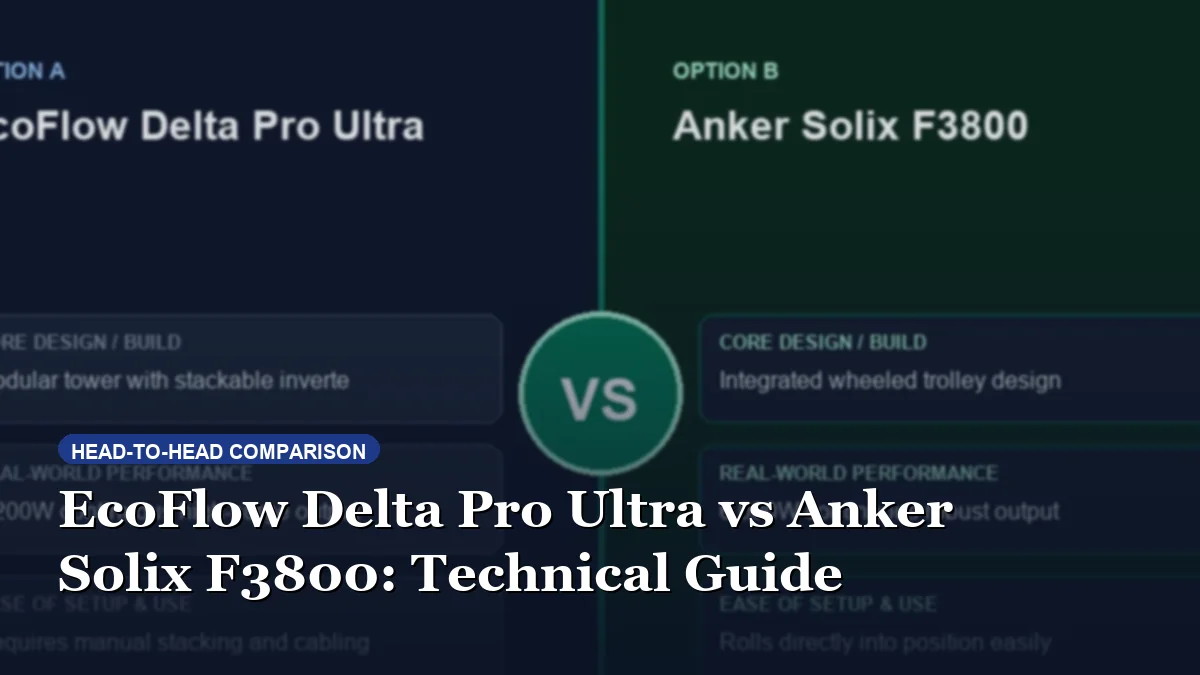
Choose the EcoFlow Delta Pro Ultra for massive expandability and heavy motor loads. Select the Anker Solix F3800 if you prioritize integrated wheels and simpler garage integration.
Compare all top models in our Best Portable Power Station: Top Picks for 2026.
Side-by-Side Breakdown
| Criteria | EcoFlow Delta Pro Ultra | Anker Solix F3800 | Edge |
|---|---|---|---|
| Core Design / Build | Modular tower with stackable inverter | Integrated wheeled trolley design | Anker Solix F3800 |
| Real-World Performance | 7,200W continuous high-surge output | 6,000W continuous robust output | EcoFlow Delta Pro Ultra |
| Ease of Setup & Use | Requires manual stacking and cabling | Rolls directly into position easily | Anker Solix F3800 |
| Durability & Reliability | LFP chemistry with robust casing | InfiniPower industrial-grade shell design | Tie |
| Efficiency / Operating Footprint | High conversion efficiency with smart home panel | Direct RV and dual-voltage support | EcoFlow Delta Pro Ultra |
| Maintenance Requirements | Firmware updates and filter cleaning | Minimal upkeep with dust-resistant vents | Tie |
| Best Ideal Use Case | Whole-home extended emergency backup | Job sites and mobile RV living | EcoFlow Delta Pro Ultra |
Core Architecture & Engineering
Heavy-duty portable power stations demand robust internal engineering to safely handle massive electrical loads. Our detailed ecoflow delta pro review explores advanced lithium iron phosphate chemistry ensuring long operational lifespans.
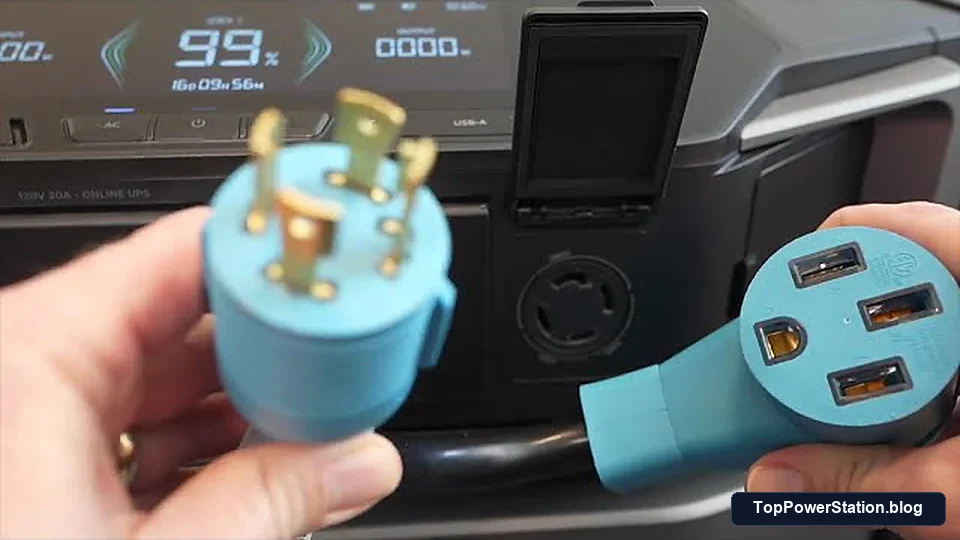
Internal layout differences dictate how these large systems handle thermal dissipation during continuous high-wattage output phases. Proper airflow channels prevent dangerous heat buildup inside the primary inverter compartments.
The EcoFlow unit utilizes a modular stackable design separating the inverter head from the battery packs, whereas the Anker employs a unified trolley-style chassis with integrated wheels and fixed internal inverter electronics.
Internal busbars and high-voltage wiring harnesses must withstand continuous high-amperage draws under heavy residential loads, requiring robust copper cross-sections and secure terminal torque specifications to prevent dangerous thermal hotspots over time.
- EcoFlow uses a stackable modular tower architecture.
- Anker employs an integrated unibody wheeled chassis.
- Both systems rely on safe LFP battery cells.
Structural Build & Enclosure Materials
Heavy industrial plastics and reinforced internal metal frames protect sensitive electronic components from daily job site impacts. The physical housing must withstand vibrations during transit across rough terrain.
Engineers designed these units to support heavy stacking configurations without compromising structural integrity or ventilation clearance.
- Impact-resistant outer shells protect internal electronics.
- Reinforced handles assist with heavy positioning tasks.
Real-World Power Delivery & Inverter Output
Delivering steady current to high-draw appliances requires sophisticated inverter technology capable of managing sudden electrical surges. Read our ecoflow delta pro ultra review for complete continuous output data.
Appliances like central air conditioners and heavy well pumps start smoothly without tripping internal safety breakers. Clean sine wave output protects sensitive household electronics from voltage spikes.
Delivering continuous power requires low Total Harmonic Distortion to protect sensitive compressor motors and computing hardware, with both systems maintaining pure sine wave output well below standard industrial safety compliance thresholds.
Surge capacities dictate how reliably heavy inductive loads like central air conditioners start up, pushing inverters near their peak wattage limits before internal overload protection triggers a controlled system shutdown.
- EcoFlow features a robust 7,200W continuous inverter.
- Anker delivers a dependable 6,000W continuous output.
- Both units handle heavy inductive motor starting loads.
Surge Capacity & Motor Starting Performance
Inductive loads demand significant instantaneous current spikes when refrigerator compressors or sump pumps initiate cycles. Advanced surge management protocols prevent sudden system shutdowns during peak demand.
Testing reveals both power stations manage heavy motor startups effectively under typical household emergency conditions.
- Instantaneous surge headroom prevents appliance fault codes.
- Stable voltage regulation protects compressor motors.
Battery Chemistry, Longevity & Thermal Management
Modern energy storage relies heavily on safe battery chemistry variants that offer thousands of deep charge cycles. LFP battery technology guarantees over three thousand cycles before capacity drops significantly.
Active cooling fans manage internal temperatures during rapid charging sessions or sustained high-output electrical loads. Thermal sensors continuously monitor cell health to prevent dangerous overheating conditions.
Lithium iron phosphate chemistry underpins both power stations, promising exceptional cycle life ratings exceeding three thousand charge sequences before dropping below eighty percent of original nominal capacity.
Active cooling arrays utilize variable-speed fans and internal temperature sensors to dissipate heat across densely packed cell groups during rapid charging cycles, maintaining optimal operating temperatures during extreme weather events.
- Exemplary cycle life exceeds three thousand charge iterations.
- Smart thermal management protects individual battery cell groups.
Thermal Regulation and Safety Protocols
Advanced internal algorithms regulate fan speeds dynamically based on real-time temperature telemetry data. This prevents premature component degradation during extreme summer heat wave operations.
Multi-layer battery management systems protect against short circuits, overcharging, and deep discharge scenarios.
- Dynamic fan modulation reduces unwanted acoustic noise.
- Comprehensive BMS monitors individual cell voltages.
Portability, Ergonomics & Physical Footprint
Moving heavy energy storage systems requires thoughtful ergonomic design features like integrated wheels and reinforced pull handles. The Anker unit utilizes a built-in trolley style for easier floor mobility.
EcoFlow relies on a modular stacking approach that separates batteries from the heavy inverter module. This modular strategy simplifies single-person lifting tasks during transportation phases.
Maneuvering heavy emergency power equipment demands careful attention to center of gravity design. Our anker solix f3800 review analyzes how integrated handles and stabilization brackets lower tipping risks.
Ergonomic grab points and reinforced polymer housings protect internal circuit boards from accidental drops, ensuring compliance with strict drop-test safety standards required for frequent transport in contractor vehicles.
- Anker Solix features an integrated pull handle system.
- EcoFlow uses detachable components for easier lifting.
- Total system weight exceeds standard portable generators.
Handling and Transport Ergonomics
Transporting these large units across gravel or uneven pavement tests the durability of caster wheels. Heavy-duty rubberized wheels absorb shocks and protect internal battery connections.
Ergonomic handle placement ensures users maintain proper posture when tilting and rolling heavy units.
- Rugged caster wheels withstand rough outdoor surfaces.
- Balanced weight distribution prevents accidental tipping.
Smart Integration, Software & Grid Connectivity
Modern power stations feature robust smartphone applications allowing remote monitoring of power consumption metrics. Users can track solar input, battery percentage, and output loads via Wi-Fi and Bluetooth.
Smart home integration panels allow seamless transfer of household circuits during unexpected utility grid power outages. Automated switching occurs within milliseconds to prevent computer restarts.
Local Bluetooth and Wi-Fi modules enable remote firmware updates and real-time power monitoring through companion mobile applications, granting users access to customizable charging speeds and automated backup schedules.
Seamless integration with home automation protocols allows these generators to interface intelligently with existing smart panels, optimizing energy consumption via time-of-use tariffs to significantly reduce monthly utility expenses.
- Dedicated mobile applications offer real-time power analytics.
- Smart home panels automate emergency circuit transfers.
- Firmware updates improve device functionality over time.
App Usability and Remote Monitoring
Intuitive user interfaces display remaining runtime calculations based on current household electrical consumption. Remote toggling of AC and DC outlets saves precious stored energy.
Cloud connectivity lets homeowners check system status while traveling away from the property.
- Clear graphical displays highlight energy input sources.
- Customizable charging schedules optimize electricity rates.
Solar Charging Performance & Expansion Capacities
Off-grid energy replenishment depends on high-voltage solar panel array inputs supported by efficient internal charge controllers. Both systems accept massive photovoltaic arrays to recharge quickly outdoors.
Maximum solar input limits dictate how fast depleted battery modules return to full operational capacity. High-voltage MPPT technology optimizes energy harvest during partial cloud cover.
High-voltage solar input ports accommodate extensive photovoltaic arrays arranged in series strings, minimizing line losses and maximizing solar conversion efficiency across varying degrees of direct sunlight exposure.
Expanding total watt-hour capacity involves chaining secondary battery expansion units through heavy-duty communication cables, scaling total energy storage to meet extended off-grid survival requirements during prolonged outages.
- High-voltage MPPT controllers maximize solar array output.
- Modular expansion batteries scale total storage capacity.
- Fast solar charging restores power during multi-day outages.
Photovoltaic Integration and Expansion Limits
Connecting multiple solar panel strings requires careful attention to maximum voltage thresholds and current ratings. Exceeding manufacturer specifications can damage internal charging circuitry permanently.
Expansion cables lock securely to prevent accidental disconnection during windy weather conditions.
- Strict adherence to voltage limits prevents hardware damage.
- Weatherproof connectors ensure reliable outdoor solar links.
Maintenance Protocols & Long-Term Reliability
Maximizing operational lifespan for high-capacity systems requires routine preventive maintenance and software management. Consult our ecoflow delta pro 3 review to see how cooling vents prevent thermal throttling during heavy use.
Periodic calibration cycles help internal state-of-charge indicators remain accurate over years of continuous deployment. Storing units in climate-controlled environments prevents accelerated battery degradation.
Routine maintenance procedures require periodic firmware checks, terminal cleaning, and clearing dust filters to prevent airflow blockages that could compromise long-term operational reliability in harsh environments.
Storing these heavy-duty units during off-seasons demands maintaining a fifty percent state of charge in temperature-controlled spaces to prevent accelerated capacity degradation and preserve chemical stability.
- Regularly clean dust filters to maintain proper airflow.
- Perform periodic software updates for optimal performance.
- Store units at moderate temperatures during off-seasons.
Preventive Care and Upkeep Procedures
Inspect high-current cables periodically for signs of wear, fraying, or loose terminal connections. Maintaining clean contact points ensures maximum power transfer efficiency during emergency operations.
Following manufacturer storage guidelines preserves battery health when the equipment remains idle for months.
- Inspect AC and DC cables for physical damage.
- Keep battery terminals clean and debris-free.
Frequently Asked Questions
Can these power stations run an entire residential home during an emergency?
Yes, both systems can power essential household appliances when paired with a proper transfer switch. Selecting the EcoFlow Delta Pro Ultra provides extra surge headroom for heavy motor loads.
How do I safely store these heavy power stations during long periods of non-use?
Store your unit in a temperature-controlled environment with a fifty percent charge level. Regularly check the battery percentage every few months to prevent deep self-discharge damage.
Are these power stations safe to operate indoors in a living space?
Both units emit zero toxic exhaust fumes, making them completely safe for indoor placement. Ensure adequate clearance around the cooling vents to maintain proper thermal regulation.
Can I connect third-party solar panels to these power stations?
Yes, you can use third-party panels provided their open-circuit voltage matches manufacturer specifications. Always verify voltage limits carefully before plugging external arrays into the unit.
What is the primary difference in how these two heavy systems transport?
The Anker features an integrated wheeled trolley design for effortless rolling across smooth surfaces. The EcoFlow uses a stackable modular architecture that requires manual positioning of components.