EcoFlow Delta 2 Max vs Bluetti AC200L: Head-to-Head
Compare the EcoFlow Delta 2 Max and Bluetti AC200L for off-grid power. We evaluate their capacity, inverter output, and daily portability.

Choose the EcoFlow Delta 2 Max for faster charging and lighter mobility. Opt for the Bluetti AC200L if you need high continuous AC output and expandable capacity.
Compare all top models in our Best Portable Power Station: Top Picks for 2026.
Side-by-Side Breakdown
| Criteria | EcoFlow Delta 2 Max | Bluetti AC200L | Edge |
|---|---|---|---|
| Core Design / Build | Modular plastic casing with integrated handles | Ruggedized housing with dual top handles | EcoFlow Delta 2 Max |
| Real-World Performance | 2048Wh capacity with 2400W output | 2048Wh capacity with 2400W output | Tie |
| Ease of Setup & Use | Intuitive mobile app and clear display | Responsive touchscreen and physical buttons | Bluetti AC200L |
| Durability & Reliability | LFP chemistry rated for 3000 cycles | LFP chemistry rated for 3000 cycles | Tie |
| Efficiency / Operating Footprint | High solar conversion with dual MPPT | Efficient power conversion with fast grid input | EcoFlow Delta 2 Max |
| Maintenance Requirements | Firmware updates via Wi-Fi and Bluetooth | Periodic dust cleaning and terminal checks | EcoFlow Delta 2 Max |
| Best Ideal Use Case | Emergency home backup and mobile off-grid trips | Heavy appliance running and workshop power | Bluetti AC200L |
Core Design & Engineering Differences
Evaluating portable power stations requires analyzing physical architecture, internal component layout, and structural durability. Both units rely on modern lithium iron phosphate cells designed to maximize safety and long-term operational lifespan.
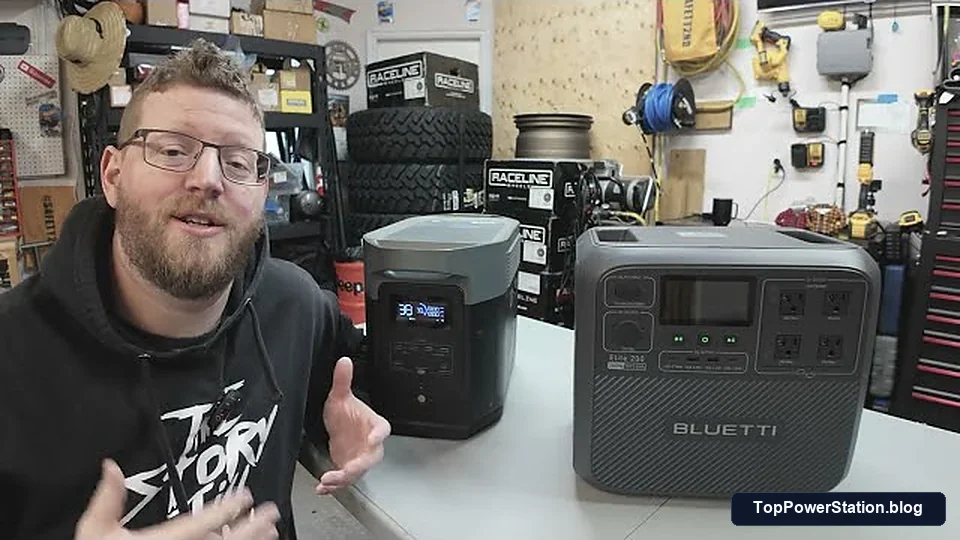
The EcoFlow Delta 2 Max features a streamlined plastic chassis optimized for weight reduction and transport. If you need heavier capacity, our ecoflow delta pro max review explores an even larger powerhouse.
Conversely, the Bluetti AC200L utilizes a heavier, ruggedized industrial enclosure built to withstand demanding job site conditions. Heavy-duty structural reinforcements protect the internal circuitry against shock, vibration, and accidental drops during transit.
- Chassis materials utilize flame-retardant industrial plastics for enhanced safety.
- Internal wiring harnesses are secured to prevent loosening during rough vehicle transport.
- Thermal management systems employ active cooling fans triggered by internal temperature sensors.
Ergonomics and Portability Layout
Ergonomic handle placement dictates how easily a user can transport these substantial energy storage units. The EcoFlow incorporates flush side handles that save space inside crowded vehicle trunks during travel.
Bluetti opts for rigid top-mounted grab handles that facilitate straightforward two-person lifting maneuvers. Selecting the right model depends heavily on your vehicle storage constraints and personal lifting comfort.
- Flush side handles minimize overall storage footprint inside compact campers.
- Top grab handles offer superior leverage during single or dual user loading.
Real-World Performance Comparison
Capacity metrics on paper do not always translate directly to sustained real-world appliance runtime. Both systems pack identical baseline energy reserves rated at 2048 watt-hours using advanced LFP chemistry.
Real-world discharge tests reveal minimal variance in overall watt-hour delivery under standard household loads. As noted in our ecoflow delta 2 review, inverters convert stored DC energy into usable AC power efficiently.
Environmental operating temperatures significantly influence inverter efficiency and total usable battery capacity. Proper ventilation during high-draw operations prevents thermal throttling and maximizes continuous power delivery.
- Base energy capacity measures 2048Wh for both competing units.
- Inverter conversion efficiency averages between eighty-five and ninety percent.
- Operating temperature ranges span from freezing up to scorching summer conditions.
Sustained Power Delivery Under Load
Running high-wattage appliances tests the limits of internal inverter transformers and battery management systems. Both stations handle continuous loads up to 2400 watts without tripping internal overload protections.
Surge capacities allow instantaneous power spikes for motor-driven compressor appliances like refrigerators. Users can reliably power sensitive electronics simultaneously without experiencing voltage drops or signal interference.
- Continuous output ratings reach 2400W across multiple alternating current outlets.
- Surge handling capabilities safely accommodate momentary inductive motor startups.
Inverter Output & Surge Capacities
Pure sine wave inverters are mandatory for safely powering sensitive medical devices and modern computers. Both systems deliver clean electricity matching standard utility grid waveforms to protect connected equipment.
Outlet configurations differ notably between the two manufacturers to accommodate diverse regional preferences. The EcoFlow provides numerous spaced sockets, while Bluetti integrates heavy-duty specialized receptacles for large plugs.
Understanding peak surge limitations helps prevent unexpected shutdowns when starting heavy motor loads. Proper load balancing across available ports ensures optimal inverter performance during extended grid outages.
- Pure sine wave output protects sensitive microprocessors and medical equipment.
- Diverse outlet arrays support standard plugs and specialized twist-lock connectors.
- Overload protection circuits instantly disconnect power during severe short circuits.
Outlet Density and Port Variety
Port selection dictates how many electronic devices you can connect simultaneously during emergencies. Multiple USB-C power delivery ports allow rapid charging for modern laptops, tablets, and mobile phones.
Direct current automotive ports and DC barrel outputs accommodate specialized 12V camping accessories. Careful port organization prevents cable clutter during high-density multi-device charging sessions.
- USB-C ports support high-speed power delivery protocols up to 100W.
- Dedicated DC outputs run 12V appliances without external power bricks.
Battery Chemistry, Efficiency & Longevity
Lithium iron phosphate chemistry provides unmatched cycle life and chemical stability for stationary energy storage. Both devices maintain robust capacity retention even after thousands of complete charge and discharge cycles.
Advanced battery management systems monitor individual cell voltages, temperatures, and current flows continuously. This active balancing prevents premature cell degradation and protects against dangerous overcharging conditions.
Long-term investment value depends heavily on these integrated protection mechanisms and cycle durability ratings. Users can expect many years of reliable daily service before reaching nominal capacity degradation thresholds.
- LFP cell chemistry delivers 3000 cycles to eighty percent capacity.
- Smart BMS firmware actively balances individual cell groups during charging.
- Comprehensive thermal sensors prevent runaway reactions in extreme heat.
Capacity Expansion and Modular Growth
Growing energy needs often require adding extra battery packs to extend off-grid runtimes. Similar modular flexibility is highlighted in our ecoflow delta pro 3 review for users demanding massive expansion.
Connecting expansion modules doubles or triples your total available watt-hours for multi-day trips. Ensure firmware versions match across all connected components to guarantee flawless communication protocols.
- Proprietary cables connect expansion batteries securely in a master-slave configuration.
- Total system capacity scales upward significantly for extended homestead backup.
Charging Speeds & Solar Integration
Rapid AC grid charging transforms emergency preparedness by restoring full power in record time. Both systems utilize advanced internal rectifiers to draw substantial wattage directly from standard wall outlets.
Solar panel integration is crucial for truly independent off-grid living and emergency resilience. Maximum power point tracking controllers optimize incoming photovoltaic voltage to extract maximum possible solar energy.
Combining wall charging with solar input creates hybrid replenishment setups for ultimate speed. Always verify open-circuit voltage limits before connecting third-party solar arrays to prevent damage.
- AC wall charging restores full capacity in under two hours.
- Dual MPPT solar controllers maximize photovoltaic energy harvesting efficiency.
- Hybrid charging combines AC and solar inputs for record-fast replenishment.
Photovoltaic Voltage Limits and Setup
Understanding solar input parameters ensures safe and efficient array configuration in the field. Operating within specified voltage ranges protects internal charge controllers from destructive electrical overloads.
Weather conditions and panel angle drastically impact daily solar energy yield statistics. Positioning panels perpendicular to direct sunlight yields the highest possible charging wattage outputs.
- Wide solar voltage ranges accommodate various third-party panel configurations.
- Weather-resistant connectors ensure reliable outdoor photovoltaic power transmission.
Maintenance, Safety & Ergonomics
Routine maintenance ensures your portable power station remains ready for unexpected emergency deployment. Keeping cooling vents clean and firmware updated prevents unexpected operational anomalies in the field.
Safety certifications from recognized testing laboratories validate the electrical integrity of these units. Comprehensive overload, short circuit, and over-temperature protections safeguard users during intensive operation.
Ergonomic user interfaces streamline daily operation through clear digital displays and responsive controls. Monitoring power consumption metrics helps users manage stored energy reserves efficiently during outages.
- Regular firmware updates optimize internal battery management algorithms automatically.
- Independent safety certifications confirm adherence to strict electrical standards.
- Digital LCD screens provide real-time input and output wattage statistics.
Firmware Updates and App Connectivity
Smart connectivity features allow remote monitoring and configuration via mobile smartphone applications. Wi-Fi and Bluetooth protocols enable users to check battery status from anywhere in the home.
Adjusting charging speeds through the app helps protect aging electrical circuits in older homes. Software customization ensures your hardware adapts to evolving energy management requirements.
- Mobile applications provide remote tracking of input and output metrics.
- Customizable charging speed settings protect sensitive home electrical circuits.
Which Option Fits Your Setup
Selecting the ideal power station requires balancing wattage and portability needs. Our comprehensive ecoflow delta 2 max review highlights how this unit excels in mobile scenarios requiring rapid charging.
The Bluetti AC200L suits users prioritizing robust build quality and heavy appliance execution. Assess your typical power consumption patterns before investing in either high-capacity ecosystem.
Proper planning ensures your chosen equipment delivers reliable off-grid electricity for years. Consider future energy expansion goals when making your final hardware purchasing decision.
- Match continuous output ratings to your heaviest household appliance loads.
- Evaluate vehicle cargo space to determine acceptable physical dimensions.
- Plan solar panel requirements based on your typical daily energy usage.
Final Decision Matrix for Buyers
Final purchasing choices ultimately hinge on specific application environments and budgetary preferences. Home backup users benefit from fast charging, while campers value rugged structural durability.
Review your primary use cases carefully to select the most suitable power ecosystem. Both options represent the pinnacle of modern portable energy engineering and reliable performance.
- Home backup scenarios favor rapid grid and solar recharging speeds.
- Off-grid camping trips demand rugged housings and dependable handle layouts.
Frequently Asked Questions
Can both power stations run household refrigerators during blackouts?
Yes, both units easily power standard refrigerators using their 2400W inverters. Their pure sine wave output ensures compressor motors run safely without electrical damage.
How long do these LFP batteries last under regular daily usage?
Both models utilize advanced lithium iron phosphate chemistry rated for 3000 cycles to eighty percent capacity. This translates to roughly ten years of dependable daily operation.
Is it possible to charge these stations while simultaneously powering devices?
Yes, pass-through charging is fully supported on both units. You can safely recharge the internal batteries via solar or AC while running connected appliances.
Can I use third-party solar panels with these power stations?
Yes, both stations accept third-party panels provided you stay within their voltage limits. Always verify open-circuit specifications before connecting foreign photovoltaic arrays.
Do these systems require any specialized routine maintenance?
Routine maintenance is minimal and involves keeping vents clean and updating firmware regularly. Storing them at partial charge in climate-controlled spaces preserves battery health.