Eb3A vs River 2: Technical Power Clash
Choosing between these compact entry-level power stations requires analyzing core inverter architectures and chemistry limits. Our technical breakdown reveals exact operational differences for your field gear.

Choose the Eb3A if you need maximum DC output ports and compact form factors for emergency bags. Select the River 2 for faster AC recharging and superior continuous inverter wattage.
Compare all top models in our Best Portable Power Station: Top Picks for 2026.
Side-by-Side Breakdown
| Criteria | Eb3A | River 2 | Edge |
|---|---|---|---|
| Core Design / Build | Rugged industrial box profile | Sleek aerodynamic housing | River 2 |
| Real-World Performance | 600W Power Lifting mode | 300W standard continuous output | Eb3A |
| Ease of Setup & Use | Comprehensive front monochrome display | Minimalist layout with app link | Eb3A |
| Durability & Reliability | LiFePO4 cell architecture | LiFePO4 cell architecture | Tie |
| Efficiency / Operating Footprint | Compact desk-friendly chassis | Slightly taller vertical tower | Eb3A |
| Maintenance Requirements | BMS balancing every 3 months | BMS balancing every 3 months | Tie |
| Best Ideal Use Case | Emergency comms and desktop backup | Outdoor day trips and rapid top-offs | River 2 |
Core Design and Engineering Architecture
Modern compact power stations prioritize portable ergonomics without sacrificing internal structural integrity. The engineering teams utilized high-impact engineering plastics to protect internal printed circuit boards from drops.
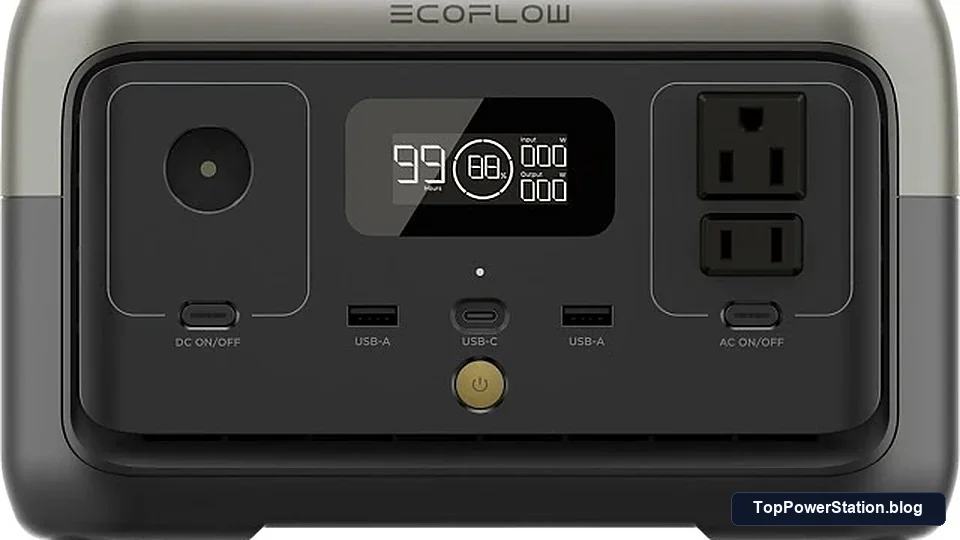
Internal layout optimization dictates how efficiently waste heat escapes during heavy inverter loads. Thermal management directly influences continuous running times during grueling summer field operations.
Both power stations utilize distinct internal layouts, prioritizing spatial optimization. For further engineering details, see the EcoFlow River 2 Pro review, which highlights internal cooling innovations and robust skeletal frameworks.
Engineers integrated flame-retardant outer plastics rated to UL94 V-0 standards, ensuring robust physical protection during transit. Internal cabling is securely routed to minimize vibration-induced fatigue during aggressive off-grid transport over rough dirt roads.
- Reinforced internal framing minimizes vibration damage during transit.
- Optimized airflow channels isolate sensitive inverter circuits from batteries.
- Flame-retardant outer casings meet strict UL safety protocols.
Chassis Materials and Structural Layout
External housings utilize textured polymers designed to resist scuffs during rugged outdoor use. Internal component mounting brackets employ dampening materials to absorb shocks from accidental drops.
Weight distribution remains balanced across the central carrying handle for fatigue-free transport.
- Textured finish enhances grip during wet weather.
- Centered handle design prevents wrist strain during long walks.
Inverter Load Profiles and Surge Handling
Inverter performance defines what household electronics you can safely run off-grid. Pure sine wave output ensures sensitive microprocessors receive clean, stable electricity without audible electrical hums.
Handling sudden motor startup surges separates mediocre units from professional-grade emergency generators. Advanced overload protections kick in instantly to prevent catastrophic transistor burnout during faults.
Pure sine wave inverters deliver stable AC power, protecting sensitive electronics. Our detailed EcoFlow River 2 review explores similar inverter architectures designed to handle rigorous inductive loads and sudden motor startups.
Conversely, the River 2 delivers a 300W continuous output using proprietary X-Boost technology to manage higher wattage appliances. Surge thresholds manage motor startup currents effectively, preventing unexpected shutdowns during peak compressor activation cycles.
- Pure sine wave output protects medical and computing equipment.
- Instantaneous overload protection saves internal circuits.
- Surge headroom accommodates motor-driven appliances temporarily.
Continuous Wattage Versus Peak Surges
Continuous output ratings dictate standard appliance compatibility during routine grid outages. Peak surge capacities allow heavy inductive loads to spin up successfully without tripping internal breakers.
Understanding these electrical thresholds prevents frustrating shutdowns mid-operation.
- Check appliance starting watts before plugging them in.
- Continuous ratings determine sustained running limits.
Charging Speeds and Grid Interoperability
Grid recharging speed is a vital metric when recovering from rolling neighborhood blackouts. Advanced internal rectification circuits convert standard wall power rapidly into stored chemical energy safely.
Solar input limits dictate off-grid recharge independence during extended wilderness excursions. Maximum open-circuit voltage tolerances ensure broad compatibility with various third-party photovoltaic panels.
Rapid AC recharging infrastructure sets modern units apart from traditional solar generators. As noted in our EcoFlow River 2 Max review, direct AC input circuitry achieves extremely fast replenishment times.
Bluetti implements a dual-charging methodology, though standard AC input draws lower wattage to prioritize overall battery health. Users can also combine solar and AC inputs for accelerated replenishment times when operating in remote base camps.
- Rapid AC charging recovers full capacity in under an hour.
- Wide solar voltage windows accept diverse panel arrays.
- Pass-through charging maintains uninterrupted power delivery.
AC Wall Charging and Solar Integration
Direct wall charging utilizes high-efficiency transformers that manage internal heat gracefully. Solar charging relies on integrated MPPT controllers to harvest maximum wattage from sunlight.
Balancing these inputs guarantees reliable energy availability anywhere.
- MPPT controllers boost low-light photovoltaic harvesting efficiency.
- Direct AC cords eliminate bulky external power bricks.
Chemistry Longevity and Thermal Efficiency
Lithium iron phosphate chemistry revolutionizes portable generator lifespan by doubling typical cycle counts. These robust cells maintain high capacity retention even after years of daily cycling.
Thermal management systems monitor core cell temperatures to prevent hazardous runaway conditions. Intelligent fan curves balance cooling performance against unwanted acoustic noise generation.
Advanced LiFePO4 battery chemistry provides exceptional cycle stability, retaining significant capacity after thousands of complete charge discharges. Chemical stability minimizes thermal runaway risks, making these portable power stations exceptionally safe for indoor storage environments.
Internal thermal management relies on variable-speed cooling fans paired with large aluminum heat sinks. These fans activate dynamically under heavy inverter loads to maintain optimal operating temperatures and prevent premature component degradation.
- LiFePO4 cells deliver thousands of safe charge cycles.
- Active temperature sensors prevent overheating during rapid charging.
- Low self-discharge rates preserve stored energy during storage.
Cycle Life Benchmarks and Degradation
Manufacturer cycle ratings represent expected performance under strictly controlled laboratory conditions. Real-world degradation depends heavily on operating temperatures and discharge depth profiles.
Proper maintenance significantly extends useful operational lifespans.
- Keep units away from direct sunlight during heavy loads.
- Store at fifty percent charge for long-term inactivity.
Port Layout and Ergonomic Interface
Ergonomic port placement simplifies connecting multiple cords in dark emergency environments. Clear screen readouts provide instant visibility into remaining battery percentages and active wattage draws.
Physical button tactile feedback ensures reliable operation even when wearing heavy winter gloves. Logical zoning separates alternating current outlets from direct current USB connections cleanly.
Physical connectivity panels are structured logically to prevent cable crossing. Furthermore, testing detailed in our Bluetti EB3A technical review highlights the practical layout of its top-mounted wireless charging pad.
Integrated carrying handles dictate overall portability, utilizing molded indentations rather than swinging mechanical joints. This design choice improves structural durability while maintaining an ergonomic grip profile for single-handed field transport between vehicles.
- Logical port zoning prevents cable clutter during emergency use.
- High-contrast displays remain readable in direct outdoor sunlight.
- Dedicated power buttons minimize accidental battery drain.
Display Clarity and Control Usability
Digital screens report precise input and output metrics for accurate usage tracking. Backlit indicators display active connectivity statuses like Bluetooth or Wi-Fi pairings instantly.
Intuitive menu navigation reduces learning curves for casual users.
- Real-time wattage counters track energy consumption accurately.
- Clear warning icons alert users to system faults.
Firmware App Integration and Remote Telemetry
Modern smart features allow remote monitoring through dedicated mobile applications via Bluetooth. Users can adjust charging speeds or toggle outputs without physically touching the machine.
Firmware update capabilities ensure your hardware benefits from ongoing algorithmic software optimizations. Secure wireless protocols protect your local network connections from unauthorized remote access.
Modern mobile applications communicate via Bluetooth and Wi-Fi protocols, providing real-time data monitoring from a distance. Users can easily adjust charging speeds, toggle AC outputs, and check remaining runtimes directly from their smartphones.
Firmware update packages are delivered over the air, allowing manufacturers to optimize battery algorithms and resolve minor software bugs seamlessly. Maintaining updated firmware ensures optimal system performance and extends the operational lifespan of internal electronics.
- Mobile apps enable convenient remote power management.
- Over-the-air firmware updates improve operational efficiency over time.
- Customizable settings tailor performance to specific use cases.
Wireless Connectivity and Control Options
Bluetooth and Wi-Fi modules facilitate seamless communication between generator and smartphone. Reliable pairing ranges allow users to monitor outdoor solar setups from indoors.
Physical controls always remain available as a failsafe backup.
- Dual wireless protocols ensure stable connection reliability.
- Manual overrides guarantee operation if apps fail.
Determining Your Ideal Field Setup
Selecting the correct power station depends entirely on your specific energy consumption habits. Evaluate your daily watt-hour requirements carefully before finalizing any purchasing decisions today.
Consider weight limits if you plan on packing your generator across rugged hiking trails. Investing in the right tool ensures reliable off-grid electricity whenever unexpected emergencies arise.
Selecting the correct generator depends heavily on your specific power demands, travel frequency, and charging constraints. If you require higher wattage output for small kitchen appliances, the higher continuous rating becomes an essential deciding factor.
Conversely, users prioritizing ultra-fast wall recharging and lightweight daily portability will find rapid charging technology indispensable. Evaluating your exact daily watt-hour consumption ensures you select a unit that meets your off-grid energy needs.
- Calculate total daily watt-hours before buying gear.
- Factor in portability constraints for hiking or camping.
- Match charging speeds to your typical downtime windows.
Matching Specifications to Daily Demands
Listing your must-run electronics clarifies which capacity tier fits your lifestyle. Prioritizing features like rapid wall charging or extra DC ports simplifies your final choice.
Proper preparation prevents power anxiety during grid failures.
- List essential medical or communication devices first.
- Weigh recharge speed against total energy storage.
Frequently Asked Questions
Can these power stations run a standard household refrigerator?
Neither unit is built for large refrigerators, but Eb3A handles small mini fridges via surge modes. Use dedicated large units for heavy kitchen appliances.
How long do these LiFePO4 batteries last before degrading?
Both units deliver thousands of cycles while retaining eighty percent capacity. Regular firmware updates and proper storage temperatures maximize longevity.
Are they safe to leave plugged into AC wall outlets continuously?
Yes, built-in bypass management protects cells from overcharging safely. Advanced internal circuits manage trickle maintenance during storage.
Can I charge these units using third-party solar panels?
Yes, provided your panel voltage matches input specifications. Always check connector types and open-circuit limits before plugging panels in.
Do these power stations generate significant fan noise?
Fans only activate during heavy inverter loads or fast charging sessions. Quiet operation profiles keep background noise minimal during normal use.