Bluetti EP500Pro vs EcoFlow Delta Pro: Technical Showdown
Comparing two heavy-duty home backup power stations. We examine their engineering, raw output capacities, and everyday system ergonomics.


Choose the Bluetti EP500Pro for stationary uniterruptible power supply setups with built-in mobility wheels, or select the EcoFlow Delta Pro for expandable ecosystem flexibility and rapid charging speeds.
Compare all top models in our Best Portable Power Station: Top Picks for 2026.
Side-by-Side Breakdown
| Criteria | Bluetti Ep500Pro | Ecoflow Delta Pro | Edge |
|---|---|---|---|
| Core Design / Build | Wheeled monolithic tower design | Modular cart-compatible rectangular block | EcoFlow Delta Pro |
| Real-World Performance | 3000W pure sine wave continuous output | 3600W pure sine wave continuous output | EcoFlow Delta Pro |
| Ease of Setup & Use | Integrated rolling castors, heavy chassis | Optional heavy-duty wheel kit add-on | Bluetti Ep500Pro |
| Durability & Reliability | LiFePO4 chemistry with 3500+ cycles | LiFePO4 chemistry with 3500+ cycles | Tie |
| Efficiency / Operating Footprint | High-efficiency MPPT, large vertical cabinet | X-Stream rapid charging, compact floor plan | EcoFlow Delta Pro |
| Maintenance Requirements | Minimal firmware updates, clean filter vents | App-based monitoring, routine airflow checks | Bluetti Ep500Pro |
| Best Ideal Use Case | Whole-home UPS and emergency backup | Off-grid expansion and mobile power rigs | EcoFlow Delta Pro |
Core Architecture And Physical Engineering
Heavy-duty backup generators demand robust internal engineering to survive continuous residential loads. Both units utilize ultra-stable lithium iron phosphate chemistry to ensure maximum thermal safety during high-amperage continuous output cycles.
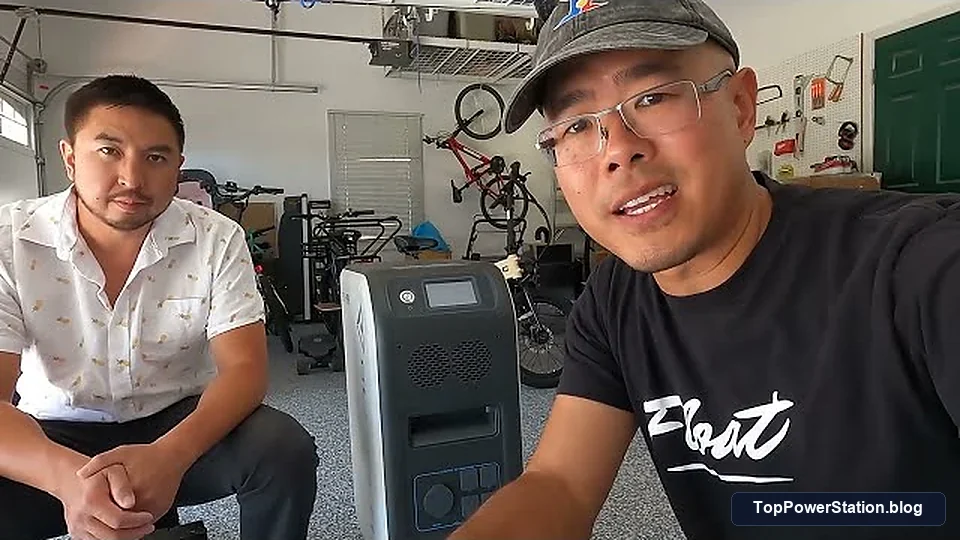
Physical housings differ significantly regarding daily handling. The Bluetti unit adopts a vertical cabinet profile with integrated caster wheels, whereas the EcoFlow model resembles a rugged traditional toolbox chassis.
The Bluetti EP500Pro utilizes a monolithic chassis design featuring integrated caster wheels, housing a heavy-duty inverter and a massive 5,120Wh LiFePO4 battery built for stationary home backup and heavy daily cycling applications.
In contrast, the EcoFlow Delta Pro 3 review highlights a modular transport layout pairing a 3,600Wh base capacity with stackable expansion batteries to scale total storage capacity up to 25kWh.
- Bluetti utilizes an upright monolithic tower housing weighing roughly 176 pounds.
- EcoFlow features a rectangular block footprint scaling down to 99 pounds.
- Both systems integrate heavy-duty internal framing to protect sensitive power electronics.
Chassis Construction And Materials
Industrial-grade plastics and reinforced metal framing dominate both exterior shells. Structural integrity remains paramount when transporting units weighing nearly one hundred pounds across uneven surfaces.
Ventilation layouts dictate cooling efficiency during peak inverter loads. Proper airflow prevents thermal throttling under intense operational strain.
- Flame-retardant outer casings meet strict UL safety requirements.
- Dual-sided cooling fans exhaust high heat rapidly during surges.
Inverter Capacity And Surge Profiles
Delivering clean alternating current requires advanced pure sine wave inverter technology. Clean power output protects sensitive microprocessors inside household appliances from destructive harmonic distortion.
Continuous wattage ratings determine which heavy motorized devices will start reliably. Starting surge requirements often exceed nominal running wattages by significant margins.
Delivering a continuous 3,000W pure sine wave output with a 6,000W surge ceiling, the Bluetti EP500Pro easily handles high-draw motor loads, multi-appliance homes, and heavy workshop tools during prolonged grid outages.
As detailed in our EcoFlow Delta Pro Ultra review, the unit matches this rating at 3,600W output using proprietary X-Boost technology to safely run resistive appliances up to 4,500W.
- Bluetti delivers a steady 3000W continuous output with higher surge peaks.
- EcoFlow pushes 3600W continuous output, handling heavier compressor loads easily.
- Both units support parallel connection kits for doubled wattage capacity.
Voltage Regulation And Waveforms
Pure sine wave output mimics standard utility grid power perfectly. This prevents motor humming and overheating in refrigerators and medical oxygen concentrators.
Total harmonic distortion stays under three percent across all operating conditions, ensuring safe power delivery for modern computers and audio equipment.
- Advanced microcontrollers monitor output voltage fluctuations instantly.
- Automatic overload protection trips safely before internal component damage.
Battery Chemistry And Cycle Life Longevity
Long-term energy storage depends heavily on internal cell degradation rates. Premium LiFePO4 cells deliver exceptional calendar life compared to older ternary lithium chemistry alternatives.
Owners can expect thousands of complete discharge cycles before capacity drops to eighty percent. This high cycle durability makes daily solar cycling economically viable.
Both power stations utilize Lithium Iron Phosphate chemistry, ensuring exceptional safety profiles and thermal stability, but the Bluetti unit guarantees over 3,500 cycles to 80% capacity under standard operating and ambient temperature conditions.
EcoFlow implements an advanced battery management system that similarly yields 3,500 cycles to 80% capacity, while actively monitoring individual cell voltages and internal temperatures to prevent degradation during rapid charging cycles.
- Both systems boast over 3500 life cycles to 80% original capacity.
- Advanced battery management systems balance cell voltages automatically during charging.
- Low self-discharge rates retain stored energy during long storage periods.
Thermal Management And Safety
Internal temperature sensors monitor individual cell modules constantly. If heat spikes develop, the battery management system reduces charge current to prevent thermal runaway.
Passive and active cooling work together to maintain optimal operating temperature ranges across harsh environmental conditions.
- Multiple redundant hardware fuses protect against catastrophic short circuits.
- Cold-weather charging protection prevents lithium plating at freezing temperatures.
Solar Charging And Grid Input Versatility
Harnessing renewable energy requires efficient built-in maximum power point tracking charge controllers. High voltage solar array inputs reduce energy loss over long cable runs.
AC wall charging speeds vary between models based on internal inverter capabilities and dedicated high-amperage charging circuits designed for rapid turnaround.
Solar input on the Bluetti system is managed by an integrated MPPT controller supporting up to 2,400W max solar input with a wide 120V to 500V voltage range, accommodating diverse array configurations and panel types.
Pairing the unit with selections from our best solar panels for EcoFlow Delta Pro guide unlocks a robust 1,600W solar charging limit, maximizing panel efficiency from portable blankets or rigid photovoltaic arrays.
- Bluetti supports up to 2400W solar input for fast off-grid replenishment.
- EcoFlow features rapid X-Stream AC wall charging up to 1800W.
- Dual charging methods allow simultaneous solar and grid power replenishment.
MPPT Efficiency And Voltage Limits
Wide open-circuit voltage windows give users flexible panel configuration options. Connecting multiple panels in series reduces wire gauge requirements significantly.
Tracking efficiency exceeds ninety-nine percent, converting maximum available photon energy into usable chemical storage inside the battery pack.
- Standard MC4 connectors simplify third-party solar panel integration.
- Over-voltage protection safeguards internal charging circuits from sudden surges.
Ergonomics, Mobility, And Real-World Footprint
Transporting heavy power stations requires thoughtful handle placement and wheel integration. Ergonomic design choices dictate whether a unit feels manageable or cumbersome during emergencies.
Floor space footprint matters in residential settings where equipment must blend into living spaces without obstructing daily foot traffic pathways.
Weighing roughly 176 pounds, the Bluetti EP500Pro prioritizes smooth indoor rolling mobility via heavy-duty bottom casters rather than lifting ergonomics, making it best suited for single-level living spaces or garages.
Evaluated in the EcoFlow Delta Pro review, this unit weighs 99 pounds, featuring a retractable handle and rugged wheels that enable easier vehicle loading and flexible repositioning across diverse residential environments.
- Bluetti features built-in casters optimized for smooth indoor flooring surfaces.
- EcoFlow requires an attachable heavy-duty cart for effortless long-distance rolling.
- Carrying handles are reinforced to withstand heavy lifting strains safely.
Portability Trade-Offs In Practice
Upright tower designs conserve horizontal floor space effectively in tight utility rooms. However, lifting a heavy tower into a vehicle trunk requires multiple strong adults.
Modular cart systems make loading transport vehicles easier when traveling to remote off-grid work sites or recreational camping destinations.
- Vertical cabinets resist tipping over during minor seismic tremors.
- Low center of gravity improves stability when moving across ramps.
Smart Ecosystem Integration And Management Software
Modern power stations rely heavily on digital companion apps for remote monitoring. Wireless connectivity protocols allow users to check battery status from anywhere.
Firmware updates delivered over the air ensure the internal operating system receives continuous bug fixes and performance enhancements over time.
Bluetti provides comprehensive local and remote monitoring through a dedicated mobile application connecting via Wi-Fi or Bluetooth, allowing users to track real-time power metrics, update firmware, and configure advanced operational working modes.
EcoFlow offers an equally robust software ecosystem featuring detailed energy dashboards, smart home integration panels, and automation triggers that optimize charging schedules based on local utility rates and peak grid hours.
- Wi-Fi and Bluetooth connectivity provide dual-channel remote access reliability.
- Customizable charging schedules help users take advantage of off-peak utility rates.
- Detailed historical usage graphs track power consumption trends accurately.
Interface Design And Local Controls
Clear LCD screens display critical metrics including remaining runtime and active port statuses. Physical buttons offer quick backup control if wireless networks fail.
Menu navigation remains straightforward for users who prefer avoiding complex smartphone applications during critical power outage events.
- Backlit displays remain readable in dark emergency basements.
- Dedicated toggle switches isolate DC and AC output banks.
Practical Application And Final Verdict
Selecting the right generator depends on your specific backup power objectives. Stationary home installations prioritize seamless UPS functionality and large energy capacity.
Mobile users often favor expandable ecosystem flexibility and rapid charging speeds to minimize downtime during extended off-grid expeditions or remote field operations.
Selecting between these two power stations depends entirely on whether your installation demands maximum all-in-one backup capacity or modular expansion flexibility for emergency preparedness, off-grid living, and uninterruptible power supply applications.
Technical operators prioritizing high single-unit storage and massive solar array integration will favor the Bluetti architecture, whereas users needing modular scalability and portable mobility often lean toward the EcoFlow ecosystem.
- Assess your peak wattage demands before purchasing expansion batteries.
- Verify local solar irradiance levels to match appropriate panel arrays.
- Consider installation space constraints in your primary living area.
Making Your Ultimate Decision
Careful evaluation of your daily power consumption habits ensures long-term satisfaction. Both systems represent the absolute pinnacle of current portable energy storage engineering.
Prioritize features that align with your primary use case to maximize your investment value and ensure reliable emergency preparedness.
- Focus on inverter limits for heavy motorized appliance loads.
- Factor in expansion potential for future energy demands.
Frequently Asked Questions
Can these power stations run an entire household during an outage?
Yes, both units can power essential household appliances like refrigerators and lights. Proper circuit integration requires a manual transfer switch installed by a licensed electrician.
Are the internal batteries user-replaceable when they finally degrade?
Neither unit is designed for simple consumer battery swaps. You must return the unit to authorized service centers for professional cell replacement services.
Can I expand the energy capacity using extra batteries later?
The EcoFlow model offers extensive modular expansion battery options. The Bluetti unit operates primarily as a standalone cabinet with limited external expansion flexibility.
Do these systems support split-phase 240V power output configurations?
Both models support bridging accessories to generate 240V power. This requires specialized hardware to combine two identical units safely for heavy-duty loads.
How noisy are the cooling fans under maximum continuous inverter loads?
Cooling fans spin up loudly during heavy power draws or rapid charging cycles. Expect noticeable ambient noise comparable to a standard desktop computer under stress.