Bluetti AC200P vs Jackery 2000: Technical Verdict
Choosing between these heavy-duty power stations requires balancing raw chemical longevity against streamlined operational mobility for off-grid applications.

Choose the Bluetti AC200P for extended lithium iron phosphate cycle life, or select the Jackery 2000 for lighter transport weight and faster solar recharging setups.
Compare all top models in our Best Portable Power Station: Top Picks for 2026.
Side-by-Side Breakdown
| Criteria | Bluetti Ac200P | Jackery 2000 | Edge |
|---|---|---|---|
| Core Design / Build | Rectangular chassis with dual cooling fans | Integrated folding handle with rugged casing | Jackery 2000 |
| Real-World Performance | 2000W continuous output with 2000Wh capacity | 2200W surge capability with clean sine wave | Bluetti Ac200P |
| Ease of Setup & Use | Touchscreen interface with multiple DC ports | Simplified LCD screen with dedicated buttons | Jackery 2000 |
| Durability & Reliability | Uses LiFePO4 chemistry for deep cycles | NMC chemistry optimized for high energy density | Bluetti Ac200P |
| Efficiency / Operating Footprint | Higher standby power draw from active cooling | Optimized inverter conversion with low idling loss | Jackery 2000 |
| Maintenance Requirements | Minimal upkeep with standard firmware updates | Routine ventilation checks and firmware monitoring | Tie |
| Best Ideal Use Case | Stationary backup and heavy workshop usage | Mobile camping and rapid emergency deployment | Split |
Core Design and Engineering Differences
Examining the physical engineering of these two generators reveals distinct architectural philosophies tailored for different user priorities in off-grid environments and emergency home backup applications today.
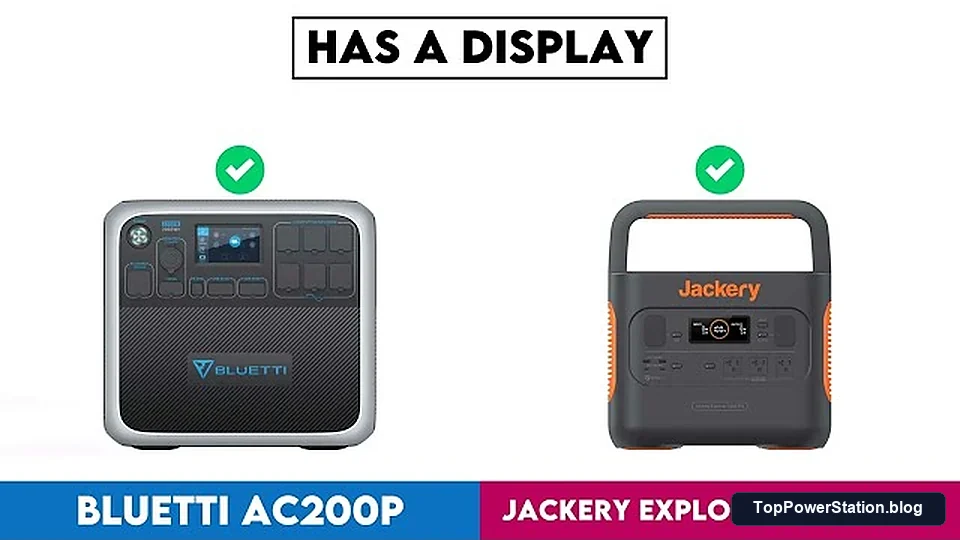
The Bluetti AC200P utilizes a dense rectangular footprint designed primarily for stationary utility, incorporating internal cooling fans to manage thermal loads during high inverter output operations.
Insights from our Jackery Explorer 2000 V2 review highlight its ergonomic portability through an integrated folding handle and an exterior shell engineered to absorb moderate impact during transit.
The Bluetti unit utilizes a heavy-duty LiFePO4 battery chemistry engineered for extended cycle life, contrasting with traditional chemistry variants found in older competing generator builds across the market.
Internal structural framing relies on reinforced ABS plastic housing designed to withstand moderate jobsite impacts while maintaining a manageable chassis footprint during frequent transportation routines and outdoor trips.
Thermal management inside the chassis employs dual cooling fans and internal heat sinks to dissipate high operational loads efficiently under demanding continuous high-wattage inverter power delivery scenarios.
- Chassis geometry and volumetric footprint dimensions
- Internal thermal management and active fan placement
- Handle integration and overall transport ergonomics
Chemical Composition and Battery Architecture
Battery chemistry dictates long-term utility, with Bluetti employing LiFePO4 cells known for exceptional thermal stability and thousands of safe operational charge cycles before significant degradation.
Jackery relies on traditional lithium-ion chemistry to achieve a lighter physical weight, though this trades away some total lifespan longevity for immediate portability and power density advantages.
- LiFePO4 versus traditional lithium-ion formulations
- Cycle life ratings under standard load conditions
Real-World Performance and Output Dynamics
Evaluating real-world electrical output requires looking beyond marketing specifications to observe how each inverter handles inductive motor loads and continuous heavy appliance demands during usage.
The Bluetti unit delivers steady wattage through a robust pure sine wave inverter, easily handling heavy workshop tools and household refrigerators without dropping voltage or tripping internal protection circuits.
Meanwhile, the Jackery alternative offers swift surge response times, making it exceptionally reliable when sensitive electronics or motor-driven compressors initiate their initial high-draw startup sequences.
Continuous AC output ratings dictate how many household appliances run simultaneously without triggering overload protection circuits during heavy utility demands in remote off-grid camping or emergency backup situations.
As detailed in our Jackery Explorer 2000 Plus review, surge capacity limits represent the peak momentary wattage the internal inverter can handle safely when heavy motor-driven compressors initiate startup draws.
Pure sine wave inversion ensures sensitive electronics like medical CPAP machines and desktop computers receive clean electricity identical to standard wall outlets without introducing disruptive electrical interference noise.
- Continuous versus peak surge wattage thresholds
- Pure sine wave harmonic distortion measurements
- Inverter efficiency under mixed household loads
Appliance Compatibility and Port Selection
Port diversity matters when running multiple devices simultaneously in remote field locations without access to standard grid power outlets or secondary distribution power strips.
Bluetti equips its chassis with a massive array of AC outlets, DC barrel ports, and specialized RV connections, reducing the need for external adapters during complex deployments.
- AC outlet counts and continuous amperage ratings
- Specialized DC and USB power delivery ports
Recharging Speeds and Energy Harvesting
Replenishing stored energy efficiently is crucial during extended grid outages or prolonged camping trips where pairing your unit with options from our best solar panels for Bluetti AC200P guide becomes totally mandatory.
The Jackery 2000 excels with rapid wall charging inputs and optimized solar array controllers that capture maximum wattage from portable panels during peak sunlight hours.
Bluetti counters with flexible multi-input charging capabilities, allowing users to combine AC wall adapters and solar arrays simultaneously to drastically cut down total battery replenishment times.
Maximum solar input wattage capacities determine how quickly external photovoltaic panels can restore full energy reserves during sunny daytime weather conditions without relying on standard grid wall outlets.
MPPT charge controllers optimize incoming voltage and current parameters from solar arrays to maximize energy harvest efficiency, even when partial shading affects panel strings outdoors.
AC wall charging speeds depend heavily on internal power supply modules that dictate total recharge duration from zero to one hundred percent capacity during standard utility restoration phases.
- Maximum solar input wattage and voltage limits
- Dual-charging capabilities and wall adapter speeds
Solar Panel Integration and MPPT Performance
Maximum Power Point Tracking controllers maximize energy harvesting efficiency by dynamically adjusting voltage matching between connected photovoltaic panels and internal battery banks.
Both systems integrate advanced MPPT algorithms, but strict adherence to open-circuit voltage limits remains vital to prevent permanent damage during custom array installations.
- MPPT voltage operating ranges and safety margins
- Connector types and weather-resistant cabling
Maintenance, Efficiency and Longevity
Maximizing equipment lifespan demands routine maintenance, proper ventilation management, and adherence to manufacturer storage guidelines during periods of prolonged seasonal inactivity.
Maintaining clean intake vents prevents dust accumulation inside the Bluetti chassis, ensuring optimal thermal dissipation during continuous high-wattage inverter output operations.
Jackery systems require careful monitoring of battery state-of-charge levels during off-season storage to prevent deep self-discharge phenomena from degrading internal cell chemistry over time.
Cycle life specifications highlight the total number of complete charge and discharge sessions the internal battery cells endure before dropping below eighty percent retained capacity thresholds.
Standby self-discharge rates dictate how much stored electrical energy dissipates naturally over months of non-use, making proper storage routines essential for emergency preparedness reliability.
Firmware updates and module modularity simplify long-term servicing requirements, allowing technical operators to troubleshoot minor system anomalies without requiring complete unit replacements across extended operational lifespans.
- Ventilation cleaning and dust filter inspection
- Long-term seasonal storage voltage protocols
Inverter Idle Draw and Parasitic Losses
Parasitic power loss occurs when the internal inverter remains powered on without active appliance loads, slowly draining the main battery over extended standby durations.
Users should always manually power down auxiliary DC and AC inverter switches when equipment sits idle to preserve maximum available emergency capacity.
- Standby power consumption metrics
- Manual switch management for power conservation
Ergonomics, Interface and User Experience
User interface design significantly impacts daily usability, especially when operating complex power stations in low-light emergency conditions or dimly lit camping environments.
Bluetti utilizes a comprehensive touchscreen display that presents detailed input and output metrics clearly, though it requires deliberate physical contact to navigate menu settings.
Jackery employs a straightforward LCD screen accompanied by physical tactile buttons, ensuring reliable operation even when users wear heavy work gloves in cold weather.
Physical handle placements directly influence lifting mechanics and carrying comfort when transporting heavy power stations across uneven terrain toward remote campsites or emergency installation sites.
LCD screen visibility under direct sunlight remains critical for monitoring real-time input wattage, output loads, and remaining battery percentage accurately during daytime outdoor operations.
Port layout organization prevents cable clutter by separating AC receptacles from DC barrel ports and USB charging connections, enhancing usability for multiple connected electronic devices simultaneously.
- Touchscreen versus physical button interfaces
- Screen visibility in direct sunlight conditions
Portability and Physical Handling Constraints
Weighing heavy power stations requires proper lifting techniques to avoid strain, making handle placement and overall weight distribution critical physical design factors.
The Jackery wins minor ergonomic advantages through balanced dual handles, whereas the Bluetti relies on fixed side grips that demand a wider lifting stance.
- Total unit weight and mass distribution
- Handle configuration and lifting leverage
Safety Protections and Regulatory Standards
Advanced safety systems protect both the power station and connected devices from electrical anomalies, short circuits, and thermal runaway scenarios during heavy usage.
Comprehensive BMS technology monitors individual cell voltages, internal temperatures, and current flows constantly to intervene before hazardous operating conditions can develop.
Both models comply with rigorous international electrical standards, featuring automatic shutdown mechanisms that trigger instantly upon detecting abnormal voltage spikes or overloads.
Battery management systems continuously monitor individual cell voltages, internal temperatures, and current flows to prevent catastrophic thermal runaway events during intensive high-draw usage scenarios.
Short circuit protection mechanisms instantly sever power delivery pathways if damaged wiring or faulty appliances create dangerous electrical faults within the connected load circuit.
Compliance certifications ensure the power station meets strict electromagnetic compatibility and electrical safety regulations mandated for consumer electronics sold within North American markets.
- Battery management system sensor coverage
- Automatic overload and short-circuit protection
Thermal Management and Emergency Shutdowns
Active cooling fans engage automatically when internal temperatures rise, dissipating heat effectively during sustained high-load power delivery cycles in warm environments.
If internal thresholds are exceeded, the inverter shuts down safely to protect sensitive semiconductor components from permanent thermal damage.
- Fan activation temperature thresholds
- Thermal overload recovery procedures
Which Option Fits Your Setup
Selecting the ideal portable power station ultimately depends on your specific application, whether you need stationary home backup security or agile mobile power for outdoor adventures.
Homeowners seeking long-term reliability and frequent cycling will benefit immensely from the robust Bluetti chemistry and extensive port array designed for stationary use.
Conversely, frequent campers and mobile professionals will appreciate the lighter transport weight and rapid setup offered by the Jackery ecosystem during frequent travels.
Choosing the ideal unit from our best 2000 watt power station roundup requires balancing total energy capacity needs against physical weight limitations for your specific recreational vehicle or residential emergency plans.
High-draw appliances like electric burners and portable air conditioners demand robust inverter capacities and extensive battery reserves to operate reliably without frequent recharging interruptions.
Assessing your typical daily kilowatt-hour consumption helps determine whether a heavy-duty industrial setup or a lighter mobile generator better matches your outdoor power requirements.
- Stationary home backup versus mobile camping
- Frequency of use and required cycle longevity
Making Your Final Purchasing Decision
Weigh your typical power consumption needs against physical weight tolerances before purchasing to ensure your chosen generator matches your exact operational requirements.
Review local emergency preparedness goals and solar charging potential to maximize the long-term value of your investment in off-grid electrical independence.
- Watt-hour capacity matching exercises
- Solar panel compatibility verification
Frequently Asked Questions
Can I run a household refrigerator continuously using these power stations?
Both units easily handle standard residential refrigerators for multiple hours, though the Bluetti AC200P provides superior long-term cycle durability for daily backup duties. You should always calculate your specific appliance running wattage before relying on battery storage.
What is the primary difference in battery chemistry between these models?
The Bluetti relies on LiFePO4 chemistry which offers thousands of charge cycles, while the Jackery uses traditional lithium-ion cells to reduce physical weight. This fundamental distinction makes Bluetti better suited for stationary longevity.
How long do these power stations take to recharge via standard wall outlets?
Standard wall recharging typically ranges from two to six hours depending on the specific input wattage capacity and charger design. Utilizing dual charging methods on compatible units can reduce total replenishment times significantly.
Are these generators safe to operate inside an enclosed tent or RV?
Yes, because they produce zero toxic exhaust emissions, they remain completely safe for indoor or enclosed space operation. However, you must still ensure adequate ventilation around internal cooling fans during heavy inverter loads.
Can I connect third-party solar panels to recharge these power stations?
Third-party panels work wonderfully provided their operating voltage and amperage outputs remain strictly within the maximum controller limits specified by the manufacturer. Always verify open-circuit voltage ratings before making any physical DC connections.