12V vs 24V Portable Power Station: Technical Guide
Choosing between low and medium voltage architectures changes your entire portable power setup. Understand how electrical efficiency, inverter loads, and wiring gauges dictate real field performance.

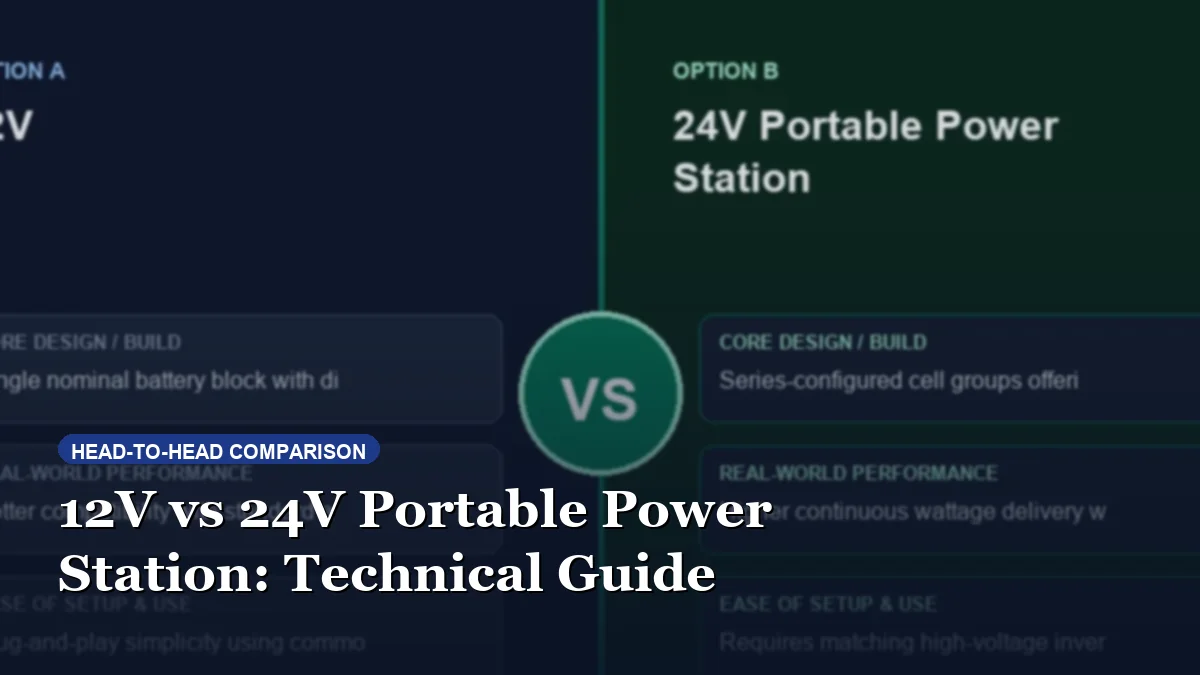
Select the 12V unit for lightweight camping and standard automotive integration. Choose the 24V power station when running heavy inductive loads that demand lower current draw and thinner cabling.
Compare all top models in our Best Portable Power Station: Top Picks for 2026.
Side-by-Side Breakdown
| Criteria | 12V | 24V Portable Power Station | Edge |
|---|---|---|---|
| Core Design / Build | Single nominal battery block with direct 12V DC output capability. | Series-configured cell groups offering higher nominal operating voltage. | 24V Portable Power Station |
| Real-World Performance | Better compatibility with standard automotive accessories and lights. | Higher continuous wattage delivery with reduced voltage drop under heavy loads. | 24V Portable Power Station |
| Ease of Setup & Use | Plug-and-play simplicity using common automotive plug standards. | Requires matching high-voltage inverters and specialized charging adapters. | 12V |
| Durability & Reliability | Fewer internal step-up conversion stages reduce overall component failure points. | Advanced thermal management handles high continuous output efficiently. | 24V Portable Power Station |
| Efficiency / Operating Footprint | Higher current draw leads to increased resistive heat losses over long cables. | Lower current draw minimizes thermal dissipation and boosts overall efficiency. | 24V Portable Power Station |
| Maintenance Requirements | Straightforward cell balancing and standard troubleshooting procedures. | Requires rigorous BMS calibration to ensure balanced series cell groups. | 12V |
| Best Ideal Use Case | Mobile overlanding, weekend camping, and standard DC electronics powering. | Off-grid cabins, heavy duty appliances, and high-draw professional tools. | 24V Portable Power Station |
Architectural Foundations and Voltage Architecture
Understanding internal electrical architecture is vital before deploying any mobile power generator in the field. The core voltage dictates how energy flows from the internal battery management system to your external devices.
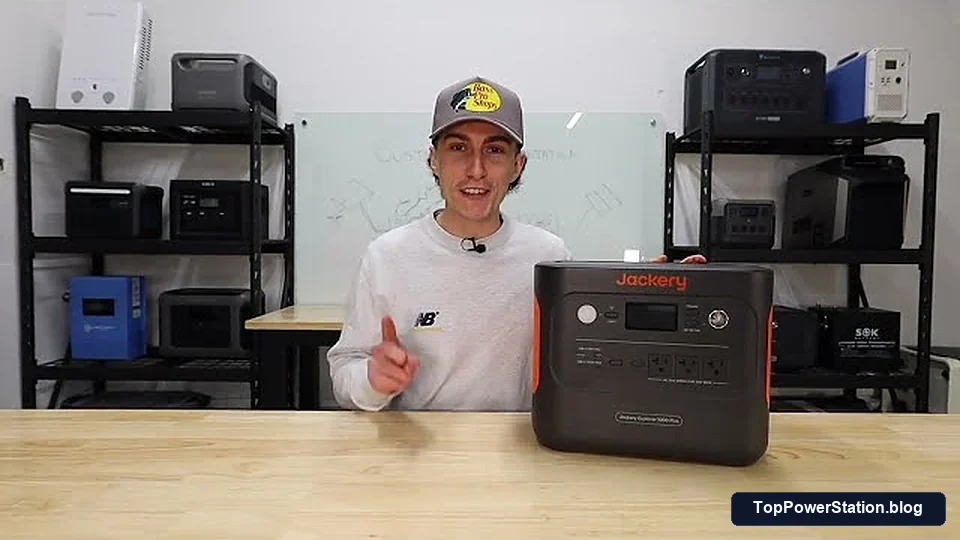
A traditional twelve-volt layout mirrors standard automotive electrical grids perfectly. This seamless compatibility allows users to plug directly into existing vehicle sockets without requiring complex DC-to-DC step-down converters or specialized wiring harnesses.
Portable power stations rely on internal battery strings configured in series or parallel. Selecting a dedicated refrigerator power station requires careful evaluation of voltage configurations to handle heavy inductive motor loads safely.
Higher voltage baselines fundamentally reduce internal resistance losses across power delivery pathways. Engineers design 24V systems to handle heavier electrical loads with less thermal stress, improving overall energy transfer efficiency compared to standard lower-voltage configurations.
- Nominal voltage defines the baseline operational threshold of the internal lithium chemistry.
- Series wiring configurations create higher potential energy storage inside medium voltage enclosures.
- Direct DC accessory outputs eliminate conversion overhead during standard low-power appliance usage.
Internal Chemistry and Series Configurations
Modern energy units rely heavily on lithium iron phosphate cells packaged securely inside rugged enclosures. These advanced cells offer exceptional cycle life and stable chemical performance across harsh environmental conditions.
Doubling the nominal voltage requires pairing individual cell groups in strict series arrangements. This engineering approach demands precise balancing circuits to prevent cell drift over extended operational lifespans.
- Series balancing protects individual cells from overcharging during high-rate replenishment cycles.
- Thermal sensors monitor internal resistance spikes across tightly packed energy storage modules.
Real-World Performance and Inverter Efficiency
Evaluating real-world performance requires looking beyond simple watt-hour ratings printed on marketing brochures. Inverter conversion efficiency plays a massive role in determining how much usable electricity reaches your household appliances.
Higher voltage platforms handle heavy surge loads with remarkable composure. When starting inductive motor loads like air compressors or refrigerators, these units experience significantly less voltage sag than their smaller counterparts.
Converting stored direct current into alternating current involves complex inverter topologies. A 24V power station maintains higher DC bus voltages, allowing internal inverters to operate closer to optimal conversion ratios without excessive step-up strain.
Under heavy continuous loads, a 12V unit frequently experiences noticeable voltage sag. This drop forces the inverter to draw significantly higher current from the battery management system, which accelerates thermal throttling and reduces usable runtimes significantly.
- Inverter conversion losses typically consume between five and fifteen percent of stored energy.
- Higher operating voltages allow internal DC buses to maintain stable output during spikes.
- Inductive motor loads generate severe startup transients that test internal inverter protection limits.
Handling Heavy Inductive Loads
Running high-draw workshop tools or medical equipment demands robust electrical infrastructure. Medium voltage systems distribute the mechanical stress across larger internal components, reducing thermal fatigue.
Voltage sag under load can trigger premature low-voltage shutdown sequences. Doubling the system voltage effectively halves the current draw required to deliver identical wattage outputs.
- Current reduction prevents thermal overload within sensitive copper transformer windings.
- Stable output voltage ensures sensitive digital equipment operates without unexpected reboots.
Cabling, Amperage Limits, and Thermal Dynamics
Electrical resistance in cables generates unwanted heat and wastes precious battery capacity. Managing amperage limits becomes increasingly critical as power demands scale upward during heavy usage sessions.
Thicker copper cables are mandatory when pushing large currents through twelve-volt systems. Conversely, medium voltage setups utilize thinner wiring gauges because lower amperage reduces resistive heat generation drastically.
Delivering high wattage through low-voltage lines requires massive copper cabling to prevent dangerous overheating. A 12V configuration demands much thicker American Wire Gauge cables to safely manage the extreme amperage required for heavy appliances.
Doubling system potential to 24V effectively halves the required current for identical wattage outputs. Consequently, manufacturers can utilize thinner, lighter external cables while maintaining strict thermal compliance and reducing overall copper material costs.
- Ohmic heating wastes valuable battery capacity through unnecessary thermal dissipation in cables.
- Thinner cables improve physical ergonomics and simplify complex routing through tight spaces.
- High amperage demands require heavy-duty terminal connections to prevent dangerous arc faults.
Thermal Management and Wire Gauges
Minimizing voltage drop over long cable runs requires careful calculation of wire thickness. Heavy copper conductors add noticeable weight to your portable kit but ensure maximum energy transfer efficiency.
Advanced thermal management systems utilize intelligent cooling fans to dissipate heat buildup. These fans activate automatically when heavy continuous loads push internal temperatures toward critical safety thresholds.
- Forced air cooling prevents premature thermal throttling during extended high-wattage operations.
- Proper terminal torque specifications eliminate high-resistance contact points prone to melting.
Portability, Ergonomics, and Physical Footprint
Physical dimensions and weight distribution heavily influence how easily you can transport your energy source. Weekend campers prioritize lightweight mobility, whereas stationary off-grid users focus entirely on raw capacity.
Compact low-voltage generators fit snugly inside crowded vehicle trunks and tight storage compartments. Their streamlined form factors make them ideal for impromptu roadside repairs and mobile workstation setups.
Physical dimensions are heavily influenced by internal battery geometries and casing reinforcement. Choosing the ideal camping power station ensures you balance a compact square footprint against sustained output capabilities for weekend trips.
Conversely, a robust 24V power system usually incorporates heavier duty chassis designs and advanced cooling fins. Users must balance the slightly increased physical weight against the massive gains in continuous power delivery.
- Ergonomic handles and balanced weight distribution dictate single-person transport comfort.
- Ruggedized outer shells protect delicate internal electronics from accidental drops and impacts.
- Integrated wheel kits transform heavy medium-voltage power stations into manageable rolling utility carts.
Weight Distribution and Transport Gear
Scaling up energy capacity naturally increases the physical mass of any portable generator. Heavy internal transformers and reinforced battery modules require sturdy structural housing to withstand vibrations.
Transporting larger power stations demands careful consideration of payload limits in smaller vehicles. Securing heavy units with rated tie-down straps prevents dangerous shifting during sudden transit stops.
- Reinforced anchor points secure heavy units inside truck beds and utility trailers.
- Balanced center of gravity designs prevent tipping when negotiating uneven terrain.
Charging Ecosystems and Solar Integration Limits
Replenishing stored energy efficiently in remote locations requires compatible solar array configurations. Matching open-circuit voltage ratings of portable solar panels to your power station controller is paramount.
Traditional low-voltage power units often impose strict limits on maximum solar input amperage. Exceeding these internal controller limits can damage sensitive MPPT charging circuits permanently during peak sunlight hours.
Integrating external solar panels requires careful matching of maximum power point tracking controllers. A 12V charging input typically imposes strict amperage caps, limiting the total wattage you can safely harvest from large array configurations.
Advanced 24V solar architectures accommodate much higher open-circuit voltage thresholds without exceeding controller current limits. This allows users to wire multiple photovoltaic panels in series, dramatically improving low-light energy harvesting efficiency.
- MPPT controllers optimize incoming solar harvest by dynamically tracking maximum power points.
- String configurations allow solar panels to operate at higher voltages for better efficiency.
- Rapid AC wall charging speeds shorten turnaround times between intensive field deployments.
Solar Panel String Design
Connecting multiple solar panels in series boosts voltage while keeping amperage manageable. This technique matches the higher input requirements of modern medium voltage power generation stations perfectly.
Always verify maximum VOC ratings before connecting third-party solar arrays to your generator. Exceeding manufacturer voltage thresholds instantly voids equipment warranties and risks catastrophic controller failure.
- Series solar wiring reduces resistive power losses across long extension cables.
- Weatherproof quick connectors ensure reliable outdoor performance during sudden rainstorms.
Safety Standards, Circuit Protection, and Longevity
Protecting users and connected equipment from electrical faults requires multi-layered safety engineering. Modern portable power stations incorporate sophisticated battery management systems to monitor operational health continuously.
Short-circuit protection and over-current safeguards prevent catastrophic thermal events during severe misuse. These automated diagnostic routines isolate faulty circuits instantly before permanent hardware damage occurs.
Electrical safety standards dictate strict insulation and fusing requirements based on operating voltage classes. A certified 12V device utilizes lower isolation barriers, yet it still requires robust short-circuit protection to prevent catastrophic battery venting events.
Higher-voltage designs incorporate sophisticated battery management systems that monitor individual cell health across complex series strings. This meticulous oversight prevents runaway degradation, directly maximizing long-term operational cycle life.
- BMS firmware monitors cell voltage, temperature, and current flow in real time.
- Physical fuse links provide a final physical barrier against sudden electrical surges.
- Flame-retardant casing materials contain internal faults safely away from external surroundings.
Battery Management Systems and Diagnostics
Advanced monitoring software actively balances individual cell groups during every charge cycle. This ongoing maintenance maximizes overall battery longevity and ensures consistent capacity delivery over years.
Diagnostic error codes displayed on digital screens help users troubleshoot minor faults quickly. Understanding these alerts prevents unnecessary equipment returns and empowers field-level maintenance procedures.
- Active balancing prevents weak cells from dragging down total pack capacity.
- Temperature sensors shut down charging operations if ambient conditions drop below freezing.
Best Deployment Scenarios and Final Buyer Fit
Selecting the right unit depends entirely on your specific operational requirements. For emergency needs, review our recommended home backup power station selections to guarantee seamless power autonomy during extended grid outages.
Analyze your typical electrical load profile before making a final purchasing decision. Matching your anticipated wattage demands and portability constraints ensures long-term satisfaction with your investment.
Selecting the correct voltage tier depends entirely on your specific mobile power demands. A casual user running basic LED lights and phone chargers will find lightweight 12V generators perfectly adequate for weekend excursions.
Conversely, remote professionals or off-grid homesteaders requiring heavy appliance operation should invest in a 24V power solution. These robust systems deliver the necessary sustained electrical throughput without risking premature hardware failure.
- Load profiling identifies peak wattage demands and daily energy consumption totals.
- Environmental conditions dictate whether you need weather-sealed enclosures or basic protection.
- Budget allocation should balance capacity needs against required inverter output capabilities.
Matching Power Stations to User Profiles
Overlanders and mobile photographers benefit greatly from lightweight, highly compatible low-voltage systems. These setups integrate smoothly with existing vehicle charging ports and portable solar blankets.
Off-grid cabin owners and remote work crews require the robust output of medium voltage stations. Running heavy tools and kitchen appliances demands sustained power delivery without thermal throttling.
- Professional contractors rely on high surge capacity to start heavy workshop tools.
- Emergency household backup requires seamless UPS functionality during unexpected grid outages.
Frequently Asked Questions
Can I jump-start a car directly with a portable power station?
Most units require a dedicated 12V jump-starting port with high surge output. Always verify that your specific model supports automotive starting currents before attempting any direct connections.
Why do 24V systems require thinner cables than 12V setups?
Higher voltage allows systems to deliver identical wattage using lower amperage. This reduced current draw minimizes resistive heat losses and permits the use of significantly thinner copper wiring gauges.
Are 24V power stations more efficient for running household appliances?
Yes, higher voltage architecture reduces internal conversion losses during heavy inverter operations. This translates to more usable watt-hours delivered to your sensitive home appliances and electronics.
Can I connect standard 12V accessories to a 24V power station safely?
Direct connection will damage standard 12V equipment instantly due to the excessive voltage. You must use a dedicated DC-to-DC step-down converter to bridge the voltage gap safely.
How does cold weather affect the performance of different voltage systems?
Low temperatures increase internal resistance across all lithium battery chemistry types. Advanced thermal management systems in medium voltage units handle freezing conditions better through active warming.